Moisturizers are useful for dry skin. The mechanism of action is to prevent the natural oils and water within the skin from escaping ; they do not put moisture into the skin. They give the skin a smooth, soft texture and, plumps up the fine wrinkles making them less obvious.
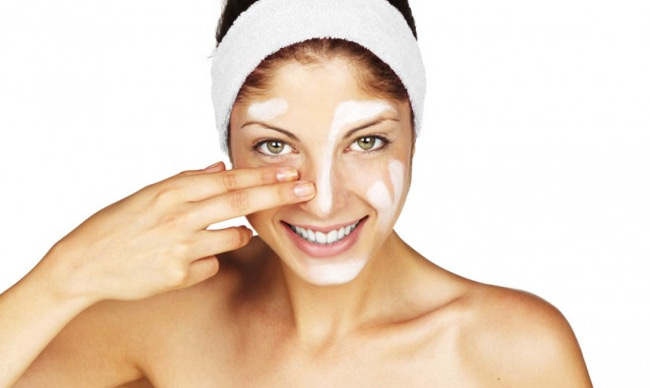
Chances are you will require a moisturizer at one time or another. Unless you have unusually dry skin, however, the use of a moisturizer should not necessarily become part of your daily routine. If moisturizers are used too often they can prevent the normal sloughing off of the top layer of dead skin cells. This gives the appearance of dryness and falsely induces the individual to use more moisturizer. This moisturizer induced dryness is called cosmetic seborrhea. If the problem persists, the skin becomes inflamed, and scaly patches form.
 Choosing a Moisturizer
As within cleansers, the choice of moisturizers is a period decision and involves a certain amount of experimentation to find the right one for you.
There are three qualities to look for in a moisturizer ;
- whether it helps control the dryness.
- whether it occludes the pores, which causes acne the milia,
- whether it irritates the skin. Oil and water are the two basic ingredients of moisturizers. The difference between moisturizing products is the ration of these two ingredients in the products. Products labeled oil free may actually have oil in them but the ration of water to oil in more as compared to their counterparts in which the ration of water to oil is usually much greater. Oils are necessary to trap the natural moisture.
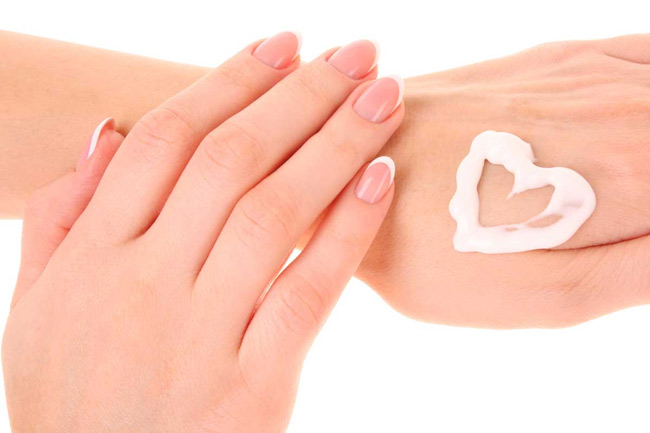
A moisturizer will smooth skin to make wrinkles less apparent, but only temporarily; unfortunately, moisturizing your skin will not have any long-term effect on wrinkles.
If you are unable to determine the ratio of oil to water in a moisturizer from its label, try the following tests before purchasing large amounts of the products.
- Put on some of the moisturizer. If the skin where you applied the moisturizer is warm, the moisturizer has a lot of oil in it. On the other hand, if the skin is cool; the moisturizer has a lot of water in it. The reason for this reaction is that the water evaporates from the skin and evaporation is a cooling mechanism. Oil, on the other hand, does not evaporate. It traps the heat in our bodies.
- Put a dab of moisturizer on a piece of tissue paper and hold it over a hot light bulb for several minutes. If there is a lot of oil in the moisturizer, it will melt around the dab of moisturizer. The wider the spread of oil into the tissue, the greater the oil content in the moisturizer.
Lotions tend to have a greater water to oil ratio and will allow the skin to breathe (sweat and cool) more than ointments which are often petroleum – based and greasy. Creams fall somewhere In the middle of the oil-to-water ration.
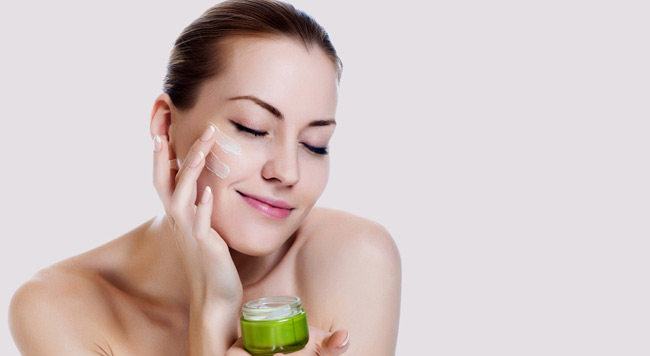
Beyond the two ingredients of oil and water cosmetic companies try to differentiate their products from similar ones through creative packaging and by adding special ingredients for which they often make unsubstantiated claims.
Here is a realistic look at some of the more commonly added ingredients .
- Mineral oil and petroleum – based products are very good moisturizers because they effectively look in the moisture. In high concentrations however they may occlude the pores, preventing natural oil from surfacing, resulting in acne and milia. They also tend to feel sticky on the skin.
- Vegetable oils generally are not as effective for moisturizing as are animal fats and mineral oils. Fats, polyunsaturated oils, such as apricot kernel, olive and avocado oils are common occlusive ingredients used in moisturizers.
- Hormones and placental extracts attract can hold water, but can also cause allergic reactions. If these hormones are absorbed into the body, they may effect the internal organs. Other ingredients such as vitamin E, collagen, proteins and amino acids may encourage skin hydration
They cannot however assist in rejuvenating aging skin because they do not pass through the top layer of the skin to the dermis where wrinkles originate. In addition, these ingredients can also cause allergic reactions. - Vitamin A derivatives have been added to some products as anti-aging agents. Whether or not the enzymes in the skin actually convert these derivatives into Tretinoin, which is the rejuvenating factor in the anti-aging products Retin-A, Renova, and vitamin A acid, remains in question until they have been exposed to the cold light of scientific scrutiny. The doses are so slow that even if they do convert to tretinion in the skin they probably do not provide the hoped benefits. Examples of products containing vitamin a derivatives include Estee lauder’s future perfect micro- targeted skin gel, prescriptive extra firm and Avon bio advance.
- Chemical agents, such as urea ,glycolic acid and lactic acid, improve the moisture retaining ability of the moisturizer. Examples are, Reversa lotion, Neo strata cream, Lachydrin lotion, Lacticare lotion and Uremol lotion. These agents, often called chemically enhanced moisturizers, are frequently recommended for dry skin problems and are most effective when put on moist skin. If they are not put on moist skin or are put on skin with small, dry skin cracks, they tend to sting.
- Fragrance– Fragrances are used to mask the odor of formulation ingredients and to impart a pleasant fresh aroma. Fragrance is added to 65% of moisturizers. Fragrances are the most common sensitizers. They are the most likely irritating agents, especially in individuals who already have a preexisting dermatitis.
Tip: Before purchasing a moisturizer know your skin type. Is it dry, oily, normal or have a T zone. Also, You should always apply moisturizer while your skin is still slightly damp.
Disclaimer
The Content is not intended to be a substitute for professional medical advice, diagnosis, or treatment. Always seek the advice of your physician or other qualified health provider with any questions you may have regarding a medical condition.