Remaining active during pregnancy offers several benefits to the mother and baby. The key to reaping such benefits is to adjust your exercise program in order to make it safe for you and your baby during this period. Keep in mind that the goal of exercising during pregnancy is to maintain your present level of fitness, not to improve it.
Benefits of Training during Pregnancy
Some of the benefits that exercise offers to expecting mothers are:
- Speedier recovery after delivery.
- Increased sense of well-being and self esteem during and after pregnancy.
- Fewer leg cramps.
- Larger placenta, which in turn provides an increased nutrient base for thebaby.
- Decreased risk of excessive weight gain caused by an increase of fat storage.
- Stronger lower back, which in turn reduces the risk of lower back pains.
- Boost in energy levels.
- Decreased likelihood of varicose veins.
- Reduced chances of having a Caesarean birth.
- Higher chances of achieving labor either a few days earlier or on time.
- Preparation for the stresses imposed by labor and delivery.
The amount of exercise that mothers-to-be will be able to tolerate during these nine months is directly related to how active they were before becoming pregnant. If a woman has never exercised before in her life, pregnancy is not the time to start a full-blown weight training and intense aerobics program. Starting a weight-training program is very traumatic on the body. A more sensible approach for someone who has never exercised before is to start a mild daily 20 to 30 minute aerobics program consisting of walking at a normal pace. Why walking? Because walking is one of the most natural and safest forms of exercise. During pregnancy, it is crucial to choose exercises that do not result in a loss of balance, since a fall could prove fatal for both the mother and the baby. Therefore, aerobic, activities such as aerobic dance, bench step classes, kickboxing aerobics, and roller blading are all out of the question.
There are certain precautions you will need to incorporate in your walking program in order to make it safe. Remember that the goal during this period is to maintain, not to improve, so your workout intensity should be mild to moderate. In other words, you should walk at a normal pace and should not attempt to push yourself.
Health Factors to Keep in mind
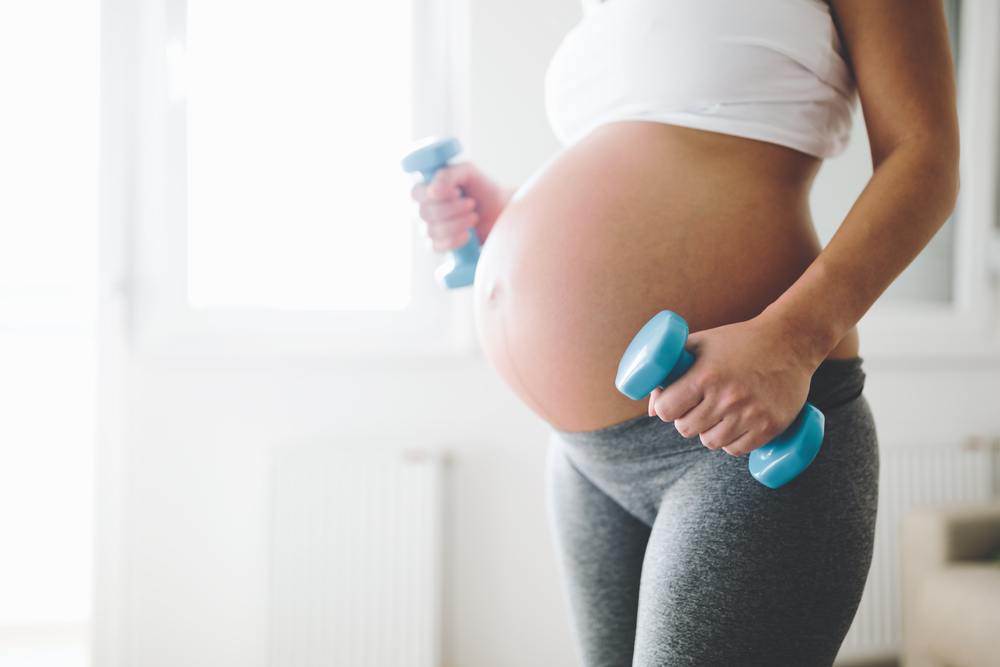
Pushing yourself can create undue stress upon your body and will increase your chances of reaching two conditions that should be avoided at all times during pregnancy. They are:
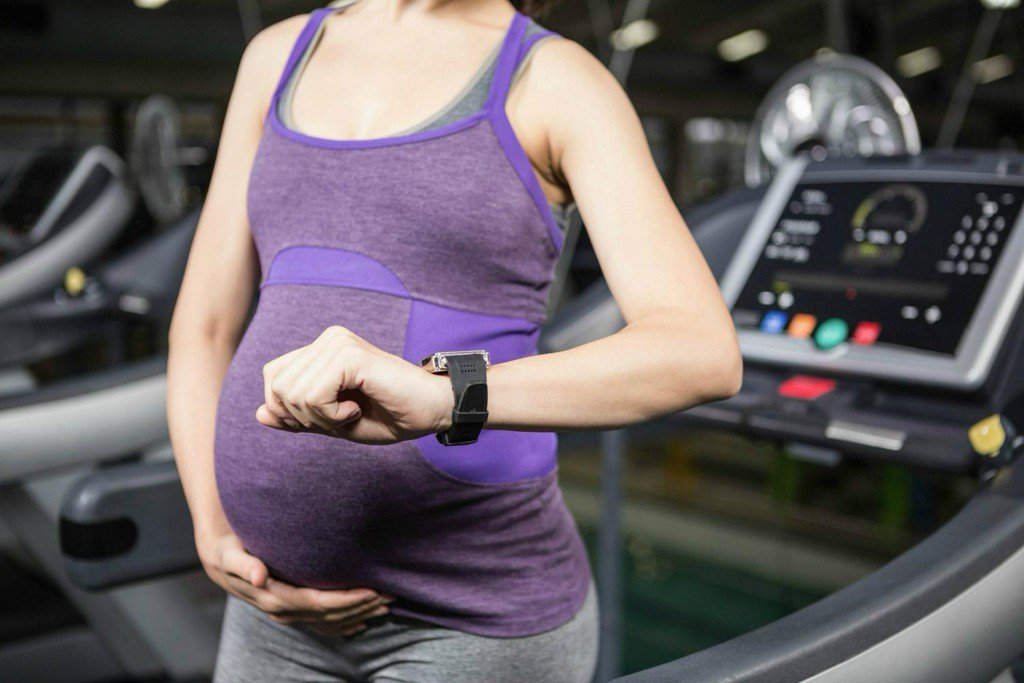
- Your heart rate should never exceed 140 beats per minute. Be especially careful to monitor your heart rate during exercise. This can easily be done by counting the amount of times your heart beats in 10 seconds while you are performing the activity and then multiplying that number by 6. This will give you the amount of beats per minute. To avoid raising your heart rate too high, walk at a normal pace.
- Your body temperature should never exceed 100 degrees Fahrenheit (or 38 degrees Celsius). Walk at a normal pace and choose a time and place where it is neither hot nor humid. Walking either early in the morning or in the late afternoon is best. Also, avoid wearing clothing that is too warm. If you’d rather walk indoors, do not use a motorized treadmill since it is easy to trip and fall while using this equipment. Instead, use the non-motorized models where you are the one that sets the pace. Other good forms of indoor exercises for expectant mothers are swimming and water walking.
If you have been active prior to your pregnancy, then you may continue your activities as long as they are not activities that could result in a loss of balance and as long as you remember to lower your intensity levels to prevent an increased body temperature and heart rate. Again, we emphasize that the goal during this period is maintenance and not improvement. Therefore, don’t push yourself.
Training Program Modifications during Pregnancy
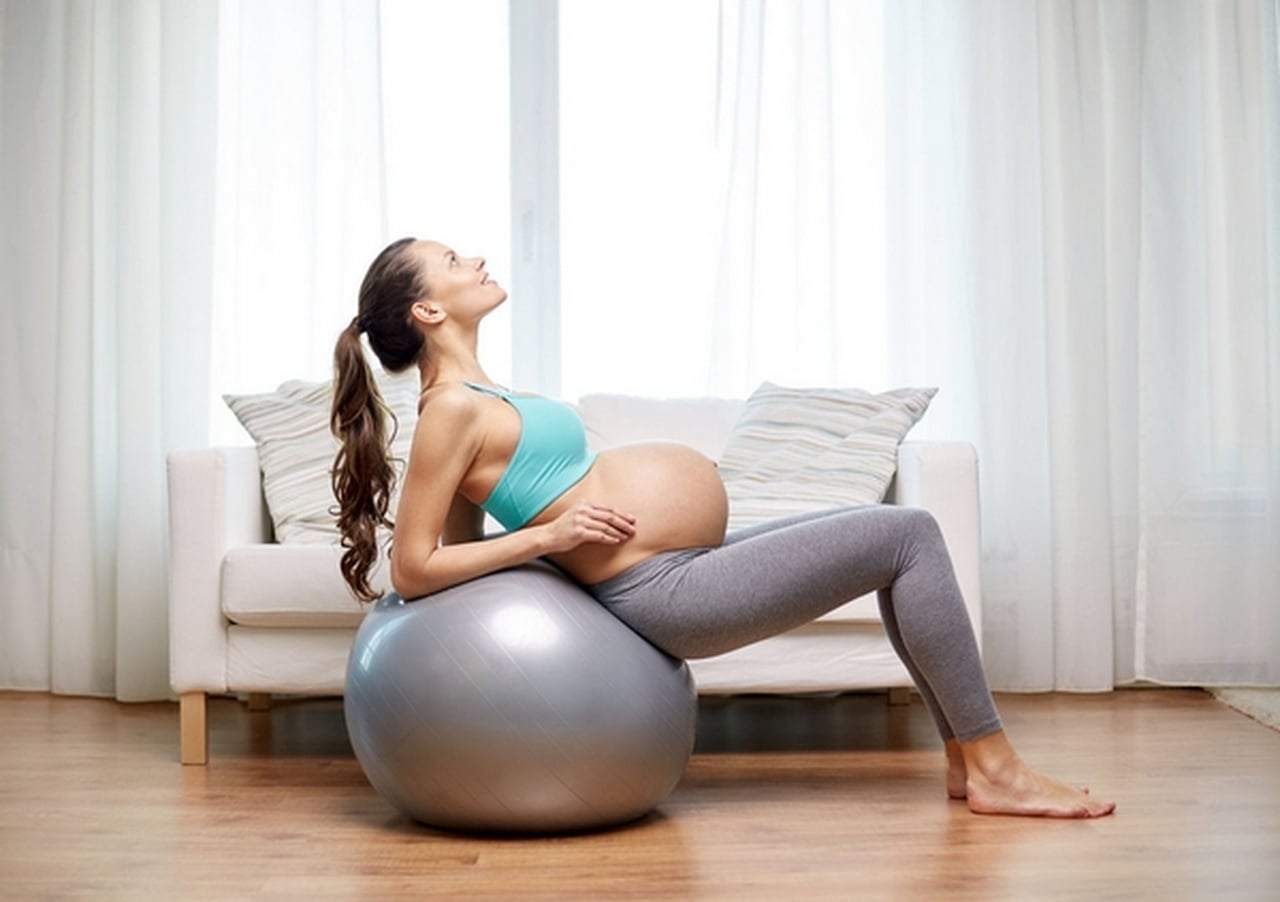
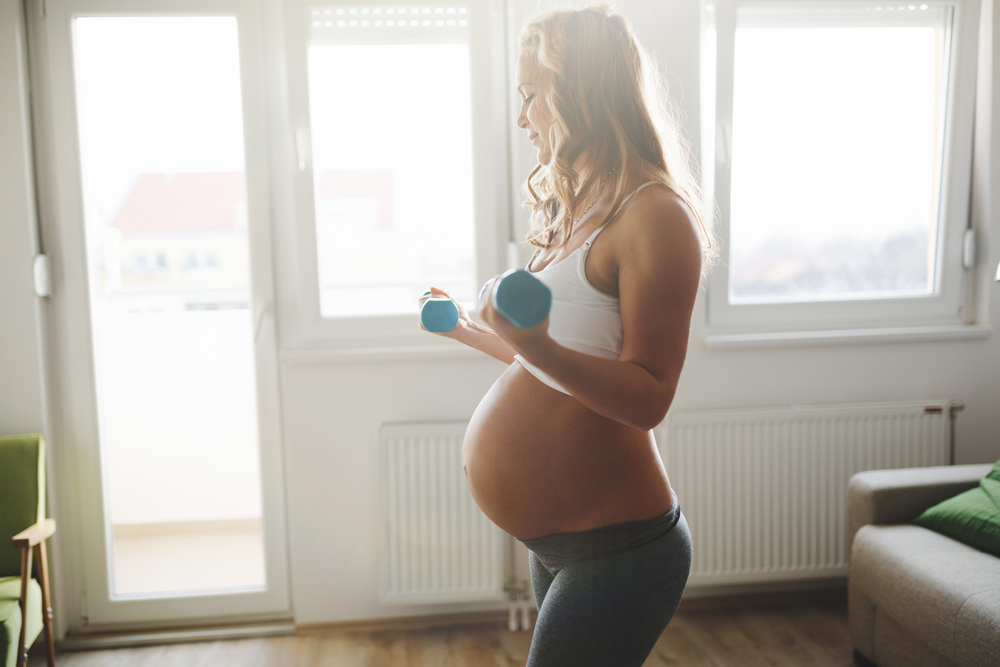
Women who are involved in weight training should follow a program with the following modifications:
- Increase your rest periods in between sets to two minutes in order to maintain a normal body temperature and a low pulse(below 140 beats).
- Perform only 3 sets per exercise.
- In order to stay away from reaching muscular failure choose a weight that you can perform for 12-15 repetitions and perform 8-10 repetitions per set instead.
- Eliminate exercises where you have to lay down flat on your back (such as flat dumbbell bench press) since this position can decrease blood flow to the uterus and therefore to the baby.
- Eliminate exercises that may cause a loss of balance such as lunges and squats. Instead, substitute exercises like seated leg curls and leg extensions. If you have access to machines, this is the perfect time to use them.
During pregnancy, it is better being locked in a two-dimensional (machines) universe rather than three (free weights) since it makes the exercises safer and eliminates the possibility of losing balance. Also by using machines, secondary stabilizer muscles, such as abdominal and pelvic muscles, are not activated. This is good at this time because we don’t want to create stress during pregnancy. Machines also greatly decrease a chance of joint injuries.During pregnancy, a loosening of the joints occurs. This loosening allows ligaments and tendons to stretch in preparation for delivery. Because of this, there is a higher risk of incurring a soft tissue injury if free weights are used. If you choose to continue using free weights during this period, remember to pay close attention to your exercise form and to choose your exercises carefully.
- You must avoid any exercises where you have to lay down flat on your stomach. For instance, do standing or seated leg curls rather than lying leg curls.
- Don’t hold your breath while exercising: otherwise you can cut the oxygen supply to your baby.
Taking all of these points into consideration, you can begin on weight training program during pregnancy.
Disclaimer
The Content is not intended to be a substitute for professional medical advice, diagnosis, or treatment. Always seek the advice of your physician or other qualified health provider with any questions you may have regarding a medical condition.