Honey-bee products in cancer treatment and prevention
05 Dec 2004
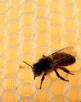 Natural honey-bee products such as propolis, royal jelly, caffeic acid, honey and venom may have applications in cancer treatment and prevention, say Croatian researchers in Journal of the Science of Food and Agriculture this month.
Nada Orsolic and colleagues from the University of Zagreb found that bee products significantly decreased tumour growth and / or spreading (metastasis) in mice when they were applied orally or by injection.
The researchers tested both the preventative and curative effects of the bee products on tumour models in mice. In the prevention studies, the products were administered before inoculation with the tumour cells. In the curative studies, the products were administered after tumour inoculation.
“The effects of the tested compounds were demonstrated either by inhibition of tumour growth or metastases (secondary tumour) formation and by increased survival of the animals,” said Dr Orsolic.
Propolis or caffeic acid significantly reduced subcutaneous tumour growth and prolonged the survival of mice. Honey also inhibited the spread of the tumour when applied before tumour cell inoculation in the lungs. Simultaneous inoculation with royal jelly and tumour cells significantly inhibited tumour spread. When bee venom was injected intratumourally, tumour shrinkage occurred, and the delay of tumour growth was evident. Survival of bee venom-treated mice was prolonged compared to control mice.
The way in which the bee products work to combat the tumours is not clear, but the authors suggest the chemicals cause apoptosis (cell suicide) or necrosis of the cancerous cells, or that they exert directly toxic or immunomodulatory effects. They may also reduce harmful oxyradicals in cells or body fluids.
The authors conclude that the intake of honey-bee products could be advantageous in the prevention and treatment of cancer.
“These results suggest the benefits of potential clinical trials using propolis or honey, combined with chemotherapeutic agents,” said Dr Orsolic.
