Scientists have previously identified a series of genetic errors that commonly occur inside cancerous blood cells, but it hasn’t been clear exactly how those genetic malfunctions create immature blood cells that overpopulate, crowd out healthy cells and spread in patients with acute myeloid leukemia or AML. Now, researchers at the University of North Carolina Lineberger Comprehensive Cancer Center have discovered how a set of faulty genetic instructions keep blood stem cells from maturing, a finding that further explains the development of AML.
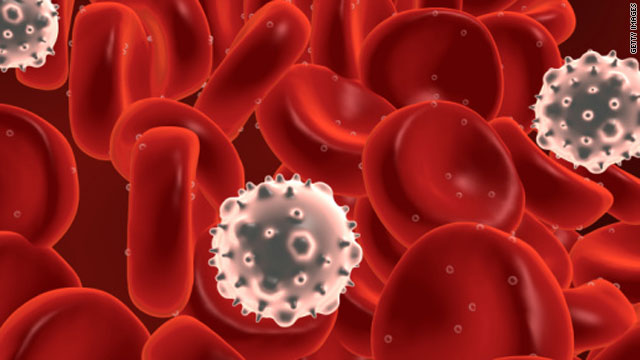
In a study published in the journal Cancer Cell, researchers reveal how a mutation in the gene DNMT3A, which has been found in approximately 20 to 30 percent of cases of AML, gives normal cells faulty genetic instructions that contribute to the development of cancerous cells. In particular, they found that this gene mutation removes a check or “brake” on activity of “stemness” genes — genes that tell cells to remain as undifferentiated stem cells. These faulty instructions lead to the creation of immature precursor cells that can become AML cells, the researchers report.
“Due to a large-scale cancer sequencing project, the DNMT3A gene is now appreciated to be one of the top three most frequently mutated genes in human acute myeloid leukemia, and yet the role of its mutation in the disease has remained far from clear,” said the study’s senior author G. Greg Wang PhD, a UNC Lineberger member and an assistant professor in the UNC School of Medicine Department of Biochemistry and Biophysics.
“Our findings not only provide a deeper understanding of how this prevalent mutation contributes to the development of AML,” Wang added, “but it also offers useful information on how to develop new strategies to treat AML patients.”
AML, one of the most common acute leukemia types in adults, involves over-production of immature blood cells that then crowd out normal, healthy cells. The American Cancer Society estimates there are nearly 20,000 new cases diagnosed and more than 10,000 deaths in the United States each year. Studies have found that just close to 23 percent of people with the disease live five years in the United States.
To try to understand how the mutation helps drive the disease, UNC Lineberger researchers created one of the first laboratory AML models for studying somatic, or non-inherited, mutations in the gene DNMT3A. The gene codes for a protein that binds to specific sections of DNA with a special chemical tag that can influence activity and expression of the underlying genes in cells.
The researchers found that specific a somatic mutation in DNMT3A caused AML cells to have a different pattern of chemical tags that affect how the genetic code is interpreted and how the cell develops. In particular, they found that in cancerous cells with somatic mutation of DNMT3A, a set of so-called “gene enhancers” — the DNA sequences that code for “on” switches for other genetic regions — for several genes known as “stemness” genes were left unchecked. Stemness genes tell cells to keep characteristics of stem cells. With the control switches, or gene enhancers, for the stemness genes left unchecked, the stem cells in the blood were left with a constant “on” switch, allowing the cells to “forget” to mature.
“In acute myeloid leukemia, the expression of these stemness genes are aberrantly maintained at a higher level,” Wang said. “As a result, cells ‘forget’ to proceed to normal differentiation and maturation, generating immature precursor blood cells, and a prelude to full-blown cancer.”
They also found that while the DNMT3A mutation is required for acute leukemia development, the mutation itself is not sufficient to cause cancer alone. Instead, they found that the mutation cooperates with another genetic defect in a gene called RAS to drive cancer, said the study’s first author Rui Lu, PhD, a Lymphoma Research Foundation postdoctoral fellow at UNC Lineberger and in the Department of Biochemistry and Biophysics.
“We found the RAS mutation stimulates these immature blood cells to be hyper-proliferate, however, these cells cannot maintain their stem cell properties, while the DNMT3A mutation itself does not have hyper-proliferative effects, but does promote stemness properties and generates leukemia stem/initiating cells together with the RAS mutation,” Lu said.
In addition to contributing to a better understanding of the disease, Wang and his colleagues also reported they tested a potential treatment in cells with the DNMT3A mutation. They found AML cells with the DNMT3A mutation were sensitive to specific drug inhibitors of DOT1L, a cellular enzyme involved in modulation of gene expression activities. As DOT1L inhibitors are currently under clinical evaluation, this translational finding suggests a potential personalized strategy for treating the human AML carrying DNMT3A mutation.
