Neurons in the brain interact by sending each other chemical messages, so-called neurotransmitters. Gamma-aminobutyric acid (GABA) is the most common inhibitory neurotransmitter, which is important to restrain neural activity, preventing neurons from getting too trigger-happy and from firing too much or responding to irrelevant stimuli.
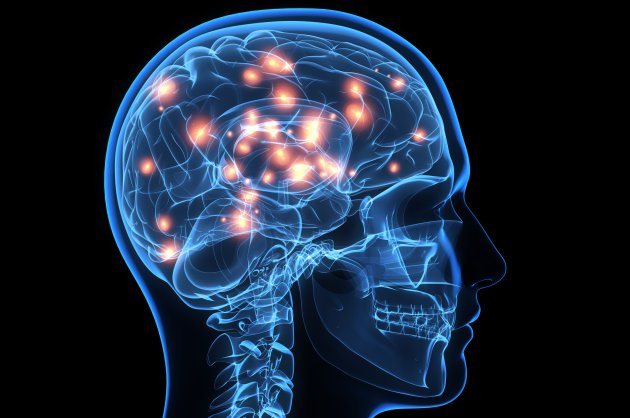
Researchers led by Dr Tobias Bast in the School of Psychology at The University of Nottingham have found that faulty inhibitory neurotransmission and abnormally increased activity in the hippocampus impairs our memory and attention.
Their latest research — “Hippocampal neural disinhibition causes attentional and memory deficits” — published in the academic journal Cerebral Cortex, has implications for understanding cognitive deficits in a variety of brain disorders, including schizophrenia, age-related cognitive decline and Alzheimer’s, and for the treatment of cognitive deficits.
The hippocampus — a part of the brain that sits within our temporal lobes — plays a major role in our everyday memory of events and of where and when they happen — for example remembering where we parked our car before going shopping.
This research has shown that a lack of restraint in the neural firing within the hippocampus disrupts hippocampus-dependent memory; in addition, such aberrant neuron firing within the hippocampus also disrupted attention — a cognitive function that does not normally require the hippocampus.
Increased activity can be more detrimental than reduced activity
Dr Bast, said: “Our research carried out in rats highlights the importance of GABAergic inhibition within the hippocampus for memory performance and for attention. The finding that faulty inhibition disrupts memory suggests that memory depends on well-balanced neural activity within the hippocampus, with both too much and too little causing impairments. This is an important finding because traditionally, memory impairments have mainly been associated with reduced activity or lesions of the hippocampus.
“Our second important finding is that faulty inhibition leading to increased neural activity within the hippocampus disrupts attention, a cognitive function that does not normally require the hippocampus, but depends on the prefrontal cortex. This probably reflects that there are very strong neuronal connections between hippocampus and prefrontal cortex. Our finding suggests that aberrant hippocampal activity has a knock-on effect on the prefrontal cortex, thereby disrupting attention.”
“Overall, our new findings show that increased activity of a brain region, due to faulty inhibitory neurotransmission, can be more detrimental to cognitive function than reduced activity or a lesion. Increased activity within a brain region can disrupt not only the function of the region itself — in this case hippocampus-dependent memory — but also the function of other regions to which it is connected — in this case prefrontal cortex-dependent attention.”
Adding to existing research findings
Dr Bast’s research is motivated by recent clinical findings that patients in early stages of schizophrenia, age-related cognitive decline and Alzheimer’s show faulty inhibition and increased activity within the hippocampus. The new study, where inhibition in the hippocampus of rats was disrupted before the animals took part in tests of attention and memory, revealed that such faulty inhibition and aberrant activity within the hippocampus causes the type of memory and attentional impairments seen in patients.
This research adds to the team’s recent findings, where they found that attention was disrupted by faulty inhibition and increased activity within the prefrontal cortex, a brain region important for attention.
Dr Bast, said: “Overall, these findings highlight that higher brain functions, such as attention and memory, depend on well-balanced neural activity within the underlying brain regions.”
Potential target for new treatments
This research has important implications for treating cognitive impairments.
The findings show that simply ‘boosting’ the activity of the key memory and attention centres in the brain (the hippocampus and prefrontal cortex), which has been a long-standing strategy for cognitive enhancement, will not necessarily improve memory and attention, but can actually impair these functions. What’s important is to re-balance activity within these regions.
Dr Bast, said: “One emerging idea is that early stages of cognitive disorders, such as schizophrenia and age-related cognitive decline and Alzheimer’s, are characterised by faulty inhibition and too much activity; this excess neural activity leads then to neuronal damage and the reduced brain activity characterizing later stages of these disorders. So, rebalancing aberrant activity early on may not only restore attention and memory, but also prevent further decline.
“We have new studies on the way where we aim to identify medicines that might be able to re-balance neural activity within hippocampus and prefrontal cortex and to restore memory and attention.”
