Women Fitness

Women Fitness is an exhaustive resource on exercise for women, workouts for women, strength training, Zumba, HIIT, weight loss, workout, fitness tips, yoga, pregnancy.

  • 150 countries
  • Site Map
  • Disclaimer
  • Privacy Policy
  • Health & Fitness
  • Celebrities
  • News
  • Digital Magazine
  • Shopping
  • Print Magazine
    • Follow
    • Subscribe

Alternative Health

New clues to brain’s wiring found by scientists: Washington University Study

May 4, 2016 By Namita Nayyar (Editor in chief)

New-clues


New research provides an intriguing glimpse into the processes that establish connections between nerve cells in the brain. These connections, or synapses, allow nerve cells to transmit and process information involved in thinking and moving the body.

Reporting online in Neuron, researchers at Washington University School of Medicine in St. Louis have identified a group of proteins that program a common type of brain nerve cell to connect with another type of nerve cell in the brain.

The finding is an important step forward in efforts to learn how the developing brain is built, an area of research essential to understanding the causes of intellectual disability and autism.

“We now are looking at how loss of this wiring affects brain function in mice,” said senior author Azad Bonni, MD, PhD, the Edison Professor of Neurobiology and head of the Department of Anatomy and Neurobiology at the School of Medicine.

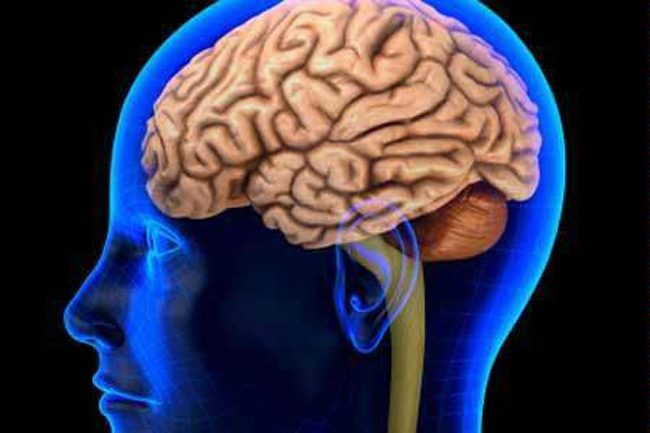
Bonni and his colleagues are studying synapses in the cerebellum, a region of the brain that sits in the back of the head. The cerebellum plays a central role in controlling the coordination of movement and is essential for what researchers call procedural motor learning, which makes it possible to move our muscles at an unconscious level, such as when we ride a bicycle or play the piano.

“The cerebellum also regulates mental functions,” Bonni said. “So, impairment of the wiring of nerve cells in the cerebellum may contribute to movement disorders as well as cognitive problems including autism spectrum disorders.”

His new results show that a complex of proteins known as NuRD (nucleosome remodeling and deacetylase) plays a fairly high supervisory role in some aspects of the cerebellum’s construction. When the researchers blocked the NuRD complex, cells in the cerebellum called granule cells failed to form connections with other nerve cells, the Purkinje neurons. These circuits are important for the cerebellum’s control of movement coordination and learning.

Bonni and his colleagues showed that NuRD exerts influence at the epigenetic level, which means it controls factors other than DNA that affect gene activity. For example, NuRD affects the configurations of molecules that store DNA and that can open and close the coils of DNA like an accordion, making genes less or more accessible. Changing the accessibility of genes changes their activity levels. For instance, cells can’t frequently make proteins from genes in a tightly packed coil of DNA.

NuRD also alters tags on the proteins that store DNA, decreasing the chances that the gene will be used. Among the genes deactivated by NuRD are two that control the activity of other genes involved in the wiring of the cerebellum.

“This tells us that the NuRD complex is very influential — not only does it affect the activity of genes directly, it also controls other regulators of multiple genes,” Bonni said.

The study done by Washington University School of Medicine.

News

  • Alternative Health
  • Arthritis
  • Asthma & Allergies
  • Breast Cancer
  • Cancer
  • Cardiovascular Health
  • Diabetes
  • Fertility & Pregnancy
  • Nutrition & Wellness
  • Orthopedics
  • Sports & Medicine
  • Weight Management
  • Women Beauty
  • Women Health
  • Other

Digital Magazine Sign-Up

Digital Magazine Available On

Available On Readly App

Available On Magzter

Advertise With Us


  • facebook
  • Twitter
  • Linkedin
  • Pinterest
  • Instagram

JOIN WF

  • Advertise With Us
  • Digital Magazine

Absolutely Free

  • WF Categories
  • Low Calorie Recipes
  • Calorie Catch
  • WF Entertainment

All About Us

  • About Namita
  • Team
  • Testimonials
  • Contact Us

© by Womenfitness.net 1999–2026. All rights reserved.

All Categories

  • What’s New
  • Weight Loss
    • Obesity
    • Low Calorie Recipes
    • Real Weight Loss Stories
    • Daily Tip
    • Fitness Analysis
    • Motivation of the Day
  • Exercise
    • Body building
    • Fitness for Models
    • Target Abs
    • Women At 40
    • Motivation Point
  • Healthy Eating
    • Calorie Catch
    • Disease Management
    • Good health
    • Herbs
  • Beauty & Fashion
    • Eye Care
    • Hair Care
    • Hand & Foot Care
    • Make Up
    • Skin Care
    • Beauty Tip
  • Celebrities
    • Actresses
    • Celebrities & Fitness Trainers
    • Sportswomen
    • Celebrity List
  • Pregnancy
    • Fertility & Conception
    • Health During Pregnancy
    • Getting Back to Normal
    • Problems in Pregnancy
    • Sexual Health
  • Yoga
    • Beauty & Yoga
    • Yoga during Pregnancy
    • Meditation Point
    • The Yogic Diet
    • Weight loss Yoga
    • Yog – Asanas
    • Yoga & Disease Management
    • Yoga in Action
  • Contact
    • About Namita
    • Our Team
    • Advertize with Us
    • FAQ
    • Message Board
    • Contact Us
  • Shopping
    • Book & Mag. Store
    • Fitness Apparels
    • Fitness Music
    • Fitness Dvd’s
    • Maternity Store
    • Sports & Outdoors
    • Health Care Store
    • Natural Health Foods
    • Herbs & Spices
    • Beauty Shop
    • Jewelry Store
    • Flowers
    • Health Care Equip.
    • Diet & Nutrition
    • Health Mobile Apps
    • Sex Lubes Store
  • Fitness Components
    • Flexibility
    • Cardiovascular
    • Weight Management
    • Nutrition
    • Strength Training
  • More
    • Testimonials
    • WF Links
    • Privacy Policy
    • Site Map
    • Disclaimer
    • News
    • Herbs
    • Top 10
    • Recipes
    • Fitness E-book

Follow

  • facebook
  • Twitter
  • Linkedin
  • Pinterest
  • Instagram
Go to mobile version