
A new version of an obesity drug that caused serious psychiatric side effects could help people lose pounds without experiencing the anxiety, depression and suicidal thoughts previously associated with it. The research, published in Bioorganic and Medicinal Chemistry, shows that the new version of the drug can still work without reaching the brain in rats, avoiding the side … [Read more...]
Weight Management


Junk-food junkies go healthy when rewarded: Cornell University Study
Healthy eating habits are more important than ever, with advocates calling for fast-food restaurants, schools and food providers to promote the sale of salads and vegetables as alternatives to burgers and fries. According to new Cornell University research, the most effective strategy for influencing such healthy food choices is not calorie counts and reduced prices, but rather … [Read more...]

Brown fat cells can burn fat to generate heat: University of Bonn Study
Brown fat cells can burn fat to generate heat. University of Bonn researchers have discovered a new method to measure the activity of brown fat cells in humans and mice. The researchers showed that microRNA-92a can be used as an indirect measure for the activity of energy consuming brown fat cells. They showed that a small blood sample was sufficient. Results were published in … [Read more...]

New link found between obesity, inflammation, and insulin resistance: A Study
A new study by researchers at Sanford-Burnham Medical Research Institute (Sanford-Burnham) has identified a new signal that triggers the events leading to insulin resistance in obesity. The signal causes inflammation in adipose tissue and leads to metabolic disease. The study, published July 17 in Cell Metabolism, suggests that blocking this signal may protect against the … [Read more...]

Obese women may have learning deficit specific to food: Yale University Study
Obese women have a deficit in reward-based learning, but only when food is involved. Importantly, say researchers who report their findings in the Cell Press journal Current Biology on July 17, those same women have no trouble at all forming accurate associations when the reward is money instead of food. The findings may lead to new, gender-appropriate ways to tackle the … [Read more...]

Weight management program also reduces depression among black women: Duke University Study
An intervention program aimed at helping obese women maintain their weight without adding pounds also significantly reduced depression in nearly half the participants, according to a new study from Duke University. The study was conducted with 185 low-income black women ages 25-44, each with a body mass index (BMI) of 25 to 35, who were receiving primary care at five … [Read more...]

Obese Americans get less than one minute of vigorous activity per day: University of South Carolina Study
Researchers at the University of South Carolina’s Arnold School of Public Health have validated a new method for calculating physical activity, sedentary behavior, and the food energy requirements of Americans. The results suggest that as a nation, we spend more than 15 hours per day sleeping and sitting, and that obese men and women spend less than one minute per day in … [Read more...]

Children living close to fast food outlets more likely to be overweight: University of East Anglia Study
Children living in areas surrounded by fast food outlets are more likely to be overweight or obese according to new research from the University of East Anglia (UEA) and the Centre for Diet and Activity Research (CEDAR). New research published today looked at weight data from more than a million children and compared it with the availability of unhealthy food from outlets … [Read more...]

Visceral fat is worse than subcutaneous fat: University of Illinois Study
Researchers have long-known that visceral fat -- the kind that wraps around the internal organs -- is more dangerous than subcutaneous fat that lies just under the skin around the belly, thighs and rear. But how visceral fat contributes to insulin resistance and inflammation has remained unknown. A study led by researchers at the University of Illinois at Chicago points … [Read more...]

In childhood obesity families and media play key roles: University of Illinois Study
Children's genetic risks for obesity may be reduced by interventions that strengthen family communication and help children manage their emotions and feelings of satiety, according to a new review of research on the problem. Although the causes of obesity are complex, families have significant influence on children's dietary habits and weight, and should be involved in … [Read more...]

Infant BMI is good predictor of obesity at age two: A Study
Babies with a high body mass index (BMI) at age two months are at risk for obesity at age two years, say pediatric researchers. The authors, in an online study published in Pediatrics, say that BMI better predicts early childhood obesity than weight-for-length, the current standard measurement. "An important factor in preventing obesity in adults is identifying at-risk … [Read more...]

Non-diet approach to weight management more effective in worksite wellness programs: University of Missouri Study
Problematic eating behaviors and dissatisfaction with one's body are familiar struggles among women. To combat those behaviors, which have led to higher healthcare premiums and medical trends, employers have offered worksite wellness programs to employees and their families. However, the vast majority of wellness programs limit their approach to promoting diets, which may … [Read more...]

Extreme obesity may shorten life expectancy up to 14 years: A Study
Adults with extreme obesity have increased risks of dying at a young age from cancer and many other causes including heart disease, stroke, diabetes, and kidney and liver diseases, according to results of an analysis of data pooled from 20 large studies of people from three countries. The study, led by researchers from the National Cancer Institute (NCI), part of the National … [Read more...]

Antidepressant shown to control weight: University of Washington Study
Group Health researchers have found that bupropion (marketed as Wellbutrin) is the only antidepressant that tends to be linked to long-term modest weight loss. Previously, Group Health researchers showed a two-way street between depression and body weight: People with depression are more likely to be overweight, and vice versa. These researchers also found that most … [Read more...]

Childhood obesity connected to mom’s perception of child’s weight: University of Houston Study
A new study from the University of Houston Department of Health and Human Performance finds a child's risk for obesity or malnutrition may be tied to the mother's misperception of her child's weight status. A key to understanding this phenomenon may lie in how she regards her own weight status. Researchers say the situation shows that healthcare providers need to broaden their … [Read more...]
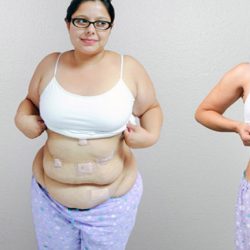
Assessing weight control practices after bariatric surgery can influence weight loss after surgery: A Study
Assessing certain weight control practices and eating behaviors after bariatric surgery can significantly influence the amount of weight loss after surgery, according to a study published online by JAMA Surgery. It is important to identify variables that are associated with, or predictive of, successful weight loss outcomes to better evaluate potential risks and benefits to … [Read more...]

Chemical exposure could lead to obesity: University of Georgia Study
Exposure to chemicals found in everyday products could affect the amount of fat stored in the body, according to a study by University of Georgia researchers. Phthalates are chemicals found in everything from plastic products to soap to nail polish -- they give plastic its bendy stretch. But growing research shows that these chemicals could be harming people's health, said … [Read more...]

Approach to combat obesity in those prone to weight gain: A Belgian Study
For the first time scientists have kick-started the natural process by which genetically predisposed obese mice gain weight, opening up a new potential approach to fight off obesity. The study that was presented today at The International Liver CongressTM in Barcelona, Spain suggests that impaired brown adipose tissue (BAT), otherwise known as 'brown fat', drives obesity, and … [Read more...]

Non-obese patients with a large waist circumference are at risk of non-alcoholic fatty liver disease: An Italian Study
A new study presented today demonstrates that a build-up of fat around the waist can cause more serious complications than obesity in the development of non-alcoholic fatty liver disease (NAFLD). The study was presented at The International Liver CongressTM 2016 in Barcelona, Spain. NAFLD is a condition in which fat builds up in the liver. In some cases this accumulation of … [Read more...]

Obese people can maintain stable weight loss: University of Copenhagen Study
Maintaining a stable weight loss is the biggest struggle for obese individuals, yet new research from University of Copenhagen have allowed researchers new insights into the complex processes involved in obesity and especially weight loss in obesity. It is now possible to offer overweight people a clearer understanding of how to sustain weight loss. "This study shows that if … [Read more...]

Healthy obesity: University of Vienna Study
Up to one-quarter of individuals currently labeled as obese are actually metabolically healthy and do not have a high risk of developing type 2 diabetes. Though obesity is a major risk factor for diabetes, the two conditions aren't always linked. A study published by Cell Press July 3rd in the journal Cell sheds light on a possible explanation, revealing that high levels of a … [Read more...]

Less exercise not more calories reason for expanding waistlines: A Study
Sedentary lifestyle and not caloric intake may be to blame for increased obesity in the US, according to a new analysis of data from the National Health and Nutrition Examination Survey (NHANES). A study published in The American Journal of Medicine reveals that in the past 20 years there has been a sharp decrease in physical exercise and an increase in average body mass index … [Read more...]

Women with higher BMI are less attractive: University of Surrey Study
Research published in the journal Economics and Human Biology has described the relationship between attractiveness, BMI and gender, showing that while women are both the harshest judges of weight in relation to beauty, they are also judged negatively by both men and women for being overweight. When these findings are applied to trends in wages, there is evidence that … [Read more...]

Excess weight linked to brain changes that may relate to memory, emotions, and appetite: A Study
Being overweight appears related to reduced levels of a molecule that reflects brain cell health in the hippocampus, a part of the brain involved in memory, learning, and emotions, and likely also involved in appetite control, according to a study performed by researchers at SUNY Downstate Medical Center and other institutions. The results of the study were published in … [Read more...]

Process that affects fat distribution, metabolic syndrome found: A Study
Building upon their earlier research on the biology of fat metabolism, Joslin scientists discovered that microRNAs -small RNA molecules that play important roles in regulation in many types of tissue -- play a major role in the distribution and determination of fat cells and whole body metabolism. Also, the study is the first to reveal that microRNAs (miRNAs) influence the … [Read more...]

Roux-en-Y gastric bypass surgery may reduce heart disease risk for obese patients with type 2 diabetes: A Study
Obese patients with Type 2 diabetes who don't have excessive surgical risk may find that Roux-en-Y gastric bypass (RYGB) surgery can help them reduce their risk of heart disease, a new clinical trial shows. "There is emerging evidence highlighting the potential health benefits of bariatric surgery in managing obese patients with Type 2 diabetes. In the past, lifestyle advice … [Read more...]

Sleep, mood improves after substantial weight loss: A Study
Obese adults who lose at least 5 percent of their body weight report that they sleep better and longer after six months of weight loss, according to a new study. "This study confirms several studies reporting that weight loss is associated with increased sleep duration," said the study's lead investigator, Nasreen Alfaris, MD, MPH, a fellow in the Department of Medicine at … [Read more...]

BMI measurement may be missing 25 percent of children who could be considered obese: A Study
Physicians using body mass index (BMI) to diagnose children as obese may be missing 25 percent of kids who have excess body fat despite a normal BMI, which can be a serious concern for long-term health, according to a Mayo Clinic study published online in Pediatric Obesity. The researchers found that BMI has high specificity in identifying pediatric obesity, meaning BMI … [Read more...]

Low energy sweeteners help reduce energy intake and body weight: University of Bristol Study
Use of low energy sweeteners (LES) in place of sugar, in children and adults, leads to reduced calorie intake and body weight -- and possibly also when comparing LES beverages to water -- according to a review led by researchers at the University of Bristol published in the International Journal of Obesity. For the first time, all available science was integrated into a … [Read more...]

‘Smat pill’ reduces weight in overweight and obese subjects: A Study
A new "smart pill" called Gelesis100 safely leads to greater weight loss in overweight and obese individuals compared with those who receive an active comparator/placebo capsule, while all subjects have similar diet and exercise instructions, an international multicenter study finds. Based on three-month results of the First Loss Of Weight (FLOW) study. Gelesis100 (formerly … [Read more...]
- « Previous Page
- 1
- …
- 5
- 6
- 7
- 8
- 9
- …
- 28
- Next Page »
