
In certain types of cancer, nerves and cancer cells enter an often lethal and intricate waltz where cancer cells and nerves move toward one another and eventually engage in such a way that the cancer cells enter the nerves. The findings, appearing in Nature Communications, challenge conventional wisdom about perineural invasion, which holds that cancer cells are marauders … [Read more...]

Researcher finds treatment of cancer pain: A Canadian Study
A new study led by University of Toronto researcher Dr. David Lam has discovered the trigger behind the most severe forms of cancer pain. Released in the journal Pain this month, the study points to TMPRSS2 as the culprit: a gene that is also responsible for some of the most aggressive forms of androgen-fuelled cancers. Head of Oral and Maxillofacial Surgery at the Faculty … [Read more...]

Early physical therapy for low back pain reduces costs: American Physical Therapy Association Study
A study in the scientific journal BMC Health Services Research shows that early and guideline adherent physical therapy following an initial episode of acute, nonspecific low back pain (LBP) resulted in substantially lower costs and reduced use of health care resources over a 2-year period. Physical therapist researchers John D. Childs, PT, PhD, et al analyzed 122,723 … [Read more...]
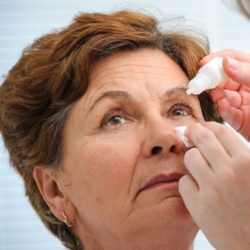
Eye drop gives hope for knifeless cataract cure, study finds
An eye drop tested on dogs suggests that cataracts, the most common cause of blindness in humans, could one day be cured without surgery, a study said Wednesday. A naturally-occurring molecule called lanosterol, administered with an eye dropper, shrank canine cataracts, a team of scientists reported in Nature. Currently the only treatment available for the debilitating … [Read more...]

In ERs, UTIs and STIs in women misdiagnosed, even mixed up nearly half the time
Urinary tract and sexually transmitted infections in women are misdiagnosed by emergency departments nearly half the time, according to a paper in the Journal of Clinical Microbiology, a publication of the American Society for Microbiology. These misdiagnoses result in overuse of antibiotics, and increased antibiotic resistance, according to Michelle Hecker, MD, an assistant … [Read more...]
Researchers discover how ovarian cancer halts body’s natural defense against tumor
Ovarian cancer shuts down immune system cells that would otherwise act as a first line of defense against the deadly tumor, Weill Cornell Medical College scientists report. But a therapy that restores the cells' disease-fighting abilities could provide a powerful new strategy to attack the cancer, which kills more than 14,000 women each year. In the June 11 issue of Cell, … [Read more...]

Milk–Pros and Cons
It used to be a no-brainer, almost everyone drank milk. Now, not so much. The reasons why are creating a healthy debate. “I would say for the most part, I am pro-milk,” Kara Trochta, MDS, RDN, LD, Registered Dietician and Nutritionist at the University of Texas, Health Science Center in San Antonio, Texas said. But Beverly Meyer, MBA, Clinical Nutritionist and Holistic … [Read more...]

Drinking beet juice regularly may lengthen your workouts
Beet juice is a dietary source of the molecule nitrate. When converted in the body, nitrate can dilate the blood vessels and increase blood flow, both important factors for exercise performance. In a new study from American Journal of Physiology-Regulatory, Integrative and Comparative Physiology, healthy male subjects who drank beet juice for 15 days had lower blood pressure … [Read more...]

New non-invasive device for diabetes patients
According to data from the 2014 National Diabetes Statistics Report, over 9.3% of the American population has diabetes, and over 8.1 million cases were undiagnosed. Patients with the disease have to watch their blood glucose levels and the traditional way was through finger pricking and test strips. But researchers at the University of Leeds, UK have developed a device that … [Read more...]

Mediterranean lifestyle may decrease cardiovascular disease by lowering blood triglycerides
Cardiovascular disease remains the No. 1 cause of death in the U.S. Evidence suggests that elevated levels of triglycerides (fats) in the blood after meals, known as postprandial lipemia (PPL), is associated with an increased risk for hardening of the arteries -- a risk factor for cardiovascular disease. Numerous population studies have associated the Mediterranean lifestyle -- … [Read more...]

Dangers and benefits of cognitive-enhancing drug use: University of Cambridge Study
The government, pharmaceutical industry, and national medical organizations need to work together to look at the harms and benefits of long-term use of cognitive-enhancing drugs by healthy individuals, say neuroscientists Professor Barbara Sahakian and Dr Sharon Morein-Zamir from the University of Cambridge in the UK, writing in a Personal View in The Lancet Psychiatry … [Read more...]

Misuse of ADHD stimulant drugs by students: University of South Carolina Study
Getting into trouble with drugs is one way to derail a promising future, and a lot more than traffickers in hard narcotics are engaging in risky behavior on university campuses. A recent literature review published by researchers at the University of South Carolina shows that one in six college students misuse common stimulant medications prescribed for attention deficit … [Read more...]

Mood and Anxiety Tourette syndrome (TS) emerge at a young age: University of California Study
A new study of Tourette syndrome (TS) led by researchers from UC San Francisco and Massachusetts General Hospital (MGH) has found that nearly 86 percent of patients who seek treatment for TS will be diagnosed with a second psychiatric disorder during their lifetimes, and that nearly 58 percent will receive two or more such diagnoses. It has long been known that TS, which … [Read more...]

Targeting nerve endings to curb allergic asthma : A Study
Current asthma medications, which work by suppressing inflammatory signaling by immune cells or by dilating the airways, can stop working over time. A study from Boston Children's Hospital, Brigham and Women's Hospital, and Harvard Medical School supports a surprising alternative approach to controlling asthma: targeting certain sensory nerve endings in the lungs that help … [Read more...]

Biphasic allergic reactions in children: Children’s Hospital of Eastern Ontario Research Institute Study
Children are more likely to have a repeat, delayed anaphylactic reaction from the same allergic cause, depending on the severity of the initial reaction. The first pediatric study to look at the predictors for this phenomenon was published today in Annals of Allergy, Asthma & Immunology. Anaphylaxis is a severe, allergic reaction that is rapid in onset and can result in … [Read more...]
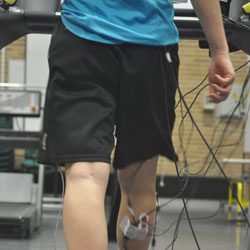
Effects of unstable shoes with curved soles on trunk muscles and lumbar lordosis: A Spanish Study
The study shows that the unstable shoes -- compared to normal shoes -- improve trunk muscle activity in order to maintain balance, which in turn favours spine stability and can help reduce low back pain. The research project, led by researchers at the University CEU Cardenal Herrera in cooperation with the University of Valencia, has been accepted for publication in the … [Read more...]

Treatment factors associated with oral cavity cancer survival: A Study
The surgical procedure known as neck dissection to remove lymph nodes and receiving treatment at academic or research institutions was associated with improved survival in patients with stages I and II oral cavity squamous cell cancer (OCSCC), according to a report published online by JAMA Otolaryngology-Head & Neck Surgery. There were about 28,000 cases of OCSCC in the … [Read more...]

Opioid epidemic and its impact on orthopaedic care: American Academy of Orthopaedic Surgeons Study
The United States makes up less than five percent of the world's population but consumes 80 percent of the global opioid supply and approximately 99 percent of all hydrocodone--the most commonly prescribed opioid in the world. And, according to the authors of a new literature review in the May issue of The Journal of the American Academy of Orthopaedic Surgeons, orthopaedic … [Read more...]

Solar events unlikely to trigger birth defects on Earth: University of Kansas Study
Studies find airplane crews at high altitude are exposed to potentially harmful levels of radiation from cosmic rays. "Neutrons which don't reach the ground do reach airline altitude," said Adrian Melott, professor of physics and astronomy at the University of Kansas. "Flight crews get a lot more radiation dose from neutrons. In fact, during solar particle events, airplanes are … [Read more...]

Teen birth, mental health lead child hospitalizations in Texas: University of Texas Study
From 2004 to 2010 in Texas, mental illness was the most common reason for the hospitalization of children ages 10-14 while pregnancy/birth was the most common reason for the hospitalization of adolescents ages 15-17, according to researchers at The University of Texas Health Science Center at Houston (UTHealth) Medical School. The results were published in the July issue of … [Read more...]

Recent kidney policy changes have not created racial disparities in care: American Society of Nephrology Study
Recent policy and guideline changes related to the care of patients with kidney failure have not created racial disparities, according to a study appearing in an upcoming issue of the Journal of the American Society of Nephrology (JASN). Such studies are needed to ensure that all patients continue to receive the highest quality of care after such changes are implemented. In … [Read more...]

New One-minute point-of-care test for Anemia: Georgia Institute of Technology Study
A simple point-of-care testing device for anemia could provide more rapid diagnosis of the common blood disorder and allow inexpensive at-home self-monitoring of persons with chronic forms of the disease. The disposable self-testing device analyzes a single droplet of blood using a chemical reagent that produces visible color changes corresponding to different levels of … [Read more...]

Scientists finds cause of allergic asthma: A German Study
Discovery improves understanding of the cause of allergic asthma and may serve as an early diagnostic marker. When the mucosal surfaces in the lungs of healthy people come into contact with allergenic substances, so-called regulatory T cells also known as Treg cells, are activated. These are capable of actively preventing the development of allergies. However, if these … [Read more...]

Treatment for Mysterious and growing allergic reaction: A Ohio State University Study
Its name is daunting. It's the hottest topic among allergy experts. It's showing up more and doctors don't yet know why. Allergy specialists at The Ohio State University Wexner Medical Center are seeing more people with eosinophilic esophagitis (EoE), an inflammatory response in the esophagus that makes it hard to swallow food. "It's considered a newer medical diagnosis, … [Read more...]

Treatment for Child’s stomachache: A Study
At some point, virtually every child gets a stomachache. Fortunately, it's usually short-lived and not cause for concern. But what happens when a child's stomach troubles -- including pain and constipation or diarrhea -- don't go away? Harry Cynamon, MD, a pediatric gastroenterologist at Children's Hospital Los Angeles (CHLA), talks about the elusive nature of irritable … [Read more...]

Japanese mushroom extract cures HPV: University of Texas Study
A Japanese mushroom extract appears to be effective for the eradication of human papillomavirus (HPV), according to a pilot clinical trial at The University of Texas Health Science Center at Houston (UTHealth) Medical School. The results were presented at the 11th International Conference of the Society for Integrative Oncology in Houston today by principal investigator … [Read more...]

Tea and citrus products could lower ovarian cancer risk: University of East Anglia Study
Tea and citrus fruits and juices are associated with a lower risk of developing ovarian cancer, according to new research from the University of East Anglia (UEA). The research reveals that women who consume foods containing flavonols and flavanones (both subclasses of dietary flavonoids) significantly decrease their risk of developing epithelial ovarian cancer, the … [Read more...]

Neuroscientist finds treatment for Alzheimer’s disease: Florida Atlantic University Study
Every 67 seconds someone is the United States develops Alzheimer's disease or some form of dementia. It's the sixth leading cause of death in the U.S. and it's the only cause of death in the top 10 in America that cannot be prevented, cured or slowed. This month, as the nation observes "Alzheimer's & Brain Awareness Month," James E. Galvin, M.D., M.P.H., one of the most … [Read more...]

Stimulation may help prevent apathy for persons with dementia: A Study
Nursing home residents with dementia are less likely to be apathetic if they live in an appropriately stimulating environment, according to nursing researchers. Nearly half of all residents in nursing homes have dementia, according to a 2013 report by the Centers for Disease Control. Apathy is one of the most common neurobehavioral symptoms in dementia, with about 90 percent of … [Read more...]

New solutions to fight pediatric asthma: University of California Study
Low flu vaccination rates, medication compliance and limited access to primary care providers have contributed to the high pediatric asthma rates in California, say UC Davis pediatricians Ulfat Shaikh and Robert Byrd, who have published an extensive study describing the challenges faced by children with asthma in California. Analyzing data from the 2011-12 California Health … [Read more...]
- « Previous Page
- 1
- …
- 134
- 135
- 136
- 137
- 138
- …
- 429
- Next Page »