
If you’re one of the 80 million people who own a dog in America, all the fun you have with your pet could be dangerous. You may not love playing fetch with a ball or toy as much as your dog does, but that time spent together may spell more than just good exercise. It may sound funny, but injuring your hand or wrist is anything but. Tom Demas was teaching his dog, scout, how … [Read more...]

Food industry can help lower cardiovascular diseases by adding little seaweed to products
Adding seaweed to processed foods such as frozen pizzas, hot dogs and dried pasta will reduce cardiovascular diseases, concludes a new scientific article. One suggestion is to replace 5% of the flour in pizza dough with dried and granulated seaweed. According to the World Health Organization (WHO) cardiovascular diseases are the number one cause of premature death … [Read more...]

Taking blood pressure drugs at bedtime lowers diabetes risk: A Study
New research published in Diabetologia (the journal of the European Association for the Study of Diabetes) shows that taking blood pressure medications at bedtime, rather than in the morning, reduces blood pressure (BP) whilst asleep and also halves the risk of developing type 2 diabetes. The research, published in two separate papers, is by Dr Ramón Hermida and colleagues from … [Read more...]

Investigation questions expert advice underpinning new US dietary guidelines
The expert report underpinning the latest dietary guidelines for Americans fails to reflect much relevant scientific literature in its reviews of crucial topics and therefore risks giving a misleading picture, an investigation by The BMJ has found. Concern about the report has prompted the US Congress to schedule a hearing on the guidelines in October, when two cabinet … [Read more...]

Stillbirth may be associated with both severely restricted and excessive fetal growth: A Study
When several factors are accounted for, stillbirth may be associated with both severely restricted and excessive fetal growth, according to a study by US researchers published in this week's PLOS Medicine. Radek Bukowski and colleagues from the NICHD Stillbirth Collaborative Research Network investigated the fetal growth abnormalities associated with stillbirth using a new … [Read more...]

Community-based weight loss program aids diabetes management: A University of California Study
Weight loss and control of blood sugar can reduce the risk of complications in patients with diabetes but this is difficult for many to achieve. A University of California, San Diego School of Medicine randomized controlled trial of obese adults with type 2 diabetes suggests that participants enrolled in a community-based structured weight loss program are able to shed more … [Read more...]

Cosmetic outcomes after breast-conserving therapy may vary by race: A Study
As perceived by both patients and doctors, the cosmetic results after "lumpectomy" for breast cancer differ for African-American versus Caucasian women, suggests a pilot study in the Plastic and Reconstructive Surgery -- Global Open®, the official open-access medical journal of the American Society of Plastic Surgeons (ASPS). Despite similar results on objective assessments, … [Read more...]

Comprehensive, nonsurgical treatment improves pelvic floor dysfunction in women: American Urogynecologic Society Study
One in three women suffer from pelvic floor dysfunction (PFD), a range of symptoms which include bladder and bowel problems as well as pelvic pain, according to the American Urogynecologic Society. Now, University of Missouri researchers have demonstrated that a comprehensive, nonsurgical treatment significantly improves symptoms in women with PFD. "Pelvic floor … [Read more...]

Dance and virtual reality: A promising treatment for urinary incontinence in elderly women: A Canadian Study
Virtual reality, dance and fun are not the first things that come to mind when we think of treating urinary incontinence in senior women. However, these concepts were the foundations of a promising study by Dr. Chantal Dumoulin, PhD, Canada Research Chair in Urogynaecological Health and Aging, a researcher at the Institut universitaire de gériatrie de Montréal, and an associate … [Read more...]
Breast cancer cells disguise themselves as neurons to cause brain tumors: A Study
Treatment and "cure" of breast cancer doesn't ensure that the disease won't spread to the brain. Too often, sometimes years after an initial diagnosis and remission, breast cancer cells are discovered growing as new tumors within the brain. Now City of Hope researchers have found how this happens. Breast cancer cells masquerade as neurons, allowing them to hide from the … [Read more...]

Cervical, vaginal cancer higher in women previously treated for pre-cancerous cells on cervix: A Swedish Study
Women previously treated for abnormal cells on the cervix (CIN3 or cervical intraepithelial neoplasia grade 3) are at an increased risk of developing and dying from cervical or vaginal cancer compared with the general female population and this risk accelerates above age 60, a paper published today suggests. Cytology screening to prevent cervical cancer is a … [Read more...]

Drug holidays from popular osteoporosis treatments: Loyola University Study
Doctors commonly recommend drug holidays, or breaks, from certain osteoporosis drugs due to the risks associated with these treatments. Yet little has been known about the ideal duration of the holidays and how best to manage patients during this time. This popular class of medications, known as bisphosphonates, has been shown to cause fractures in the thigh bones and tissue … [Read more...]

Treating chronic kidney disease using clay minerals: A German Study
Clay has healing powers. This natural product is destined to help treat chronic kidney disease: a well-tolerated agent based on clay minerals lowers patients' excessive phosphate levels. Miss M. spends around 15 hours a week in hospital. Her renal functions are limited, and her kidneys are no longer able to filter toxins from her blood. She is a dialysis patient, forced to … [Read more...]

Glaucoma drug helps women with blinding disorder linked to obesity: A Study
An inexpensive glaucoma drug, when added to a weight loss plan, can improve vision for women with a disorder called idiopathic intracranial hypertension (IIH), according to a study funded by the National Institutes of Health. IIH, also called pseudotumor cerebri, predominantly affects overweight women of reproductive age. An estimated 100,000 Americans have it, and the … [Read more...]

Dealing with urinary incontinence: University of Hong Kong Study
A recent study showed that prompted voiding is an effective measure for managing the problem of urinary incontinence and a behavioral strategy that can be implemented in nursing homes, both to deal with the problem and to change the attitudes of elderly residents and caregivers towards urinary incontinence. With a donation of HK$1.26 million from The Hong Kong Jockey Club … [Read more...]

Promising new biomarkers linked to early diagnosis of breast cancer: A Study
Two new papers in the "Advancing Women's Health" issue of Clinical Chemistry, the journal of AACC, show for the first time that measuring the amount of certain protein fragments and microRNAs in a woman's blood and breast tissue might enable the early diagnosis of breast cancer or prediction of its metastasis, respectively. Cancer is the second leading cause of death in both … [Read more...]

Researchers link protein with breast cancer’s spread to brain: University of Wisconsin-Madison Study
A cancer-research team at the University of Wisconsin-Madison has identified a protein that may be a major culprit when breast cancer metastasizes to the brain. Brain metastasis is a terrifying complication of advanced breast cancer, with a grim prognosis and few treatment options. The cancer's spread to the brain is often undetected until patients start to develop symptoms … [Read more...]

Biomaterials get stem cells to commit to bony future: University of California Study
With the help of biomimetic matrices, a research team led by bioengineers at the University of California, San Diego has discovered exactly how calcium phosphate can coax stem cells to become bone-building cells. This work is published in the Proceedings of the National Academy of Sciences the week of Jan. 6, 2014. UC San Diego Jacobs School of Engineering professor Shyni … [Read more...]
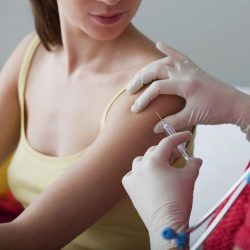
On-demand vaccines possible with engineered nanoparticles: A Study
Vaccines combat diseases and protect populations from outbreaks, but the life-saving technology leaves room for improvement. Vaccines usually are made en masse in centralized locations far removed from where they will be used. They are expensive to ship and keep refrigerated and they tend to have short shelf lives. University of Washington engineers hope a new type of … [Read more...]

Angelina Jolie effect has led to increased uptake of double mastectomies: A Study
Researchers at a breast cancer prevention clinic in Manchester, UK, have observed an increased uptake of preventative double mastectomies since May 2013, when Angelina Jolie announced that she had undergone the procedure. In a Letter to the Editor, published in the open access journal Breast Cancer Research, researchers from the Genesis Prevention Centre Family History … [Read more...]
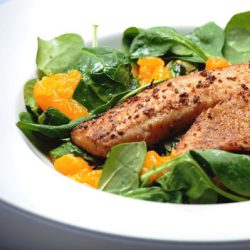
New diet for treating patients with drug resistant epilepsy: University of Royal Holloway London Study
Scientists from Royal Holloway, University of London and UCL have identified how a specific diet can be used to help treat patients with uncontrolled epilepsy. The findings, which reveal how the ketogenic diet acts to block seizures in patients with drug-resistant epilepsy, are published in the journal Brain. Epilepsy affects over 50 million people worldwide and … [Read more...]

New hope in the fight against cardiovascular disease: Australian Study
New hope in the fight against cardiovascular disease has arrived, following breakthrough research identifying a pigment in our bile which could protect us. A fluid produced by the liver and stored in the gallbladder, bile's function is to aid the digestion process. Now Dr Andrew Bulmer from Griffith University's Menzies Health Institute Queensland (MHIQ) has found that … [Read more...]

Plant sterols can be used as a natural alternative for pregnant women with high cholesterol: University at Buffalo Study
When it comes to effective solutions for lowering cholesterol levels in pregnant women, Mother Nature may know best. Researchers at the University at Buffalo are studying whether plant sterols can be used as a natural alternative to drug therapy in expectant mothers who have high cholesterol. While it's normal for a woman's cholesterol to spike during pregnancy, excessive … [Read more...]

Antibody-drug compounds and immunotherapy to treat breast cancer: A Swiss Study
To more efficiently treat breast cancer, scientists have been researching molecules that selectively bind to cancer cells and deliver a substance that can kill the tumor cells, for several years. Researchers from the University and University Hospital Basel have now for the first time successfully combined such an antibody-drug conjugate with a therapy that stimulates the … [Read more...]

Key milestone for brown fat research: University of Warwick Study
The first MRI scan to show 'brown fat' in a living adult could prove to be an essential step towards a new wave of therapies to aid the fight against diabetes and obesity. Researchers from Warwick Medical School and University Hospitals Coventry and Warwickshire NHS Trust used a magnetic resonance imaging (MRI) based method to identify and confirm the presence of brown … [Read more...]

Fish consumption advisories for expecting mothers fail to cover all types of contaminants: University of Toronto Study
A new study suggests that fish consumption advisories for expecting mothers are ineffective in reducing infant exposure to long-lived contaminants like persistent organic pollutants (POPs). The study, performed by a team of researchers including University of Toronto Scarborough PhD student Matt Binnington and Professor Frank Wania, looks at how different levels of … [Read more...]

Weight gain in children occurs after tonsil removal: A Study
Weight gain in children after they have their tonsils removed (adenotonsillectomy) occurs primarily in children who are smaller and younger at the time of the surgery, and weight gain was not linked with increased rates of obesity. About 500,000 children in the United States have their tonsils removed each year. The childhood obesity rate prompted reevaluation of the … [Read more...]

Prenatal risk factors may put children at risk of developing kidney disease: A Study
Certain prenatal risk factors are associated with the development of chronic kidney disease in children, according to a study appearing in an upcoming issue of the Journal of the American Society of Nephrology (JASN). Future studies should investigate whether modifying these factors could help protect children's kidney health. Risks for certain types of kidney disease may … [Read more...]

Risk of colorectal cancer from eating processed meat: University of Southern California study
A common genetic variant that affects one in three people appears to significantly increase the risk of colorectal cancer from the consumption of processed meat, according to study published today in PLOS Genetics. The study of over 18,000 people from the U.S., Canada, Australia and Europe represents the first large-scale genome-wide analysis of genetic variants and dietary … [Read more...]

Mom’s diet mirrors child’s food allergies: University of Manchester Study
A long-term study evaluating maternal diet's impact on food allergy in later life is expected to uncover causes of allergy in children. About 20 million Europeans are subject to food allergies. Now scientists are looking at these allergies in new ways. It involves the food industry in its work and pays special attention to the link between early diets and allergy in later … [Read more...]
- « Previous Page
- 1
- …
- 95
- 96
- 97
- 98
- 99
- …
- 429
- Next Page »