
Firefighters face many risks during their jobs, but, ironically, the most dangerous part of running into a burning building isn’t the flames, it’s the smoke. It billows off furniture, appliances and carpets in toxic waves of cancer-causing fumes. That’s how about 60 percent of career firefighters will die, according to the international association of fire fighters. Cancer has … [Read more...]
Cancer


Study contradicts belief that cancer protects against Alzheimer’s
Despite studies that claim people with cancer are less likely to develop Alzheimer's disease--raising the possibility that what triggers cancer also prevents the neurodegenerative disorder--a new investigation finds a more somber explanation. Many cancer patients don't live long enough to get Alzheimer's. The research, led by investigators at Huntsman Cancer Institute at the … [Read more...]

Lifestyle choices may affect long-term heart health of childhood cancer survivors: A Study
A new study has found that following a healthy lifestyle may lower childhood cancer survivors' risk of developing the metabolic syndrome. Published early online in CANCER, a peer-reviewed journal of the American Cancer Society, the findings indicate that children with cancer and adults who had cancer when they were children should receive information about how their lifestyle … [Read more...]

Gut microbes turn carbs into colorectal cancer: University of Toronto Study
Colorectal cancer has been linked to carbohydrate-rich western diets, but the underlying mechanisms have been unclear. A study published by Cell Press July 17th in the journal Cell shows that gut microbes metabolize carbohydrates in the diet, causing intestinal cells to proliferate and form tumors in mice that are genetically predisposed to colorectal cancer. Treatment with … [Read more...]
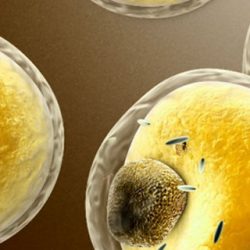
Brown fat found to be at the root of cancer-related wasting syndrome: A Spanish Study
Many patients with advanced stages of cancer, AIDS, tuberculosis, and other diseases die from a condition called cachexia, which is characterized as a "wasting" syndrome that causes extreme thinness with muscle weakness. Cachexia is the direct cause of roughly 20% of deaths in cancer patients. While boosting food intake doesn't help, and no effective therapies are available, … [Read more...]

Black raspberry candies find the sweet spot for cancer prevention: Ohio State University Study
Whether it's a plate or pyramid, healthy eating guidelines always give fruits and vegetables center stage -- and for good reason: they contain critical nutrients that the human body needs and that experts think may help prevent illnesses like cancer, diabetes and heart disease. The research around these "superfoods" make headlines almost daily, but scientists say using … [Read more...]

Aspirin use may help prevent bile duct cancer: A Study
A team of current and former Mayo Clinic researchers has discovered that aspirin use is associated with a significantly reduced risk of developing bile duct cancer, also called cholangiocarcinoma. The results are published in Hepatology. "Our study found that individuals who took aspirin had a more than a two-and-a-half to three-and-a-half-fold lesser chance of developing … [Read more...]

Antibody halts cancer-related wasting condition: A Study
New research raises the prospect of more effective treatments for cachexia, a profound wasting of fat and muscle occurring in about half of all cancer patients, raising their risk of death, according to scientists from Dana-Farber Cancer Institute. Many strategies have been tried to reverse the condition, which may cause such frailty that patients can't endure potentially … [Read more...]

Taking aspirin could increase cancer survival: Cardiff University Study
Patients receiving cancer treatment could increase their chance of survival by up to 20% and help stop their cancer from spreading by taking a low-dose of aspirin, new research suggests. In a systematic review of the available scientific literature a team from Cardiff University's School of Medicine found a significant reduction in mortality and cancer spread by patients who … [Read more...]

Cholesterol-lowering drug molecule has prostate cancer fighting capabilities: University of Missouri Study
Standard treatment for prostate cancer can include chemotherapy that targets receptors on cancer cells. However, drug-resistant cancer cells can emerge during chemotherapy, limiting its effectiveness as a cancer-fighting agent. Researchers at the University of Missouri have proven that a compound initially developed as a cholesterol-fighting molecule not only halts the … [Read more...]

Blue-green algae may cure cancer: Oregon State University Study
Could a slippery glob of algae hold the key to the next anti-cancer drug? According to new research into a compound produced by a unique community of blue-green algae, the answer could be yes. The compound in question is called coibamide A, discovered eight years ago by scuba-diving scientist Kerry McPhail, Ph.D., of Oregon State University. A new study shows coibamide A has … [Read more...]

Bubble technology invented that can shoot drugs deep into tumors
Scientists at Nanyang Technological University (NTU Singapore) have invented a new way to deliver cancer drugs deep into tumour cells. The NTU scientists create micro-sized gas bubbles coated with cancer drug particles and iron oxide nanoparticles, and then use magnets to direct these bubbles to gather around a specific tumour. Ultrasound is then used to vibrate the … [Read more...]

Obesity and kidney cancer linked: University of Texas Study
Receptors for leptin, a protein hormone, may be associated with tumor recurrence in patients with renal cell carcinoma (RCC), providing further understanding about molecular links between obesity and RCC tumor formation and prognosis, according to a study at The University of Texas MD Anderson Cancer Center. The findings are being presented April 18 at the annual meeting of … [Read more...]
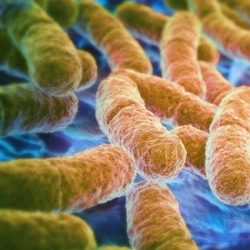
Gut bacteria could help prevent cancer: University of California Study
Researchers have shown that various types of intestinal bacteria might be factors in both causing and preventing obesity, and in other conditions and diseases. Now, a UCLA study suggests that it could also potentially be used to reduce the risk for some types of cancer. The research, published online April 13 in the peer-reviewed journal PLOS ONE, offers evidence that … [Read more...]

Antioxidants in antidiabetic drugs can cause cancer: A Study
Yet another study exposes antioxidants' potential to fuel the spread of cancer--this time for antioxidants found in a specific type of antidiabetic medication. Researchers working in mice with cancer now find that some of these drugs can spur the metastasis of existing tumors, including colon and liver cancer. If borne out in humans, the findings caution against giving this … [Read more...]

Lower-carb diet slows growth of aggressive brain tumor: University of Florida Study
University of Florida Health researchers have slowed a notoriously aggressive type of brain tumor in mouse models by using a low-carbohydrate diet. A high-fat, low-carbohydrate diet that included a coconut oil derivative helped reduce the growth of glioblastoma tumor cells and extended lifespan in mouse models by 50 percent, researchers found. The results were published … [Read more...]

Higher levels of vitamin D linked to lower cancer risk: University of California Study
Researchers at University of California, San Diego School of Medicine report that higher levels of vitamin D -- specifically serum 25-hydroxyvitamin D -- are associated with a correspondingly reduced risk of cancer. The findings are published in the April 6, online issue of PLOS ONE. "We have quantitated the ability of adequate amounts of vitamin D to prevent all types of … [Read more...]

Exercise protects against cancer: University of Copenhagen Study
When you're pounding along an icy pavement or sweating through a gym workout, you try to remind yourself of the many health benefits of exercise. Between gasps, you can say that a healthy, fit lifestyle helps prevents obesity, a worldwide problem of increasing magnitude that has been linked to cardiovascular disease and diabetes. But here's one more -- exercise may decrease … [Read more...]

New Test for Brain Tumors
Every year in the United States as many as 15,000 people are diagnosed with glioblastoma, the most aggressive kind of brain cancer. Many patients don’t survive more than a year after diagnosis. A new test can help doctors pinpoint what is driving the tumor and better target their treatment early on. Fifty-one-year-old Christopher Keim is a husband, dad and hockey coach. He … [Read more...]

‘Bad cholesterol’ and growth of tumors linked: University of Alberta Study
Several studies have recognized a link between obesity and cancer. Richard Lehner, professor of Pediatrics and investigator at the University of Alberta's Faculty of Medicine & Dentistry, has taken his research further to understand how tumour cells grow through scavenging very low-density lipoproteins (VLDL) and low-density lipoproteins (LDL), commonly known as the "bad … [Read more...]

Chinese medicinal plant anti-cancer compound found: A Chinese Study
New research led by Professor Cathie Martin of the John Innes Centre has revealed how a plant used in traditional Chinese medicine produces compounds which may help to treat cancer and liver diseases. The Chinese skullcap, Scutellaria baicalensis -- otherwise known in medicine as Huang-Qin -- is traditionally used as a treatment for fever, liver and lung … [Read more...]

Bad night’s sleep might worsen cancer development: A Spanish Study
Recent studies have indicated that patients with sleep apnea may be associated with worse cancer outcomes. Now a new animal study, presented at the European Association of Urology Congress in Munich, uncovers a possible mechanism which may underlie this link. Hypoxia is where a tissue or organ does not get enough oxygen. It is one of the consequences of sleep apnea, which is … [Read more...]
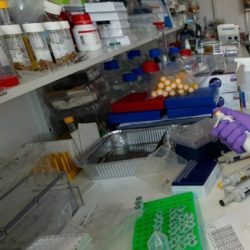
Pathway of protein that helps cancer cells survive discovered: Case Western Reserve University Study
A team of researchers from Case Western Reserve School of Medicine has discovered how the cancer-related protein Bcl-2 signals cancer cells to live longer. The breakthrough emerged when the scientists discovered that Bcl-2 alters the level of calcium ions in lymphoma and leukemia cells that are resistant to cancer treatments. Published in the journal Proceedings of the National … [Read more...]
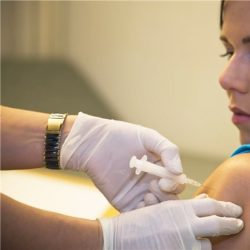
Skin tumor vaccine shows promise: A German Study
Papillomaviruses (linked to cervical cancer when they infect the mucosal tissue in the female reproductive tract) can also infect normal skin, where they cause warts and possibly non-melanoma skin cancer, mostly in immune-suppressed organ transplant patients. An article published in PLOS Pathogens suggests that vaccination might prevent virus-associated benign and malignant … [Read more...]
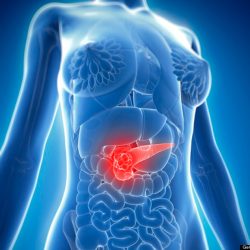
Pancreatic cancers could be prevented by lifestyle changes: A British Study
Almost 40 per cent of pancreatic cancers -- one of the deadliest forms of cancer -- could be avoided in the UK through maintaining a healthy weight and not smoking according to Cancer Research UK, in a call to arms against the disease. Every year 8,800 people are diagnosed with the disease in the UK but survival rates remain very low, with only three per cent of people … [Read more...]

Moderate hormone suppression may be enough in thyroid cancer: University of Colorado Study
A study of long-term thyroid cancer outcomes shows, among other findings, that moderate suppression of thyroid-stimulating hormone (TSH), which drives the disease, may be as beneficial as more extreme hormone suppression. Extreme TSH suppression is associated with increased side effects including osteoporosis and heart rhythm irregularities. Results are published online ahead … [Read more...]

Vitamin D provides relief for those with chronic hives: University of Nebraska Study
A study by researchers at the University of Nebraska Medical Center shows vitamin D as an add-on therapy could provide some relief for chronic hives, a condition with no cure and few treatment options. An allergic skin condition, chronic hives create red, itchy welts on the skin and sometimes swelling. They can occur daily and last longer than six weeks, even years. Jill … [Read more...]

Review, view of future in cancer in adolescents, young adults
A narrative review published online by JAMA Pediatrics examines the current status of cancer in adolescents and young adults and offers a view of the future. The article by Ronald D. Barr, M.B., Ch.B., M.D., of McMaster University, Ontario, Canada, and coauthors discusses incidence and survival, distribution and biology of disease, special challenges, the price of success, … [Read more...]

Herpes Virus Fights Cancer?
The FDA says about 74,000 Americans were diagnosed with melanoma, a type of skin cancer. Last year, nearly 10,000 of them died of it. Now, researchers have a new weapon in their arsenal; one that comes from a genetically-altered herpes virus. Here’s more about the first cancer-killing viral therapy ever approved in the U.S. Larry Hegland can tell you exactly how long it’s … [Read more...]

Chronic fatigue syndrome: Inherited virus can cause cognitive dysfunction and fatigue: University of South Florida Study
Many experts believe that chronic fatigue syndrome (CFS) has several root causes including some viruses. Now, lead scientists Shara Pantry, Maria Medveczky and Peter Medveczky of the University of South Florida's Morsani College of Medicine, along with the help of several collaborating scientists and clinicians, have published an article in the Journal of Medical Virology … [Read more...]
- « Previous Page
- 1
- …
- 3
- 4
- 5
- 6
- 7
- …
- 38
- Next Page »
