
Scientists have unearthed still more evidence that antibiotics can contribute to obesity. Research published ahead of print in the journal Antimicrobial Agents and Chemotherapy suggests that patients on long-term antibiotic treatment gained weight and had significant changes in their gut microbiota. The study, led by Didier Raoult, of Aix-Marseille University, Marseille, … [Read more...]
Weight Management


Obesity: Are lipids hard drugs for the brain?: A Study
Why can we get up for a piece of chocolate, but never because we fancy a carrot? Serge Luquet's team at the "Biologie Fonctionnelle et Adaptative" laboratory (CNRS/Université Paris Diderot) has demonstrated part of the answer: triglycerides, fatty substances from food, may act in our brains directly on the reward circuit, the same circuit that is involved in drug addiction. … [Read more...]

Obesity spells problems for trauma patients: American Academy of Orthopaedic Surgeons Study
A new study appearing in the November 18 issue of the Journal of Bone & Joint Surgery (JBJS) found a link between obesity and a higher risk for surgery in orthopaedic trauma patients. In addition, researchers found that patients with obesity had longer hospital stays and greater treatment costs. They were also more likely to be discharged to a care facility, rather than to … [Read more...]
Weight-loss surgery reduces sugar cravings: A Study
Weight loss surgery curbs the sweet tooth by acting on the brain's reward system, according to a study published November 19 in Cell Metabolism. The researchers found that gastrointestinal bypass surgery, which is used to treat morbid obesity and diabetes, reduced sugar-seeking behavior in mice by reducing the release of a reward chemical called dopamine in the brain. The … [Read more...]
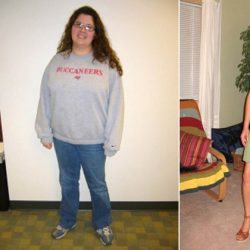
Children born to women after bariatric surgery at higher risk of obesity and diabetes: American Physiological Society Study
Studies show that weight-loss surgery can boost fertility in women and reduce the risk of pregnancy complications that commonly occur in obese women, such as gestational diabetes and preeclampsia. While weight loss surgery improves the metabolic health of mothers, new findings to be presented at Cardiovascular, Renal and Metabolic Diseases: Physiology and Gender support that … [Read more...]

Food Order Sheds Pounds
If you are trying to control your blood sugar and ultimately shed pounds, new research shows you should pass the bread basket at the end of the meal-not before. It has been a tough battle, but 52-year-old Michael Vetter is finally winning at losing. “I’ve lost 50 pounds and I’ve been able to keep that off,” Vetter told Ivanhoe. From a high of 275 pounds, to a much … [Read more...]

Approach to accelerate metabolism could lead to new obesity treatment: Israeli Study
By manipulating a biochemical process that underlies cells’ energy-burning abilities, investigators at Beth Israel Deaconess Medical Center (BIDMC) have made a novel discovery that could lead to a new therapy to combat obesity and diabetes. Published in the April 10 issue of the journal Nature, the new findings show that reducing the amount of nicotinamide … [Read more...]

Obese people feel full sooner than people of normal weight: A Swiss Study
The number of people in the world who are obese has doubled since 1980. Attempts to halt the progress of this pandemic are reliant on more accurate knowledge of how obesity occurs. This is what a research group led by Christoph Beglinger at the University Hospital in Basel aimed to find out by comparing feelings of satiation among people of normal weight and those who are … [Read more...]

Depleting the gut microbiota protects from obesity: A Swiss Study
In the past few years, research on gut microbiota (that is, all microorganisms, mainly bacteria, inhabiting our gut) has started to unravel its tremendous role in our body, and how it symbiotically affects the functioning of our organs. In particular, microbiota has also an impact on the way calories are absorbed and how fat cells develop. By studying mice without microbiota, … [Read more...]

Over a lifetime, childhood obesity costs $19,000 per child: A Singaporean Study
Childhood obesity comes with an estimated price tag of $19,000 per child when comparing lifetime medical costs to those of a normal weight child, according to an analysis led by researchers at the Duke Global Health Institute and Duke-NUS Graduate Medical School in Singapore. When multiplied by the number of obese 10-year-olds in the United States, lifetime medical costs for … [Read more...]

Parental obesity and autism risk in the child: Whether paternal obesity a greater risk factor than maternal obesity: A Norwegian Study
Several studies have looked at possible links between maternal obesity during pregnancy and the risk of developmental disorders in the child. However, paternal obesity could be a greater risk factor than maternal obesity, according to a new study from the Norwegian Institute of Public Health. As the first researcher to study the role of paternal obesity in autism, Dr. Pål … [Read more...]

Mortality risks of being overweight or obese are underestimated: University of Pennsylvania Study
New research by Andrew Stokes, a doctoral student in demography and sociology in the School of Arts and Sciences at the University of Pennsylvania, suggests that many obesity studies substantially underestimate the mortality risks associated with excess weight in the United States. His study, "Using Maximum Weight to Redefine Body Mass Index Categories in Studies of The … [Read more...]

Severe obesity on the rise among children in the U.S: University of North Carolina Study
A new study led by a University of North Carolina School of Medicine researcher finds little to cheer about in the fight against childhood obesity, despite a recent report to the contrary. The study, published online first April 7 in JAMA Pediatrics, found that all classes of obesity in U.S. children have increased over the last 14 years. Perhaps most troubling, the study … [Read more...]

Weight loss efforts start well but lapse over time: A Study
Learning you have an obesity-related disease motivates many to start a weight loss program, but troubling health news is often not enough to sustain weight loss efforts, finds new research in the American Journal of Preventive Medicine. The study evaluated mostly male Veterans Affairs (VA) patients to uncover what motivated them to join the VA behavioral weight management … [Read more...]

Child’s obesity and cognitive function linked: University of Illinois Study
A University of Illinois study finds that obese children are slower than healthy-weight children to recognize when they have made an error and correct it. The research is the first to show that weight status not only affects how quickly children react to stimuli but also impacts the level of activity that occurs in the cerebral cortex during action monitoring. "I like to … [Read more...]

A protein could be key to fight obesity: American Physiological Society Study
More than one-third of people in the US are obese. Obesity and its related health problems -- including high blood pressure, high cholesterol, diabetes, insulin resistance, and belly fat -- affect so many, yet effective treatments are very few. In a new study, Simon Musyoka Mwangi and colleagues tested whether higher levels of a certain protein help fight the weight gain and … [Read more...]

Morning rays helps in Weight Loss: A Northwestern University Study
A surprising new strategy for managing your weight? Bright morning light. A new Northwestern Medicine® study reports the timing, intensity and duration of your light exposure during the day is linked to your weight -- the first time this has been shown. People who had most of their daily exposure to even moderately bright light in the morning had a significantly lower body … [Read more...]

Brain circuits involved in cravings: Dartmouth College Study
Dartmouth researchers studying rats have discovered that activation of designer neural receptors can suppress cravings in a brain region involved in triggering those cravings. The study is the first to systematically show how designer brain receptors and designer drugs work together to change how cues for food stimulate motivation. The findings, which may help scientists to … [Read more...]

Childhood obesity linked to poverty and parenting style: Concordia University Study
In 2013, 42 million infants and young children worldwide were overweight or obese. If current trends continue, that number will increase to 70 million by 2025, according to the World Heath Organization. It's not just genes that are the cause: socio-demographic and environmental elements are also contributing factors. Lower socio-economic status, living in neighbourhoods that … [Read more...]

Low energy sweeteners help reduce energy intake and body weight: University of Bristol Study
Use of low energy sweeteners (LES) in place of sugar, in children and adults, leads to reduced calorie intake and body weight -- and possibly also when comparing LES beverages to water -- according to a review led by researchers at the University of Bristol published in the International Journal of Obesity. For the first time, all available science was integrated into a … [Read more...]

Gastric bypass for teens: Weight loss and lipid improvements sustained 8 years after surgery: A Study
Eight years after having gastric bypass surgery as teenagers, patients continue to have significant weight loss and improvement in their lipid profiles. In a study to be presented Nov. 10 at the annual American Heart Association meeting in Orlando, researchers from Cincinnati Children's Hospital Medical Center found that body mass index decreased by 32 percent. In addition, the … [Read more...]

Obese kids show signs of heart disease: American Heart Association Study
Imaging tests of obese children -- some as young as 8 years old -- showed signs of significant heart disease and heart muscle abnormalities, according to research presented at the American Heart Association's Scientific Sessions 2015. Comparing 20 obese kids with 20 normal-weight kids, researchers found that obesity was linked to 27 percent more muscle mass in the left … [Read more...]

Negative body image increases adolescent obesity risk: University of Texas Study
Negative body image significantly increases the risk of obesity regardless of whether youth have depression, according to researchers at The University of Texas Health Science Center at Houston (UTHealth) School of Public Health. "Our last study found that participants who were depressed were twice as likely to be obese six years later, implying a cause-and-effect … [Read more...]

Metabolically healthy obesity: Australian Study
Australian researchers have defined some key characteristics of the metabolically healthy obese -- those obese individuals who remain free from type 2 diabetes and other disorders that usually associate with obesity. Their findings have implications for the treatment of type 2 diabetes, insulin resistance and obesity. Two in three Australian adults are overweight or obese. … [Read more...]

Gastric balloon in a pill helps patients lose weight without surgery: A Study
```` A new gastric balloon that can be swallowed like a pill and then filled while in the stomach, helped patients lose more than 37 percent of their excess weight over four months, according to new research presented at ObesityWeek 2015, the largest international event focused on the basic science, clinical application and prevention and treatment of obesity. The … [Read more...]

Weight is significant factor in the recurrence of atrial fibrillation: A Study
Researchers have found that the recurrence of atrial fibrillation increases in patients who are overweight and decreases when patients are able to lose weight, and keep it off, following a cardiac ablation, according to two new studies. Though the outcomes of these studies seem like common sense, Jared Bunch, MD, heart-rhythm specialist and director of … [Read more...]

Eating ‘on the go’ could lead to weight gain: University of Surrey Study
In a new study published in the Journal of Health Psychology, researchers from the University of Surrey have found dieters who eat 'on the go' may increase their food intake later in the day which could lead to weight gain and obesity. The findings from the study also showed that eating while walking around triggered more overeating compared to eating during other forms of … [Read more...]

Junk food are not driving the rising obesity trend in the US: A Study
Soda, candy, and fast food are often painted as the prime culprits in the national discussion of obesity in the United States. While a diet of chocolate bars and cheese burgers washed down with a Coke is inadvisable from a nutritional standpoint, these foods are not likely to be a leading cause of obesity in the United States according to a new Cornell University Food and Brand … [Read more...]

Genes linked to brain response to foods high in fat and sugar: Obesity Society Study
For the first time, researchers have identified two genetic variants that interact to alter the brain responses to high-calorie foods, a tie that could aid in the development of targeted treatments for obesity and overweight. Researchers at Imperial College London led by Tony Goldstone, MD, PhD, of Consultant Endocrinologist, found that two gene variants -- FTO and DRD2 -- … [Read more...]

Patients most likely to have joint pain reduction after bariatric surgery: University of Pittsburgh Study
'In the three years following bariatric surgery, the majority of patients experience an improvement in pain and walking ability, according to the preliminary results of a University of Pittsburgh Graduate School of Public Health-led analysis presented today in Los Angeles at ObesityWeek, the annual international conference of the American Society for Metabolic & Bariatric … [Read more...]
- « Previous Page
- 1
- …
- 12
- 13
- 14
- 15
- 16
- …
- 28
- Next Page »
