
Common methods of assessing mental or physical disorders may consistently underestimate the prevalence of mental disorders among middle-aged and older adults, a new study from the Johns Hopkins Bloomberg School of Public Health has found. The analysis, led by postdoctoral fellow Dr. Yoichiro Takayanagi, and published in the January 8 online edition of JAMA … [Read more...]
Women Health


A cure for vitamin B6 deficiency: A Swiss Study
Plant scientists engineered the cassava plant to produce higher levels of vitamin B6 in its storage roots and leaves. This could help to protect millions of people in Africa from serious deficiencies. In many tropical countries, particularly in sub-Saharan Africa, cassava is one of the most important staple foods. People eat the starchy storage roots but also … [Read more...]

Precision injections of Botox into migraine: A Study
Researchers are using a high-precision instrument to inject toxins that alleviate migraine attacks. This means even better needle guidance and user-friendliness. It looks like a pistol in which the stock has been replaced by a long needle. The tool, called MultiGuide, has been developed by NTNU and is based on an invention made by Dr. Daniel Bratbak at St. Olav's Hospital. … [Read more...]

Being single is much more than handling just loneliness: A Study
With 51% of Britain's population registered as unmarried (ONS, 2012), half of adult Americans currently unattached (Bureau of Labor Statistics), and over half of the households in Paris, the city of love, made up by only-ones, having no significant other seems to be today's latest trend. Yet the world isn't quite the singles' oyster; when it comes to being single, society is … [Read more...]

Workplace mentors benefit female employees: University of California Study
The success of online networking sites such as LinkedIn illustrates the popularity of building a wide-ranging contact list. Yet when it comes to raising one's profile within the workplace, female employees stand much to gain from formal, face-to-face mentoring programs, according to a new study. In the paper, "Network Intervention: A Field Experiment to Assess the Effects of … [Read more...]

Social influence of online peers improvs exercise habits: University of Pennsylvania Study
Can the Web make people more fit? It's a question hot on the minds of everyone from health insurers to gym owners to public health officials. Although millions of dollars a year are being spent designing promotional ads and social media campaigns, they clearly aren't working: more than 43 percent of Americans get insufficient levels of daily exercise, and nearly a third are … [Read more...]

Emotional infidelity makes women more jealous: Norwegian study
A recent Norwegian study shows that men and women react differently to various types of infidelity. Whereas men are most jealous of sexual infidelity, so-called emotional infidelity is what makes women the most jealous. Evolutionary psychology provides an explanation for why this can be. If your partner has sex with someone else, it is considered infidelity -- even if no … [Read more...]

Behavioral disorders as risk factors for chronic pain in teenagers: A Swiss Study
One in four young people have experienced chronic pain and a mental disorder. According to a new report in the Journal of Pain, the onset of pain is often preceded by mental disorders: an above-average rate of incidence of depression, anxiety disorders, and behavioral disorders occurs before the onset of headaches, back pain and neck pain. The report is based on the findings of … [Read more...]

Varying walking pace burns more calories: Ohio State University Study
Looking for a simple way to burn more calories while walking? Change up your pace. In a study published in the September 2015 issue of the journal Biology Letters, engineering researchers at The Ohio State University found that walking at varying speeds can burn up to 20 percent more calories compared to maintaining a steady pace. The study is one of the first to measure … [Read more...]

Parkinson’s disease: Everyday activity more beneficial than occasional strenuous exercise: University of Michigan Study
New University of Michigan research finds people with Parkinson's disease may want to consider attempting to do the dishes, fold the laundry and take strolls around the neighborhood in their quest to control their symptoms. Parkinson's patients often become sedentary because of motor symptoms such as gait, balance problems or falls, said study principal … [Read more...]

Tai Chi linked to improved physical capacity among older adults: A Study
The ancient Chinese exercise Tai Chi is linked to improved physical capacity among older adults with certain common long term conditions, indicates a pooled analysis of the available evidence, published online in the British Journal of Sports Medicine. Among people with breast cancer, heart failure, osteoarthritis and chronic obstructive pulmonary disease (COPD), … [Read more...]

Face-to-face socializing more powerful than phone calls, emails in guarding against depression: Oregon Health & Science University Study
In a slight knock on digital and telephone communications, a new study points to the unsurpassed mental health benefits of regular face-to-face social interactions among older adults. Study participants who regularly met in person with family and friends were less likely to report symptoms of depression, compared with participants who emailed or spoke on the phone. … [Read more...]

Depression can lead to work disability: A Norwegian Study
In Norway, men suffering from depression are three times more likely to become work disabled than non-sufferers. This risk is only twice as great for women. Researchers at SINTEF and the Nordland and Finnmark hospitals have carried out a study published this summer in the periodical International Journal of Methods in Psychiatric Research. "We aren't sure why … [Read more...]

Compulsive texting associated with poorer school performance among adolescent girls: American Psychological Association Study
Teenage girls who compulsively text are more likely than their male counterparts to do worse academically, according to research published by the American Psychological Association. "It appears that it is the compulsive nature of texting, rather than sheer frequency, that is problematic," said lead researcher Kelly M. Lister-Landman, PhD, of Delaware County … [Read more...]

Novocure Brain Treatment for Glioblastoma
Glioblastoma is the most common brain tumor in adults, representing about 17 percent of all cases, and it is very aggressive. Now, there is technology to fight it and new hope where there wasn’t much before. The Optune device delivers low-intensity alternating electric fields to Zavier Delarosa’s brain. He told Ivanhoe, “I feel like this is actually a good thing for … [Read more...]
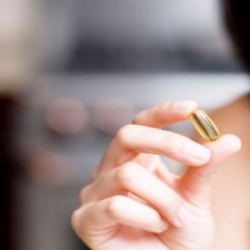
Drug made from lettuce for treating clotting: University of Pennsylvania Study
Biopharmaceuticals, or drugs that are based on whole proteins, are expensive to make and require refrigeration to store. Insulin, for example, is unaffordable and inaccessible to most of the global population. At the University of Pennsylvania School of Dental Medicine, Henry Daniell and colleagues have been working to overcome these obstacles by using a plant-based system … [Read more...]

Drug treatments to mirror the health benefits of exercise: Australian Study
Research finds around 1000 molecular reactions to exercise, opening the door for drug treatments to mirror the health benefits of exercise. Drugs that mimic the benefits of exercise could soon become a reality thanks to breakthrough research from the University of Sydney's Charles Perkins Centre. Published in Cell Metabolism, the research exposed a thousand molecular changes … [Read more...]

Spiritual awareness varies throughout the day: University of Connecticut Study
People who report having spiritual awareness have it vary throughout the day, rather than being constant, according to a study by University of Connecticut researchers. The study, which will be presented at the 110th Annual Meeting of the American Sociological Association (ASA), found that people had the highest levels of spiritual awareness in the morning and while engaged … [Read more...]

Body fat can send signals to brain, affecting stress response: University of Florida Study
The brain's effect on other parts of the body has been well established. Now, a group that includes two University of Florida Health researchers has found that it's a two-way street: Body fat can send a signal that affects the way the brain deals with stress and metabolism. While the exact nature of those signals remains a mystery, researchers say simply knowing such a … [Read more...]

High dietary sodium, potassium may worsen chronic kidney disease: American Society of Nephrology Study
High dietary intake of sodium and potassium may speed the progression of kidney disease, according to a study appearing in an upcoming issue of the Journal of the American Society of Nephrology (JASN). The findings could impact dietary recommendations to help safeguard patients' health. Chronic kidney disease (CKD) is a major public health challenge because it is common, … [Read more...]

Gen Y need to eat less and work out more: York University Study
If you are struggling with weight gain, you might be surprised to know that your parents had it easier -- they could eat more and exercise less, and still avoid obesity, according to a recent study out of York University's Faculty of Health. "Our study results suggest that if you are 25, you'd have to eat even less and exercise more than those older, to prevent gaining … [Read more...]

The movements involved in fidgeting may counteract the adverse health impacts of sitting for long periods: University of Leeds Study
New research suggests that the movements involved in fidgeting may counteract the adverse health impacts of sitting for long periods. In a study published today in the American Journal of Preventive Medicine, a team of researchers, co-led by the University of Leeds and UCL, report that an increased risk of mortality from sitting for long periods was only found in those who … [Read more...]

Depressed people who respond to fake drugs get the most help from real ones: University of Michigan Study
When it comes to treating depression, how well a person responds to a fake medicine may determine how well they'll respond to a real one, new research finds. Those who can muster their brain's own chemical forces against depression, it appears, have a head start in overcoming its symptoms with help from a medication. But those whose brain chemistry doesn't react as much to a … [Read more...]

In Syria disproportionately lethal effects on women and children: A Study
Using explosive weapons in populated areas in Syria has disproportionately lethal effects on women and children and should be urgently prohibited, say a team of international experts in The BMJ today. For Syrian children, explosive weapons such as bombs and missiles, were the most lethal, the findings show. This is the first study to analyse the impact of different … [Read more...]

New drug to treat chronic itch: A Study
If you have an itch, you have to scratch it. But that's a problem for people with a condition called "chronic intractable itch," where that itchy sensation never goes away--a difficult-to-treat condition closely associated with dialysis and renal failure. In a new study, scientists from the Florida campus of The Scripps Research Institute (TSRI) describe a class of compounds … [Read more...]

Daughters are smokers if mothers smoke: Columbia University Study
The more a parent smokes, the more their teenage son or daughter will also smoke. Teenagers are much more likely to smoke and be dependent on nicotine if a parent is dependent on nicotine, especially daughters if their mother is dependent on nicotine. Results of the study by researchers at Columbia University Medical Center and the New York State Psychiatric Institute appear … [Read more...]

An innovative interventional radiology treatment for chronic migraine: A Study
An innovative interventional radiology treatment has been found to offer chronic migraine sufferers sustained relief of their headaches, according to research being presented at the Society of Interventional Radiology's Annual Scientific Meeting. Clinicians at Albany Medical Center and the State University New York Empire State College in Saratoga Springs used a treatment … [Read more...]

Link between Migraine and Carpal Tunnel Syndrome: University of Texas Study
Patients with carpal tunnel syndrome are more than twice as likely to have migraine headaches, reports a study in Plastic and Reconstructive Surgery -- Global Open®, the official open-access medical journal of the American Society of Plastic Surgeons (ASPS). The association also runs in the other direction, with migraine patients having higher odds of carpal tunnel syndrome, … [Read more...]

Early maturing girls at great risk of alcohol abuse: Florida Atlantic University Study
Inadequate supervision by parents during early adolescence forecasts a host of behavior problems, including problem drinking. The risk of alcohol abuse arising from inadequate parental supervision is particularly high for girls who reach puberty early, according to a new study by researchers at Florida Atlantic University. "Parental Supervision and Alcohol Abuse Among … [Read more...]

A walk around the office can reverse vascular dysfunction: University of Missouri Study
Across the country, many employees are seated at desks for the majority of an eight-hour workday. As technology creates an increase in sedentary lifestyles, the impact of sitting on vascular health is a rising concern. Now, researchers from the University of Missouri School of Medicine have found that when a person sits for six straight hours, vascular function is impaired -- … [Read more...]
- « Previous Page
- 1
- …
- 18
- 19
- 20
- 21
- 22
- …
- 98
- Next Page »
