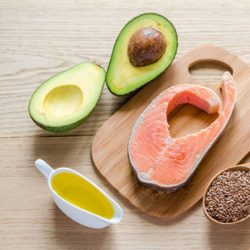
Dietary fat may impact the severity and duration of autoimmune flare-ups, suggests a study published on October 20 in the journal Immunity. Adjusting the length of fatty acids consumed by mice altered the function of T helper cells in the gut--either intensifying or alleviating symptoms in an animal model of the autoimmune disease (i.e., multiple sclerosis). A team led by … [Read more...]
Nutrition & Wellness


Tualang honey supplements found to reduce harmful side effects of smoking: A Study
Smoking is a known factor in many serious health issues: stroke, myocardial infarction, cardiovascular disease, coronary artery disease, to name but a few. In their recent research in Toxicological & Environmental Chemistry, Syaheedah et al. sought to study what impact antioxidants in honey have on the oxidative stress in smokers. Smoking introduces free radicals into … [Read more...]

High-fat diet may cause changes in brain that lead to anxiety, depression: A Study
A new study in mice reveals that increased body weight and high blood sugar as a result of consuming a high-fat diet may cause anxiety and depressive symptoms and measurable changes in the brain. Also, the beneficial effects of an antidepressant were blunted in mice fed a high-fat diet. "When treating depression, in general there is no predictor of treatment resistance," … [Read more...]

New drug for alcohol dependence: A Swedish Study
Researchers at Karolinska Institutet and the Sahlgrenska Academy in Sweden might be one step closer to finding an effective drug for alcohol dependence. In two separate studies, they show that the so-called dopamine stabilizer OSU6162 can reduce the craving for alcohol in alcohol dependent people and normalises the level of dopamine in the brain reward system of rats that have … [Read more...]

Excessive alcohol use continues to be drain on American economy: A Study
Excessive alcohol use continues to be a drain on the American economy, according to a study released by the Centers for Disease Control and Prevention (CDC). Excessive drinking cost the U.S. $249 billion in 2010, or $2.05 per drink, a significant increase from $223.5 billion, or $1.90 per drink, in 2006. Most of these costs were due to reduced workplace productivity, crime, and … [Read more...]

Multihormone reverses metabolic damage of high calorie diet: A German Study
A single molecule, which acts equally on the receptors of the metabolic hormones glucagon and glucagon-like peptide-1 (GLP-1) improves body weight and diabetes through restored function of the anti-obesity hormone leptin. This was discovered by an international team comprising scientists from the Helmholtz Center Munich, Germany, Indiana University and the San Diego-based … [Read more...]

Fiber prevents diabetes and obesity: A French Study
Scientists have known for the past twenty years that a fiber-rich diet protects the organism against obesity and diabetes but the mechanisms involved have so far eluded them. A French-Swedish team including researchers from CNRS, Inserm and the Université Claude Bernard Lyon 1 (Unité Inserm 855 "Nutrition et Cerveau") has succeeded in elucidating this mechanism, which involves … [Read more...]

Lower fat content for adolescents diets: A Study
The prevalence of excess weight and obesity among adolescents and, as a result, the concomitant problems, has increased considerably in recent years. A study by the UPV/EHU has confirmed that, irrespective of the total calories consumed and the physical activity done, an excessive proportion of fat in the diet leads to a greater accumulation of fat in the abdomen. The study has … [Read more...]

Few persons with metabolic syndrome adhere to nutrition recommendations: A Finnish Study
Adherence to dietary recommendations is weak among people suffering from metabolic syndrome or having increased risk for metabolic syndrome, according to the Nordic SYSDIET study led by the University of Eastern Finland. In most cases, the diet is too high in salt and saturated fat, and too low in dietary fiber and unsaturated fat. Furthermore, many don't have a sufficient … [Read more...]

Smoking, heavy alcohol use are linked to aging: A Study
Cigarette smoking and heavy alcohol use cause epigenetic changes to DNA that reflect accelerated biological aging in distinct, measurable ways, according to research presented at the American Society of Human Genetics (ASHG) 2015 Annual Meeting in Baltimore. Using data from the publicly available Gene Expression Omnibus, Robert A. Philibert, MD, PhD and colleagues at the … [Read more...]

Rebates a cost-effective way to boost healthy eating: University of Illinois Study
Providing low-income households that receive federal food assistance benefits with financial incentives to buy fruits and vegetables would encourage them to purchase and consume more healthy food, and slightly increase their longevity, a new study suggests. Despite some critics' concerns, these incentives, in the form of rebates for purchasing healthy foods, are unlikely to … [Read more...]

Enzyme malfunction may be why binge drinking can lead to alcoholism: Stanford University Study
A malfunctioning enzyme may be a reason that binge drinking increases the odds of alcoholism, according to a study by scientists at the Stanford University School of Medicine. The scientists identified a previously unsuspected job performed by the enzyme, ALDH1a1, in mice. The discovery could help guide the development of medications that extinguish the urge to … [Read more...]

New dietary guidelines must be sustainable: George Washington University Study
The new iteration of the Dietary Guidelines for Americans (DGA) must incorporate sustainability considerations -- both for the health and wellbeing of Americans and the world in which we live, urges a new piece appearing in Science Express on Oct. 1. Co-authored by public health and sustainability experts at George Washington (GW) and Tufts universities, the article … [Read more...]

Defective signaling in the brain can cause overeating: A Study
Defective signaling in the brain can cause overeating of high fat foods in mice, leading to obesity, according to one of the first research articles published in the new open access journal Heliyon. The body controls food intake by balancing a need for food to survive with a desire for food for pleasure. By shifting the balance between these systems, defective brain signaling … [Read more...]

Not all trans fatty acids are bad: European Society of Cardiology Study
New evidence suggests that low levels of trans fatty acids (TFAs) may not be as harmful to human health as previously thought, even if industrially produced, and may even be beneficial if they occur naturally in foods such as dairy and meat products, according to a study published in the European Heart Journal. Artificial TFAs occur when oil goes through a process of … [Read more...]

Arsenic found in many American red wines, but health risks depend on total diet: University of Washington Study
A new University of Washington study that tested 65 wines from America's top four wine-producing states -- California, Washington, New York and Oregon -- found all but one have arsenic levels that exceed what's allowed in drinking water. The U.S. Environmental Protection Agency allows drinking water to contain no more than 10 parts per billion of arsenic. The wine samples … [Read more...]

Unsaturated fats, high-quality carbs lower risk of heart disease: American College of Cardiology Study
While eliminating saturated fats can improve heart health, a new study shows that it makes a difference which foods are used in their place. A study published in the Journal of the American College of Cardiology shows that replacing saturated fats with unsaturated fats and high-quality carbohydrates has the most impact on reducing the risk of heart disease. When saturated fats … [Read more...]

Health risks of fructose and sugary drinks: American College of Cardiology Study
There is compelling evidence that drinking too many sugar-sweetened beverages, which contain added sugars in the form of high fructose corn syrup or table sugar (sucrose), can lead to excess weight gain and a greater risk of developing type 2 diabetes and cardiovascular disease, according to a new review paper published in the Journal of the American College of … [Read more...]

Graphics encourage diners to eat less: A Study
To encourage consumers to lower their caloric intake, the U.S. Food and Drug Administration now requires most chain restaurants to state the number of calories that each menu item contains. But is a number the only effective way of helping diners make low-calorie choices? No, says a new study in the Journal of Public Policy & Marketing. According to the study, another … [Read more...]

High consumption of sugar sweetened beverages linked to overall poor diet: A Swedish Study
New research presented at this year's annual meeting of the European Association for the Study of Diabetes (EASD) in Stockholm shows that high consumption of sugar-sweetened beverages, which has been linked to increased risk of type 2 diabetes, is part of a poor overall diet. Thus care must be taken when linking such beverages to disease risk, say the authors from Lund … [Read more...]

Eating more fruits and non-starchy vegetables is associated with less weight gain: A Study
Increased consumption of fruits and non-starchy vegetables is inversely associated with weight change, according to a study published this week in PLOS Medicine. The longitudinal study, conducted by Monica Bertoia of Harvard T. H. Chan School of Public Health and Brigham & Women's Hospital, Boston, Massachusetts, and colleagues, shows differences by type of fruit or … [Read more...]

Eating a lot of fish may help curb depression risk: A Study
Eating a lot of fish may help curb the risk of depression--at least in Europe--suggests a pooled analysis of the available evidence, published online in the Journal of Epidemiology & Community Health. The association between a fishy diet and mental health appears to be equally significant among men and women, the first analysis of its kind indicates. Depression … [Read more...]

Poor diet and high blood pressure now number one risk factors for early death: Australian Study
A huge international study of global causes of death has revealed that since 1990, there has been a profound change in risk factors for death. In 1990, child and maternal malnutrition and unsafe water, sanitation, and lack of hand washing were the leading risks for death, but these have now been replaced by dietary risks and high blood pressure. The findings are from a new … [Read more...]

Diet beverage drinkers compensate by eating unhealthy food: University of Illinois Study
Want fries with that diet soda? You aren't alone, and you may not be "saving" as many calories as you think by consuming diet drinks. A new study that examined the dietary habits of more than 22,000 U.S. adults found that diet-beverage consumers may compensate for the absence of calories in their drinks by noshing on extra food that is loaded with sugar, sodium, fat and … [Read more...]

To curb the production and sale of cheap salty junk food: University of Warwick Study
A World Health Organization adviser is calling for the government to stop food manufacturers and distributors producing and selling unhealthy, cheap, salty junk food. Francesco Cappuccio, Professor of Cardiovascular Medicine & Epidemiology at the University of Warwick's Warwick Medical School is making the appeal after conducting 30 years of research into the diets of … [Read more...]

FDA approves new drug for binge eating disorder (BED)
The United States Food and Drug Administration (FDA) recently approved lisdexamfetamine dimesylate, under the brand name Vyvanse, to treat moderate to severe binge eating disorder (BED) in adults, a first of its kind prescription drug specifically indicated for BED. "TOS has long supported new tools to assist with treating obesity," says Martin Binks, PhD, TOS Secretary … [Read more...]

Eating disorders linked with financial difficulties in female students: University of Southampton Study
Experiencing financial difficulties at university may increase the risk of female students developing an eating disorder, according to new research from the University of Southampton and Solent NHS Trust. Conversely, the study also found that having extreme attitudes to food and eating predicted short-term financial difficulties for female students, suggesting the … [Read more...]

Binge drinking is strongly associated with eating problems among Russian girls: A Study
Adolescent binge drinking has been linked to a host of problems, including worse school performance, risky sexual behaviors, illicit drugs, and a greater risk of suicide. Binge drinking may also be linked to problematic eating behavior, yet little research exists. A study of the relationship between binge drinking and eating problems among Russian adolescents has found that … [Read more...]

How do anorexics control their appetite: A Study
Many adults, regardless of their weight, resolve to avoid fatty foods and unhealthy desserts. But despite one's best intentions, when the moment for decision comes, that chocolate lava cake is often too enticing and self-control vanishes. This behavior is normal because hunger increases the intensity of food rewards. Yet, individuals with anorexia nervosa (AN), despite their … [Read more...]

Mediterranean diet plus olive oil associated with reduced breast cancer risk: A Spanish Study
Eating a Mediterranean diet supplemented with extra virgin olive oil was associated with a relatively lower risk of breast cancer in a study of women in Spain, according to an article published online by JAMA Internal Medicine. Breast cancer is a frequently diagnosed cancer and a leading cause of death in women. Diet has been extensively studied as a modifiable risk factor … [Read more...]
- « Previous Page
- 1
- …
- 14
- 15
- 16
- 17
- 18
- …
- 44
- Next Page »
