A single approach can prevent both obesity and eating disorders in teenagers, according to new guidelines from the American Academy of Pediatrics. Scientific evidence summarized in the new recommendations shows that physicians and parents can ward off problems at both ends of the weight spectrum by avoiding focusing teens' attention on weight or dieting, and instead … [Read more...]
Weight Management

‘Healthy Obesity’ May Be A Myth
The term "healthy obesity" has gained traction over the past 15 years, but scientists have recently questioned its very existence. A new study provides further evidence against the notion of a healthy obese state, revealing that white fat tissue samples from obese individuals classified as either metabolically healthy or unhealthy actually show nearly identical, abnormal … [Read more...]

Proved: Exercise Does More Good If You Believe It Will
Everyone knows exercise is supposed to be good for your health, but is the belief that exercise will have a positive effect more important for our well-being than the exercise itself? The psychologist Hendrik Mothes from the University of Freiburg's Department of Sport Science and his team have conducted a study demonstrating that test subjects derive more psychological as well … [Read more...]

Do You Feel Hungry Even After A Meal?
The brain's reward centers in severely obese women continue to respond to food cues even after they've eaten and are no longer hungry, in contrast to their lean counterparts, according to a recent study by a multidisciplinary team at UT Southwestern Medical Center. The study, published recently in the journal Obesity, compared attitudes and the brain activity of 15 … [Read more...]

Multiply The Fat Burnt During Exercise
When we exercise, our body’s oxidation of fat and carbohydrates depends on the intensity and duration of the activity. A new study analyses the effect of consuming an alkaloid, p-synephrine, on the burning of lipids and refutes the value of “miracle” diets: it is not possible to lose more than a kilogramme of fat per month. New research published in the British Journal of … [Read more...]
Obesity May Be A Disease Of The Brain
Obesity may ultimately be a disease of the brain, involving a progressive deterioration of various cognitive processes that influence eating. Researchers at Macquarie University have now shown that memory inhibition -- the useful ability to 'block out' memories that are no longer useful, which depends on a brain area called the hippocampus -- is linked to dietary excess. … [Read more...]

Early To Bed Cuts Risk Of Obesity Later
Preschoolers who are regularly tucked into bed by 8 p.m. are far less likely to become obese teenagers than young children who go to sleep later in the evening, new research has found. Bedtimes after 9 p.m. appeared to double the likelihood of obesity later in life, according to a study from The Ohio State University College of Public Health. "For parents, this … [Read more...]

Is Your Brain Fueling You to Overeat?
The findings offer clues in Alexander Johnson's quest to unpack the interconnected mechanisms of overeating and obesity. Obesity is an epidemic domestically -- more than a third of Americans are considered to be obese -- and a growing health problem in other parts of the world. "In today's society we are bombarded with signals to eat, from fast-food commercials to the … [Read more...]

How lifestyle intervention for weight loss affects birth rates in women?
Women who are overweight or obese pose an ongoing challenge for the fertility clinic. Many studies show that these patients are at increased risk of infertility and are less likely than normal-weight women to conceive after fertility treatment. For example, ovulating sub-fertile women with a body mass index (BMI) of 29 kg/m2 or higher have been found in one study to have a 4% … [Read more...]

Switch-Off Your Cravings
Eating a type of powdered food supplement, based on a molecule produced by bacteria in the gut, reduces cravings for high-calorie foods such as chocolate, cake and pizza, a new study suggests. Scientists from Imperial College London and the University of Glasgow asked 20 volunteers to consume a milkshake that either contained an ingredient called inulin-propionate … [Read more...]

Calorie-burning Pathway found in Fat Cells
Investigators at Dana-Farber Cancer Institute in collaboration with scientists at the University of California, Berkeley, have identified a natural molecular pathway that enables cells to burn off calories as heat rather than store them as fat. This raises the possibility of a new approach to treating and preventing obesity, diabetes, and other obesity-linked metabolic … [Read more...]
Greater Risk of Heart Failure among Overweight Youth
It comes down to starting healthy habits early. Fortunately, it's never too late to adopt a healthier lifestyle, and losing weight is great for reducing your risk of heart attack. But you can still be at a higher risk for other heart problems if you're late in changing your habits. Excessive weight at a young age puts one at a far higher risk of heart failure as … [Read more...]

Children drinking sports drinks have risk of obesity
A high proportion of 12-14 year olds are regularly consuming sports drinks socially, increasing their risk of obesity and tooth erosion, concludes a Cardiff University School of Dentistry survey. Published today in the British Dental Journal, the survey looked at 160 children in four schools across South Wales and concluded that children are attracted to sports drinks … [Read more...]
Harsh parenting may lead to obesity in young women
The adolescent years can be full of changes, whether physical, emotional, or familial. A new study by Iowa State University researchers suggests that when these years include prolonged periods of food insecurity coupled with harsh parenting practices, females are prone to obesity in early adulthood. "When females who are normal weight in their early adolescence … [Read more...]

Adolescent weight linked to heart failure in early middle age
Surprisingly, the increased risk of heart failure was found in who were within the normal body weight range (a body mass index of 18.5 to 25) in adolescence, with an increased risk starting in those with a BMI of 20 and rising steeply to a nearly ten-fold increased risk in those who were very obese, with a BMI of 35 or over. The study, which is published in the European … [Read more...]

Philadelphia to bring in ‘soda tax’ to fight obesity
Philadelphia has introduced a levy on carbonated sugary drinks, despite a multi million-dollar campaign by the beverage industry to block it. It will become the first major US city to implement a so-called "soda tax", which supporters say will improve the health of 1.5 million residents. But opponents say it will hurt small businesses and poorer people. The measure will come … [Read more...]

Study compares effectiveness of weight-loss drugs
In an analysis that included nearly 30,000 overweight or obese adults, compared with placebo, orlistat, lorcaserin, naltrexone-bupropion, phentermine-topiramate, and liraglutide were each associated with achieving at least 5 percent weight loss at 52 weeks, and phentermine-topiramate and liraglutide were associated with the highest odds of achieving at least 5 percent weight … [Read more...]

Anorexia nervosa: Pleasure at getting thin more than fear of getting fat Reveals an INSERM Study
A study from Inserm, Paris Descartes University and Sainte Anne Hospital suggests that anorexia nervosa might not be explained by fear of gaining weight, but by the pleasure of losing it... and that the phenomenon might be genetically influenced. Published in Translational Psychiatry, this study, directed by Prof. Gorwood, head of the Clinic for Mental and Brain Diseases, … [Read more...]

Prevalence of obesity in U.S. increases among women: JAMA Study
The prevalence of obesity in 2013- 2014 was 35 percent among men and 40 percent among women, and between 2005 and 2014, there was an increase in prevalence among women, but not men, according to a study appearing in the June 7 issue of JAMA. Between 1980 and 2000, the prevalence of obesity increased significantly among adult men and women in the United States; further … [Read more...]

One hour of driving a day = 2.3kg more weight and 1.5cm wider waist, study reveals
People who drive an hour or more a day are 2.3kg heavier and 1.5cm wider around the waist compared to people who spend 15 minutes or less in their cars, research has revealed. These findings from a research study led by Professor Takemi Sugiyama from the Australian Catholic University's Institute of Health and Ageing, show the convenience of car travel has a significant … [Read more...]

Current apps on weight management lack certification from health authorities
Overweight and obese people are turning to a multitude of smartphone apps to help them lose weight. But new research presented at the European Obesity Summit (Gothenburg, Sweden, June 1-4) says that only 17 (0.5%) of the apps identified by the researchers have been developed by a certified health organisation or university. Nor are there any published evidence of effectiveness … [Read more...]
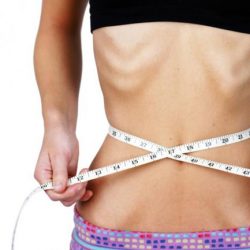
Can someone with anorexia get better?
The answer is Yes. Someone with anorexia can get better. A health care team of doctors, nutritionists, and therapists will help the patient get better. They will: Help bring the person back to a normal weight Treat any psychological issues related to anorexia Help the person get rid of any actions or thoughts that cause the eating disorder These three steps will prevent … [Read more...]
Converting cells to burn fat, not store it: A McGill University Study
Researchers have uncovered a new molecular pathway for stimulating the body to burn fat -- a discovery that could help fight obesity, diabetes and cardiovascular disease. In a study published in the journal Genes & Development, a team led by researchers from the Department of Biochemistry at McGill University focus on a protein known as folliculin and its role in … [Read more...]

Regular Physical Activity is the ‘Magic Bullet’ for pandemics of obesity and cardiovascular disease: Florida Atlantic University Study
In an editorial published in the current issue of Cardiology, professors from the Charles E. Schmidt College of Medicine at Florida Atlantic University have evaluated the totality of evidence and conclude that regular physical activity bears the closest resemblance to a "magic bullet" to combat the worldwide epidemic of obesity and cardiovascular disease. The statistics on … [Read more...]

Tweeting your weight loss? Is there a link between microblogging, eating disorders?
In a new open access article for Cogent Social Sciences; Mobile Exercising and Tweeting the Pounds Away: The Use of Digital Applications and Microblogging and their Association with Disordered Eating and Compulsive Exercise, researchers from Georgia College & State University, and Chapman University explore the relationship between social media, eating disorders, and … [Read more...]
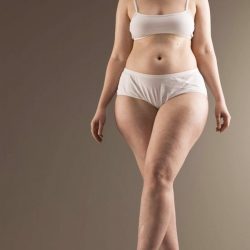
Obesity cause disease in organs distant from those where fat accumulates: A Study
Obesity is on the rise throughout the world, and in some developed countries two-third of the adult population is either overweight or obese. This brings with it an increased risk of serious conditions such as heart disease, stroke, cancer and osteoarthritis. Many of these conditions do not appear to affect the parts of the body where the excess fat accumulates, but rather to … [Read more...]

Epigenetic modification increases susceptibility to obesity and predicts fatty liver: A German Study
Scientists of the German Center for Diabetes Research (DZD) led by the German Institute of Human Nutrition (DIfE) have shown in a mouse model that the epigenetic* modification of the Igfbp2** gene observed in the young animal precedes a fatty liver in the adult animal later in life. In addition, young animals with this modification exhibit impaired glucose metabolism and are … [Read more...]

Abdominal fat accumulation prevented by unsaturated fat: Uppsala University Study
New research from Uppsala University shows that saturated fat builds more fat and less muscle than polyunsaturated fat. This is the first study on humans to show that the fat composition of food not only influences cholesterol levels in the blood and the risk of cardiovascular disease but also determines where the fat will be stored in the body. The findings have recently been … [Read more...]

Lead linked to obesity: University of Michigan Study
When we think of ill effects from lead exposure various neurologic problems usually come to mind. Now researchers at the University of Michigan say another health impact can be added to the list: obesity. Even at low levels, lead is associated with obesity in mice whose mothers were exposed to the chemical, researchers at the U-M School of Public Health found. Specifically … [Read more...]
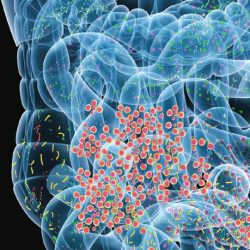
Early antibiotic exposure leads to lifelong metabolic disturbances: A Study
A new study published in Cell suggests that antibiotic exposure during a critical window of early development disrupts the bacterial landscape of the gut, home to trillions of diverse microbes, and permanently reprograms the body's metabolism, setting up a predisposition to obesity. Moreover, the study shows that it is altered gut bacteria, rather than the antibiotics, driving … [Read more...]
- « Previous Page
- 1
- …
- 3
- 4
- 5
- 6
- 7
- …
- 28
- Next Page »
