
Expectant mothers in their first trimester should avoid certain cosmetics, cleaning agents and medicines, to protect the developing fetal brain from chemicals that can trigger autism, York U health researchers have found. "The products that we use on a daily basis, such as creams and cosmetics, contain chemicals that could potentially affect a developing baby during … [Read more...]

Insulin cells determine weight-loss surgery success rate: A Danish Study
Danish researchers have found that the ability to produce insulin is pivotal to the success of weight loss surgery in patients with type 2-diabetes. The study provides a better point of departure for advise and determining which patients will benefit from surgery. Type 2-diabetes is a serious complication for people with obesity. Obesity affects the economy as well as the … [Read more...]

Signal when a pregnant woman is about to go into labor: University of Texas Study
During the last few weeks of a woman's pregnancy, many keep an overnight bag ready to go at a moment's notice in case they begin to go into labor. They do this because there is no clear signal that labor is about to begin -- before the body makes it abundantly clear that this process has started. Understanding the mechanisms that initiate this process is especially important … [Read more...]

‘Love hormone’ helps produce ‘bliss molecules’ to boost pleasure: University of California Study
The hormone oxytocin, which has been associated with interpersonal bonding, may enhance the pleasure of social interactions by stimulating production of marijuana-like neurotransmitters in the brain, according to a University of California, Irvine study. The research provides the first link between oxytocin -- dubbed the "love hormone" -- and anandamide, which has been … [Read more...]

Women under 55 less likely to be told they were at-risk of heart disease: American College of Cardiology Study
Even when young women had a similar or greater risk for heart disease than young men, they were 11 percent less likely to report that healthcare providers told them they were at-risk for heart disease prior to a heart attack, according to a new study published today in the Journal of the American College of Cardiology. "Young women who experience a heart attack are more … [Read more...]

Higher rates of in-hospital mortality in young women: American College of Cardiology Study
Young women with ST-elevation myocardial infarction were less likely to receive life-saving angioplasty and stenting to restore blood flow to blocked arteries than men and also had longer hospital stays and higher rates of in-hospital mortality, according to a study published today in the Journal of the American College of Cardiology. ST-elevation myocardial infarction, or … [Read more...]

Stroke in marijuana users more often caused by narrowing of arteries in skull: American College of Cardiology Study
A new study found strokes in young adults who use marijuana are more likely to be caused by stenosis, narrowing of the arteries, in the skull than strokes in non-users. Previous studies have found an association between marijuana use and stroke, but the new study published as a research letter in the Nov. 3 issue of the Journal of the American College of Cardiology is the … [Read more...]

High post-pregnancy BMI raises pelvic organ prolapse risk: Yale University Study
Maintaining a normal body mass index (BMI) is important for good cardiovascular health and blood sugar control, but maintaining it after pregnancy can also be key to preventing pelvic organ prolapse, according to a new study by Yale School of Medicine researchers. The findings are published in the journal Reproductive Sciences. Yale researcher Marsha K. Guess, M.D., and … [Read more...]

Light exposure linked to weight gain in children: Queensland University Study
A world-first study by QUT's Sleep in Early Childhood Research Group has revealed pre-schoolers exposed to more light earlier in day tend to weigh more. Cassandra Pattinson, a PhD student and her colleagues studied 48 children aged three to five from six Brisbane childcare centres over a two week period, measuring each child's sleep, activity and light exposure along with … [Read more...]

ACL injuries increase among school-aged children and adolescents: A Study
A new study confirms what doctors working with young athletes already suspected: the number anterior cruciate ligament (ACL) tears among youths, particularly high school students, has risen during the past 20 years. The study, to be presented at the 2015 American Academy of Pediatrics (AAP) National Conference & Exhibition in Washington, DC, reviewed an insurance … [Read more...]

Skin-to-skin contact with baby in neonatal unit decreases maternal stress levels: American Academy of Pediatrics Study
Research shows that stable parent-child bonds are fundamental to healthy child development. For parents of babies born prematurely or with special medical needs, this early bonding can be interrupted by the complex medical care required in a neonatal intensive care unit (NICU). An ongoing study conducted at a large metropolitan NICU, however, shows that a little skin-to-skin … [Read more...]

Canine companionship helps calm children undergoing cancer treatment: A Study
Although survival rates for children diagnosed with cancer have increased dramatically over the past 40 years, hard evidence of proven psychosocial benefits to improve quality of life among patients and families during treatment has remained elusive. Many hospitals have therapy dogs who visit with patients, and anecdotal evidence underscores the positive impact these … [Read more...]

Basketball, soccer, lacrosse lead to most ACL injuries in female athletes: A Study
A new study finds the overall rate of anterior cruciate ligament (ACL) injuries among high school athletes is significantly higher among females, who are especially likely to experience ACL tears while playing basketball, soccer and lacrosse. The study, "Sport-Specific Yearly Risk and Incidence of Anterior Cruciate Ligament Tears in High School Athletes: A Systematic Review … [Read more...]

Health food stores recommend teens try performance supplement not recommended under 18: American Academy of Pediatrics Study
Posing as a 15-year-old athlete wanting to bulk up during strength training, a researcher asked more than 200 health food stores whether he should take a sports performance supplement containing creatine. Despite recommendations against using creatine under age 18 by the American Academy of Pediatrics (AAP) and the American College of Sports Medicine, more than two-thirds of … [Read more...]
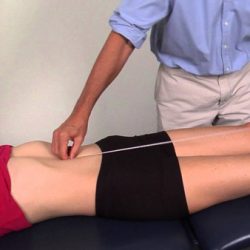
Treatments for leg length discrepancies: A Study
When balancing treatment options for a child with a significant difference in leg length, doctors typically advise families about the risks and benefits of surgeries to either shorten or elongate one of the limbs. New research suggests they may also want to consider how the child's ultimate height will affect his or her income as an adult. In a study to be presented at the … [Read more...]

More than 25 percent of women giving birth who test positive for marijuana also using other drugs: A Study
As an increasing number of states legalize marijuana for medical or recreational use, health officials expect consumption of tetrahydrocanabis (THC) during pregnancy to increase. A new study suggests a mother's use of marijuana while pregnant could indicate other drug use as well. An Arizona study found that 26 percent of mothers or their newborns who tested positive for THC … [Read more...]

Magnesium during labor may reduce risk of fever in mothers: A Study
Women who received magnesium sulfate during labor were less likely to develop maternal fever, a condition that can lead to a variety of complications in newborns including difficulty breathing, seizures, cerebral palsy and a condition known as "floppy baby syndrome," characterized by inadequate muscle tone, according to a retrospective study presented at the ANESTHESIOLOGY® … [Read more...]

Women would benefit from light meal during labor: A Study
Most healthy women can skip the fasting and, in fact, would benefit from eating a light meal during labor, suggests research being presented at the ANESTHESIOLOGY® 2015 annual meeting. Improvements in anesthesia care have made pain control during labor safer, reducing risks related to eating, researchers note. Women traditionally have been told to avoid eating or drinking … [Read more...]

Teenager in United States are more risk takers: A Columbia University Study
Teenagers are known for taking unnecessary risks, from reckless driving to smoking marijuana, but some seek out risky experiences more than others. A new study of sensation-seeking behavior led by a researcher at Columbia University's Mailman School of Public Health with colleagues from Columbia University's Department of Psychiatry and the University of Puerto Rico School of … [Read more...]

Proteome analysis can help to slow down aging: A German Study
Researchers have found differences between normal and pathologic peptidomic changes that may lead to an improved understanding of molecular mechanisms underlying aging. Proteome analysis in combination with therapy may influence pathologic aging. For the first time, researchers succeeded in showing differences between normal and pathologic aging on a molecular level. In one … [Read more...]

Diet affect the progression of multiple sclerosis: A German Study
Dietary fatty acids affect the development and progression of autoimmune chronic-inflammatory diseases such as multiple sclerosis. In a collaborative study between the Departments of Neurology at the Ruhr-Universität Bochum (St. Josef-Hospital) and the Friedrich Alexander Universtiy Erlangen, researchers now found that long-chain fatty acids promote the development and … [Read more...]

Alcohol intake increases the risk of breast cancer: A Study
Saying that the link between alcohol and cancer is dangerous is nothing new.. Five Spanish universities and more than 300,000 female volunteers participated in a European investigation that is now confirming that alcohol intake increases the chances of developing breast cancer. This risk quadruples with the intake of each daily glass of wine or beer. Thanks to the altruistic … [Read more...]
Brain multitasking Revealed: New York University Study
Researchers at NYU Langone Medical Center say they have added to evidence that a shell-shaped region in the center of the mammalian brain, known as the thalamic reticular nucleus or TRN, is likely responsible for the ability to routinely and seamlessly multitask. The process, they suggest, is done by individual TRN neurons that act like a "switchboard," continuously … [Read more...]

Gene therapy could aid weight loss: Oregon State University Study
Delivering the hormone leptin directly to the brain through gene therapy aids weight loss without the significant side effect of bone loss, according to new collaborative research from Oregon State University and University of Florida. Rapid or significant weight loss through dieting can trigger bone loss. Loss of bone density, in turn, can lead to increased susceptibility … [Read more...]

Women Less Career Centric, Myth broken: Ithaca College Study
There is a pre-existing assumption that women place less importance on their careers than men. A new study by an Ithaca College professor challenges this assumption by evaluating how much men and women consider their careers a central part of their identity. "Are Women Less Career Centric Than Men? Structure, Culture and Career Investments" by Stephen Sweet, analyzes data … [Read more...]

Exercising is linked to younger brain: University of Tsukuba Study
It is widely recognised that our physical fitness is reflected in our mental fitness, especially as we get older. How does being physically fit affect our aging brains? Neuroimaging studies, in which the activity of different parts of the brain can be visualised, have provided some clues. Until now, however, no study has directly linked brain activation with both mental and … [Read more...]

‘Sensor’ protein could help fight against obesity and diabetes: A Study
In the study, researchers showed a protein called NLRP1 is switched on when increased dietary energy (food) intake triggers the cell to become 'unstable'. Activating the protein sets off a chain of events that instructs cells to use up their energy or fat stores to prevent excess fat accumulating. The research, led by Dr Seth Masters from Melbourne's Walter and Eliza Hall … [Read more...]

Clues about ‘betel nut’ addiction: University of Florida Study
For hundreds of millions of people around the world, chewing betel nut produces a cheap, quick high but also raises the risk of addiction and oral cancer. Now, new findings by a University of Florida Health researcher reveal how the nut's psychoactive chemical works in the brain and suggest that an addiction treatment may already exist. The betel nut, a seed of the areca … [Read more...]

Anxiety is a barrier to breast cancer screening: University of Colorado Study
Recent American Cancer Society (ACS) breast cancer screening guidelines consider the anxiety created by false-positive mammography an "important but not critical outcome" when deciding who should be screened. In other words, in these guidelines, the chance that mammography will create needless cancer worry is a light thumb on the scale against breast cancer screening in some … [Read more...]

Unhealthy weight gain in pregnancy has been linked with postpartum weight retention: Columbia University Study
Unhealthy weight gain in pregnancy has been linked with postpartum weight retention but until now its long-term effects had been understudied in low-income and minority populations who are at high risk for obesity. For the first time, researchers at Columbia University's Mailman School of Public Health studied the association between gestational weight gain and long-term weight … [Read more...]
- « Previous Page
- 1
- …
- 104
- 105
- 106
- 107
- 108
- …
- 429
- Next Page »