
The results of a new study on physical activity have researchers asking what in the world will it take to get people moving. Clarkson University Associate Professor of Physical Therapy & Physician Assistant Studies Ali Boolani and Oklahoma State University Associate Professor of Physical Education Timothy Baghurst wanted to see how aspiring physical … [Read more...]

Obesity cause disease in organs distant from those where fat accumulates: A Study
Obesity is on the rise throughout the world, and in some developed countries two-third of the adult population is either overweight or obese. This brings with it an increased risk of serious conditions such as heart disease, stroke, cancer and osteoarthritis. Many of these conditions do not appear to affect the parts of the body where the excess fat accumulates, but rather to … [Read more...]

Link between social media, eating disorders, and compulsive exercise: Chapman University Study
In a new open access article for Cogent Social Sciences; Mobile Exercising and Tweeting the Pounds Away: The Use of Digital Applications and Microblogging and their Association with Disordered Eating and Compulsive Exercise, researchers from Georgia College & State University, and Chapman University explore the relationship between social media, eating disorders, and … [Read more...]

Exercise associated with longer life in patients with heart failure: University of Exeter Study
Exercise is associated with a longer life in patients with heart failure, according to research presented today in a late breaking trial session at Heart Failure 2016 and the 3rd World Congress on Acute Heart Failure. The analysis in more than 4000 patients showed a mortality benefit from exercise regardless of heart failure severity, age and gender. "Patients with heart … [Read more...]

Epigenetic modification increases susceptibility to obesity and predicts fatty liver: A German Study
Scientists of the German Center for Diabetes Research (DZD) led by the German Institute of Human Nutrition (DIfE) have shown in a mouse model that the epigenetic* modification of the Igfbp2** gene observed in the young animal precedes a fatty liver in the adult animal later in life. In addition, young animals with this modification exhibit impaired glucose metabolism and are … [Read more...]
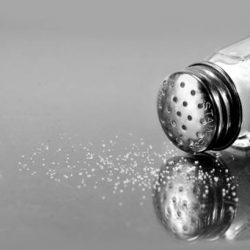
Low-salt diets may not be beneficial for all: McMaster University Study
A large worldwide study has found that, contrary to popular thought, low-salt diets may not be beneficial and may actually increase the risk of cardiovascular disease (CVD) and death compared to average salt consumption. In fact, the study suggests that the only people who need to worry about reducing sodium in their diet are those with hypertension (high blood pressure) and … [Read more...]
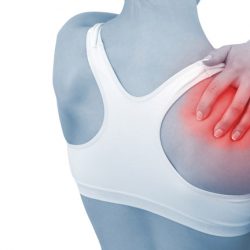
Trigger for immune cells inflammatory response identified: University of Bristol Study
Scientists at the University of Bristol have identified the trigger for immune cells' inflammatory response -- a discovery that may pave the way for new treatments for many human diseases. Immune cells play essential roles in the maintenance and repair of our bodies. When we injure ourselves, immune cells mount a rapid inflammatory response to protect us against infection … [Read more...]

Intake of dietary fat in adolescence associated with breast density: University of Maryland Study
Consuming high amounts of saturated fat or low amounts of mono- and polyunsaturated fats as an adolescent was associated with higher breast density in young adulthood. Breast density is a risk factor for breast cancer. The new work has been published in Cancer Epidemiology, Biomarkers & Prevention, a journal of the American Association for Cancer Research. Authors are … [Read more...]

Sleep disorders common in athletes: University of Eastern Finland Study
Professional athletes suffer from sleep disorders more frequently than generally thought, however, systematic examination, counselling and individual treatment planning can improve the quality of their sleep. Published in the Journal of Sports Sciences, a new Finnish study clearly shows for the first time that systematic measures can improve the sleep of professional … [Read more...]

Healthy lifestyle can prevent cancer: Washington University Study
A large proportion of cancer cases and deaths among U.S. individuals who are white might be prevented if people quit smoking, avoided heavy drinking, maintained a BMI between 18.5 and 27.5, and got moderate weekly exercise for at least 150 minutes or vigorous exercise for at least 75 minutes, according to a new study published online by JAMA Oncology. Cancer is a leading … [Read more...]

Role of a key hormone in type 2 diabetes: Norwegian University Study
Researchers at the Norwegian University of Science and Technology (NTNU) and Oxford University have found a hormone that may offer an effective treatment for type 2 diabetes. The incidence of diabetes, especially type 2 diabetes, has skyrocketed over the last few decades, according to a report from the World Health Organization. The report says that there were 108 million … [Read more...]

Support from family and friends helps in preventing depression in teenagers: University of Cambridge Study
The importance of friendships and family support in helping prevent depression among teenagers has been highlighted in research from the University of Cambridge. The study, published in the open access journal PLOS ONE, also found that teenagers who had grown up in a difficult family environment were more likely than their peers to be bullied at school. Adolescence is a key … [Read more...]

Prediabetes is associated with increased risk of diabetes, cardiovascular disease, dementia and cancer: A German Study
Prediabetes is associated with increased risk of diabetes, cardiovascular disease, dementia and cancer. However, the disease risk considerably varies among subjects. In The Lancet Diabetes & Endocrinology DZD scientists have now summarized information from the literature and have provided novel data indicating that in future the determination of the 4 major phenotypes fatty … [Read more...]
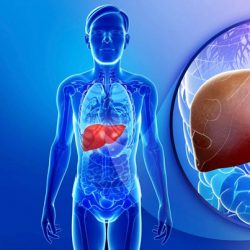
High levels of protein p62 predict liver cancer recurrence: University of California Study
Researchers at University of California San Diego School of Medicine and Sanford Burnham Prebys Medical Discovery Institute have discovered that high levels of the protein p62 in human liver samples are strongly associated with cancer recurrence and reduced patient survival. In mice, they also found that p62 is required for liver cancer to form. The study in Cancer Cell, … [Read more...]

Geting the most nutrition from your calories and ‘enjoy the taste of eating right’: Academy of Nutrition and Dietetics
While taste drives most food choices, eating nutrient-rich foods that provide the most nutrition per calorie is one of the best ways to "Enjoy the Taste of Eating Right," according to the Academy of Nutrition and Dietetics. As part of the 2014 National Nutrition Month® theme, the Academy encourages everyone to choose the most nutritionally-packed foods you can from each of the … [Read more...]

Benefits of cooking and eating as a family: A Study
Make mealtime a family time. If you can get together for meals even a few times a week, family meals mean healthier eating -- and more. For National Nutrition Month®, the Academy of Nutrition and Dietetics encourages all families to make a commitment to eating more meals together and "Enjoy the Taste of Eating Right." "Research shows that family meals promote healthier … [Read more...]

Dieters should avoid friends and late night cravings: University of Birmingham Study
There's more to dieting than just sheer willpower and self-control. The presence of friends, late night cravings or the temptation of alcohol can often simply be too strong to resist. Research led by Heather McKee of the University of Birmingham in the UK monitored the social and environmental factors that make people, who are following weight management programs, cheat. The … [Read more...]

Abdominal fat accumulation prevented by unsaturated fat: Uppsala University Study
New research from Uppsala University shows that saturated fat builds more fat and less muscle than polyunsaturated fat. This is the first study on humans to show that the fat composition of food not only influences cholesterol levels in the blood and the risk of cardiovascular disease but also determines where the fat will be stored in the body. The findings have recently been … [Read more...]

Vitamin A may help boost immune system to fight tuberculosis: University of California Study
Tuberculosis is a major global problem, affecting 2 billion people worldwide and causing an estimated 2 million deaths annually. Western countries are once again tackling the disease, with recent outbreaks in Los Angeles and London. The rise of drug-resistant TB, called a "ticking time bomb" by the World Health Organization, and the high cost of fighting the disease … [Read more...]

Fructose not responsible for increase in non-alcoholic fatty liver disease: A Study
Non-alcoholic fatty liver disease is the most common chronic liver disease in developed countries, affecting up to 30 per cent of their populations. Since the disease is closely linked to obesity and Type 2 diabetes, there's a growing debate in the medical community about whether diet plays a role in its development, specifically the consumption of fructose. The possible … [Read more...]

Attitude during pregnancy affects weight gain: A Study
Overweight or obese women with the mentality that they are "eating for two" are more likely to experience excessive weight gain while pregnant, according to researchers at Penn State College of Medicine. Cynthia Chuang, associate professor of medicine and public health sciences, studied the attitudes and habits of women who gained appropriate weight and those who exceeded … [Read more...]

From Heart Surgery to Marathons!
If running a marathon was easy, everyone would do it. The 26.2 mile race is tough for anyone … especially for Paul Sykes. He ran one just weeks after heart surgery. He was born with a bad heart valve and Paul Sykes knew someday he’d have to have it replaced. Sykes told Ivanhoe, “I was getting a lot of pain, chest pain.” Sykes loves to run. “One day I went home after a … [Read more...]

Low-salt diets may not be beneficial for all, study suggests
A large worldwide study has found that, contrary to popular thought, low-salt diets may not be beneficial and may actually increase the risk of cardiovascular disease (CVD) and death compared to average salt consumption. In fact, the study suggests that the only people who need to worry about reducing sodium in their diet are those with hypertension (high blood pressure) … [Read more...]

FMD: Mysterious Disease in Women
Fibromuscular dysplasia, or FMD for short, is up to ten times more common in women than in men. But it’s often overlooked because patients and their doctors have a hard time identifying the symptoms. Here’s what you need to know about this rare and mysterious disease. Nurse Mary Lou Lucas has spent her career helping others understand their medical problems. But she was … [Read more...]

Thoracic Outlet Syndrome
Imagine being injured by your own bones or muscles. That’s what happens to patients with thoracic outlet syndrome, a condition that goes misdiagnosed in many. If proper treatment is given right away, patients could be cured for good. Jamila Crooks told Ivanhoe, “The last three years have been stressful. Holding a coffee cup was very difficult. Going from doctor to doctor not … [Read more...]

Uric acid can cause metabolic syndrome: Washington University Study
A new study suggests uric acid may play a role in causing metabolic syndrome, a cluster of risk factors that increases the risk of heart disease and type 2 diabetes. Uric acid is a normal waste product removed from the body by the kidneys and intestines and released in urine and stool. Elevated levels of uric acid are known to cause gout, an accumulation of the acid in the … [Read more...]

Genes that protect against frailty: Yeshiva University Study
Frailty is a common condition associated with old age, characterized by weight loss, weakness, decreased activity level and reduced mobility, which together increase the risk of injury and death. Yet, not all elderly people become frail; some remain vigorous and robust well into old-age. The question remains: why? Researchers at Albert Einstein College of Medicine of Yeshiva … [Read more...]
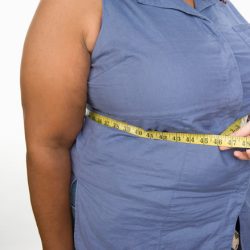
Lead linked to obesity: University of Michigan Study
When we think of ill effects from lead exposure various neurologic problems usually come to mind. Now researchers at the University of Michigan say another health impact can be added to the list: obesity. Even at low levels, lead is associated with obesity in mice whose mothers were exposed to the chemical, researchers at the U-M School of Public Health found. Specifically … [Read more...]

Link between maternal age and emergency delivery: Oslo University Study
An increased risk of emergency operative delivery is linked with increasing maternal age, suggests a new study published today in BJOG: An International Journal of Obstetrics and Gynaecology. The study used a sample of 169,583 low risk, first-time mothers in Norway, to examine the association between maternal age and emergency operative delivery, which include emergency … [Read more...]

Medicinal oil reduces epileptic seizures: A Study
Two years ago, the parents of Chloe Olivarez watched painfully as their daughter experienced epileptic seizures hundreds of times a day. The seizures, caused by a rare metabolic disease that depleted her brain of needed glucose, left Chloe nearly unresponsive, and slow to develop. Within hours, treatment with an edible oil dramatically reduced the number of seizures for … [Read more...]
- « Previous Page
- 1
- …
- 45
- 46
- 47
- 48
- 49
- …
- 426
- Next Page »
