
When an adolescent female patient comes to Nationwide Children's Hospital's Sports Medicine clinic, not only are these young women treated for their sports-related injury, but their sports medicine physician will also ask if they've missed any periods, because of a growing concern among female athletes. Anastasia Fischer, MD, a physician in Sports Medicine at Nationwide … [Read more...]

Magnesium may protect against hip fractures: A Norwegian Study
Drinking water with a relatively high concentration of magnesium protects against hip fractures, according to results of a study from the Norwegian Institute of Public Health. There are considerable variations in the quality of drinking water in Norway. The researchers studied variations in magnesium and calcium levels in drinking water between different areas, as these are … [Read more...]

The secret of fertile sperm: A Study
To better understand the causes of male infertility, a team of Bay Area researchers is exploring the factors, both physiological and biochemical, that differentiate fertile sperm from infertile sperm. At the 58th Annual Biophysical Society Meeting, which takes place Feb. 15-19, 2014, in San Francisco, Calif., the team will present its work to identify and characterize proteins … [Read more...]

Effect of more than 1,500 chemicals on estrogen: A Study
A team of researchers at City of Hope has developed a screening assay that can quickly assess up to 1,536 compounds' effect on estrogen activity in the body. The test can also evaluate whether chemicals act as inhibitors of aromatase, an enzyme linked to breast cancer that converts androgen to estrogen. The results verifying this novel screening method -- called AroER … [Read more...]

More women receiving breast reconstruction after mastectomy: University of Michigan Study
A new study finds that the majority of women who undergo mastectomy for breast cancer go on to get breast reconstruction, a practice that has increased dramatically over time. Researchers found that 46 percent of patients received reconstruction in 1998 but that figure rose to 63 percent by 2007. "Breast reconstruction has a big impact on quality of life for breast cancer … [Read more...]

Heart failure at the cellular level: An Italian Study
A team of researchers at the University of Florence in Italy and the University of Connecticut Health Center have used a multidisciplinary approach to provide an unprecedented glimpse of what happens to the heart during an "infarction" -- a heart attack -- by looking at how the attack affects electrical activity and calcium release in heart cells. "Thanks to this method, we … [Read more...]

Vitamin D, calcium disparities found among American subpopulations: A Study
Many Americans do not meet recommended intakes of calcium and vitamin D, despite the important role these vital nutrients play in bone health during all stages of the lifecycle. Researchers set out to determine calcium and vitamin D intakes among specific subpopulations of Americans in order to identify those most in need of fortification/enrichment and supplementation. Their … [Read more...]

HPV vaccination associated with reduced risk of cervical lesions: A Danish Study
A reduced risk of cervical lesions among Danish girls and women at the population level is associated with use of a quadrivalent HPV vaccine after only six years, according to a new study published February 19 in the Journal of the National Cancer Institute. Two HPV vaccines are currently available and have proven to be highly effective against HPV16/18-associated cervical … [Read more...]

HPV-positive squamous cell carcinoma of the oropharynx patients’ recurrence differs from HPV-negative patients: A Study
Patients with HPV-positive squamous cell carcinoma of the oropharynx (SCCOP) had a longer time to development of distant metastasis (DM) after initial treatment, and had more metastatic sites in more atypical locations compared to HPV-negative patients, according to research presented today at the 2014 Multidisciplinary Head and Neck Cancer Symposium. Culled from records of … [Read more...]
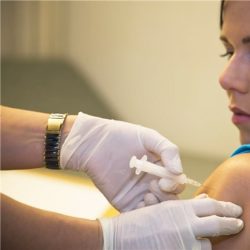
Skin tumor vaccine shows promise: A German Study
Papillomaviruses (linked to cervical cancer when they infect the mucosal tissue in the female reproductive tract) can also infect normal skin, where they cause warts and possibly non-melanoma skin cancer, mostly in immune-suppressed organ transplant patients. An article published in PLOS Pathogens suggests that vaccination might prevent virus-associated benign and malignant … [Read more...]

Sex hormone levels at midlife linked to heart disease risk in women: University of Pittsburgh Study
As hormone levels change during the transition to menopause, the quality of a woman's cholesterol carriers degrades, leaving her at greater risk for heart disease, researchers at the University of Pittsburgh Graduate School of Public Health discovered. The first-of-its-kind evaluation, supported by the National Institutes of Health (NIH), was done using an advanced method to … [Read more...]
Adding sugar to high-fat Western diet could be worse than high-fat diet alone: An Italian Study
A high-fructose, high-fat diet can cause harmful effects to the livers of adult rats, according to new research published in Experimental Physiology, providing new insight into the effects of adding fructose to a Western diet high in fat. The study showed that short-term consumption of a Western diet, rich in saturated fats and fructose, is more damaging for healthy liver … [Read more...]

Almonds reduce the risk of heart disease: Aston University Study
Scientists have found that eating almonds in your diet can reduce the risk of heart disease by keeping blood vessels healthy. Research found that they significantly increase the amount of antioxidants in the blood stream, reduce blood pressure and improve blood flow. These findings add weight to the theory that Mediterranean diets with lots of nuts have big health … [Read more...]

Long-distance training saddle young cyclists with fragile bones: Wake Forest University Study
Young cyclists training to join the Tour de France could be causing irreversible damage to their bones. The combination of cycling extreme distances and restricting caloric intake to reduce weight can decrease bone density to levels that put young athletes at greater risk for serious fractures and, in the long term, developing osteoporosis. It is unclear whether these … [Read more...]

Adults can undo heart disease risk by changing lifestyle: Northwestern University Study
The heart is more forgiving than you may think -- especially to adults who try to take charge of their health, a new Northwestern Medicine® study has found. When adults in their 30s and 40s decide to drop unhealthy habits that are harmful to their heart and embrace healthy lifestyle changes, they can control and potentially even reverse the natural progression of coronary … [Read more...]

Influence of westernization spells danger for public health in Nigeria: University of Warwick Study
The lifestyle altering effects of westernization could be responsible for the high prevalence of obesity, and associated health risks in sub-Saharan Africa, researchers have found. The study, published in PLOS ONE, by a team from the University of Warwick Medical School found that over one in five women in Nigeria were reported to be overweight or obese, with this statistic … [Read more...]

Healthy lifestyle is crucial for women of childbearing age: Academy of Nutrition and Dietetics Study
Nutrition is crucial before, during and after pregnancy to optimize health for both mother and child, according to an updated position paper and a new practice paper from the Academy of Nutrition and Dietetics. The Academy's position paper "Nutrition and Lifestyle for a Healthy Pregnancy Outcome" has been published in the Journal of the Academy of Nutrition and Dietetics. An … [Read more...]

Food labelling: University of Greenwich Study
People munching popcorn in a cinema don't change their eating habits whether the snacks are labelled high fat, low fat or not labelled at all, even if they are concerned about their weight, according to a new study led by the University of Greenwich. But add in a third factor -- the socioeconomic background of eaters -- and some quirky results emerge. When concerned eaters … [Read more...]
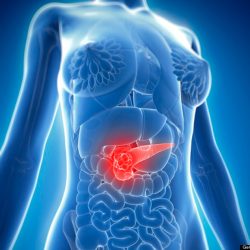
Pancreatic cancers could be prevented by lifestyle changes: A British Study
Almost 40 per cent of pancreatic cancers -- one of the deadliest forms of cancer -- could be avoided in the UK through maintaining a healthy weight and not smoking according to Cancer Research UK, in a call to arms against the disease. Every year 8,800 people are diagnosed with the disease in the UK but survival rates remain very low, with only three per cent of people … [Read more...]

Process that affects fat distribution, metabolic syndrome found: A Study
Building upon their earlier research on the biology of fat metabolism, Joslin scientists discovered that microRNAs -small RNA molecules that play important roles in regulation in many types of tissue -- play a major role in the distribution and determination of fat cells and whole body metabolism. Also, the study is the first to reveal that microRNAs (miRNAs) influence the … [Read more...]

Exercise, diabetes affect amount of fat inside bones: University of North Carolina Study
In your bones, there is fat. Why? Researchers don't know, but they have theories. How does it get there? They have theories about that, too. Is it the same sort of fat found in muscle? Not sure. Is this bone fat a bad thing? Yes. Researchers think it is. But sometimes, they say, it might not be so bad. "This is a new field," said Maya Styner, MD, an assistant … [Read more...]

Roux-en-Y gastric bypass surgery may reduce heart disease risk for obese patients with type 2 diabetes: A Study
Obese patients with Type 2 diabetes who don't have excessive surgical risk may find that Roux-en-Y gastric bypass (RYGB) surgery can help them reduce their risk of heart disease, a new clinical trial shows. "There is emerging evidence highlighting the potential health benefits of bariatric surgery in managing obese patients with Type 2 diabetes. In the past, lifestyle advice … [Read more...]

Sleep, mood improves after substantial weight loss: A Study
Obese adults who lose at least 5 percent of their body weight report that they sleep better and longer after six months of weight loss, according to a new study. "This study confirms several studies reporting that weight loss is associated with increased sleep duration," said the study's lead investigator, Nasreen Alfaris, MD, MPH, a fellow in the Department of Medicine at … [Read more...]

BMI measurement may be missing 25 percent of children who could be considered obese: A Study
Physicians using body mass index (BMI) to diagnose children as obese may be missing 25 percent of kids who have excess body fat despite a normal BMI, which can be a serious concern for long-term health, according to a Mayo Clinic study published online in Pediatric Obesity. The researchers found that BMI has high specificity in identifying pediatric obesity, meaning BMI … [Read more...]

Positive, long-term outcomes in fight against Cushing’s syndrome: A Study
Sinai Hospital of Baltimore endocrinologist, Henry G. Fein, M.D., today presented new research showing that patients with Cushing’s syndrome, a rare disease that can lead to extreme weight gain, type 2 diabetes, high blood pressure and psychological issues, experienced significant, sustained weight loss while taking oral medication daily over a number of years to manage … [Read more...]
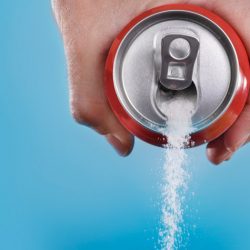
Inconsistent sugar recommendations raise questions: A Study
Sugar has been a part of the human diet since sugarcane was domesticated in 8000 B.C., but today myths and misunderstandings about sugar and the role it plays in health abound. In the media, sugar has been linked to obesity, toxicity, addiction, and fatty liver disease, among a host of other health outcomes, but with little, no or poor research to back up such claims, according … [Read more...]

Fruits, vegetables: Good for health, not necessarily a weight loss method: University of Alabama Study
It is a commonly recommended weight-loss tactic to increase the feeling of being full by consuming more fruits and vegetables, but that may be another diet recommendation dead-end, according to a new study from the University of Alabama at Birmingham published in the American Journal of Clinical Nutrition. The recommended daily serving amount for adults is 1.5-2 cups of … [Read more...]

Vegetarian diets produce fewer greenhouse gases and increase longevity: Loma Linda University Study
Consuming a plant-based diet results in a more sustainable environment and reduces greenhouse gas emissions, while improving longevity, according to new research from Loma Linda University Health. A study and an article, produced by researchers at Loma Linda University School of Public Health, will be published in full in the July issue of the American Journal of Clinical … [Read more...]

Hormones causing children’s weight gain: Loyola University Study
The number of children who are obese remains alarmingly high in the U.S. and, unfortunately, diseases associated with obesity are on the rise. Worried about their overweight children, many parents wonder if other diagnoses, such as hypothyroidism, could be the reason behind their child's weight gain. But according to experts more often than not the underlying issues are more … [Read more...]

Obesity before pregnancy linked to earliest preterm births: Stanford University Study
Women who are obese before they become pregnant face an increased risk of delivering a very premature baby, according to a new study of nearly 1 million California births. The findings from the Stanford University School of Medicine provide important clues as to what triggers extremely preterm births, specifically those that occur prior to 28 weeks of pregnancy. The … [Read more...]
- « Previous Page
- 1
- …
- 62
- 63
- 64
- 65
- 66
- …
- 429
- Next Page »