
A childhood family breakup can have long-term negative consequences for the children. Recent University of Illinois research looks at overall health, depression, and smoking as a health-related behavior and finds that, for girls, all three are worse. "Girls' health is more sensitive to family structure," says Andrea Beller, a U of I economist who studies educational … [Read more...]

Amygdala, a small structure in the brain is associated with charitable behavior: University of Pennsylvania Study
The amygdala, a small structure at the front end of the brain's temporal lobe, has long been associated with negative behaviors generally, and specifically with fear. But new research from Michael Platt, the James S. Riepe University Professor in the psychology, neuroscience and marketing departments at the University of Pennsylvania, along with Steve Chang from Yale University … [Read more...]

Osteoarthritis and human body clock linked: Manchester University Study
A University of Manchester biologist has for the first time established that the painful and debilitating symptoms endured by osteoarthritis sufferers are intrinsically linked to the human body clock. The study, led by Dr Qing-Jun Meng, who is a Senior Research Fellow for Arthritis Research UK, could in the years to come, pave the way for drug treatment of the joint … [Read more...]

Hunger hormone is boosted by restricted meal times: University of Southern California Study
Rats with restricted feeding schedules learn to eat more, helped by the "hunger hormone" ghrelin, according to new research from the University of Southern California. The insights, to be published in the journal eLife, could be valuable for helping the researchers develop new effective weight-loss therapies. "We are looking deep into the higher order functions of the … [Read more...]

Health benefits of beverage made of whey with calcium, Vitamin D and prebiotic dietary fibre: Lithuanian Study
Adding calcium, Vitamin D and prebiotic dietary fibre to a beverage made of whey can have huge health benefits for those who drink it, team of Lithuanian scientists has discovered. Writing in CyTA -- Journal of Food, Algirdas Liutkevicius and colleagues describe how they created -- and tested -- two different versions of a whey-based beverage. While … [Read more...]

Treatment of lupus: LupuzorTM enters phase III
LupuzorTM may become the first specific and non-immunosuppressant therapy for lupus, a disabling autoimmune disease that is currently incurable. Discovered by Sylviane Muller's team in the CNRS Immunopathologie et Chimie Thérapeutique laboratory, in Strasbourg, this peptide is the subject of a CNRS patent (granted in 2009) and has already successfully completed phases I and II … [Read more...]

Carbs boost half-marathon race performance: American Physiological Society Study
Carbohydrates are the body's main energy source during high-intensity, prolonged running, a new study published in Journal of Applied Physiology reports. Muscles use carbohydrate and fat stored in the body as fuel during exercise, but the fuel sources differ in availability. Carbohydrates can be used immediately but have limited stores. Fats require additional processing … [Read more...]

Pet boost your sex appeal: A Study
Dogs and cats are increasingly seen as being a crucial member of a traditional family, but aside from the companionship and love you receive from your pet… can they also make you appear sexier? Many men and women will agree that caring for a dog can beattractive in a potential partner, and new research published in Anthrozoös: A multidisciplinary journal of the interactions … [Read more...]

Food Fraud: Michigan State University Study
Michigan State University has not only defined the term "food fraud," but the university also is helping the United States and other countries establish the strategies to fight it. In the current issue of Food Chemistry Journal, the MSU research team introduces the topic of food fraud and provides a definition with translations in Russian, Korean and Chinese. The … [Read more...]

Fourfold increase in rate of diagnosed cases of celiac disease in the UK: University of Nottingham Study
Celiac UK, the national charity for celiac disease announces today, 12th May 2014, new research from the University of Nottingham that has found a fourfold increase in the rate of diagnosed cases of celiac disease in the United Kingdom over the past two decades, but, still three quarters of people with celiac disease may remain undiagnosed. The National Institute of Health … [Read more...]

Exercise can elevate stress response and make it more difficult to become slim: A Norwegian Study.
The obese are advised to do physical exercise. But this can increase their physiological stress responses, and thereby make it more difficult to slim, according to a new Norwegian study. This research may provide an explanation for the difficulties which many people encounter in losing weight despite energetic keep-fit efforts. "It's often said obese people should change … [Read more...]

Diets rich in antioxidant resveratrol has no link in reducing heart disease or cancer: A Johns Hopkins University Study
A study of Italians who consume a diet rich in resveratrol -- the compound found in red wine, dark chocolate and berries -- finds they live no longer than and are just as likely to develop cardiovascular disease or cancer as those who eat or drink smaller amounts of the antioxidant. "The story of resveratrol turns out to be another case where you get a lot of hype about … [Read more...]
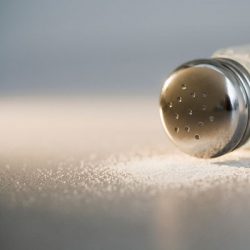
Both Sea or Table salt bad for health: Loyola University Study
Pink Himalayan, Breton Gray and Hawaiian Alea – the newer offerings of salt may be exotic, cost more and frequent the shelves of high-end stores, but they are just as bad for you as common table salt. “Typically people opt for natural vs. processed to avoid preservatives such as sodium, but in this case, all salt is sodium,” says Ashley Barrient, clinical dietitian, Loyola … [Read more...]

Obese employees cost employers thousands in extra medical costs: A Study
A new study in the American Journal of Health Promotion finds that, on average, a morbidly obese employee costs an employer over $4,000 more per year in health care and related costs than an employee who is of normal weight. The study also revealed that obese individuals who had comorbidities such as high blood pressure, diabetes, and high cholesterol incurred more costs … [Read more...]

B12 injection not proven to increase energy: Loyola University Study
Feeling sluggish? Gaining weight? What you need is a shot in the arm, claim advertisers for trendy vitamin B12 injections. Don't let marketers needle you. "If medical testing confirms that an individual has a vitamin B12 deficiency, a vitamin B12 supplement will help. But if a B12 deficiency has not been identified by a physician or primary care doctor, there is no need to … [Read more...]

Early menopause increases heart failure risk in smokers: The North American Menopause Society Study
Women who go through menopause early -- at ages 40 to 45 -- have a higher rate of heart failure, according to a new study published online today in Menopause, the journal of The North American Menopause Society (NAMS). Smoking, current or past, raises the rate even more. Research already pointed to a relationship between early menopause and heart disease -- usually … [Read more...]

Olive, sunflower oil is bad for baby skin: Manchester University Study
Using olive or sunflower oil on new born babies' skin damages the barrier which prevents water loss and blocks allergens and infections, new research led by The University of Manchester has found. Despite most midwives recommending olive or sunflower oil for dry skin, as highlighted in a previous University study, there has been little research into the effects of these … [Read more...]

Timing of first childbirth influences women’s health at age 40: Ohio State University Study
A new study finds some surprising ways in which women's health at midlife is connected to when they had their first child and to their marital history. Researchers found that women who had their first child in their early 20s didn't report better health at midlife than those who had their first baby as a teen. "We've had all this focus on the bad effects of teen … [Read more...]

Effect of antidepressants during pregnancy: A Canadian Study
Using antidepressants during pregnancy greatly increases the risk of autism, Professor Anick Bérard of the University of Montreal and its affiliated CHU Sainte-Justine children's hospital revealed. Prof. Bérard, an expert in the fields of pharmaceutical safety during pregnancy, came to her conclusions after reviewing data covering 145,456 pregnancies. "The variety of causes of … [Read more...]

Treating colon cancer with vitamin A: A Swiss Study
A leading cause of cancer deaths worldwide, colon cancer is famously resistant to treatment. There are many reasons for this, but one has to do with a group of persisting cancer cells in the colon that cause relapses. Conventional therapies against them are mostly ineffective. EPFL scientists have now identified a biological mechanism that can be exploited to counteract colon … [Read more...]

Marriage is good for the health of men’s bones: University of California Study
Marriage is good for the health of men's bones -- but only if they marry when they're 25 or older, new UCLA research suggests. In a study published online in the peer-reviewed journal Osteoporosis International, researchers found evidence that men who married when they were younger than 25 had lower bone strength than men who married for the first time at a later age. In … [Read more...]

Breast cancer risk increased in young women after treatment for Hodgkin’s disease: A German Study
Girls treated for Hodgkin's disease during adolescence acquire a considerable risk of developing breast cancer, as shown by an observational study published in the current issue of Deutsches Ärzteblatt International. The study, which was carried out by Günther Schellong and his colleagues in the German Working Group on the Long-Term Sequelae of Hodgkin's Disease, has an … [Read more...]

Olive oil component investigated for breast cancer prevention: A Study
A major component of olive oil, hydroxytyrosol, is the subject of a Houston Methodist study of women who are at increased risk of developing breast cancer. The study focuses on the changes in breast density after one year of treatment and is the first of its kind in the United States. Tejal Patel, M.D., breast medical oncologist with Houston Methodist Cancer Center, leads … [Read more...]
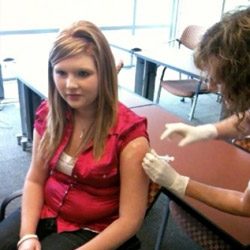
Patterns of cancer screening in Appalachian women: University of Kentucky Study
A new study by University of Kentucky researchers shows that women who never or rarely screen for breast cancer are also unlikely to receive screening for cervical cancer. The study also identified four key barriers independently associated with the lack of these cancer screenings in Appalachian women. Published in Women & Health, the study focused on six rural counties … [Read more...]

Number of cancer stem cells might not predict outcome in HPV-related oral cancers: Ohio State University Study
New research from The Ohio State University Comprehensive Cancer Center -- Arthur G. James Cancer Hospital and Richard J. Solove Research Institute (OSUCCC -- James) suggests that it may be the quality of cancer stem cells rather than their quantity that leads to better survival in certain patients with oral cancer. The researchers investigated cancer stem cell numbers in … [Read more...]
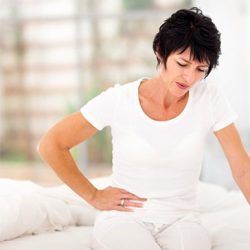
One in five women with ovarian cancer has inherited predisposition: Washington University Study
A new study conservatively estimates that one in five women with ovarian cancer has inherited genetic mutations that increase the risk of the disease, according to research at Washington University School of Medicine in St. Louis. Most women in the study would have been unaware of a genetic predisposition to ovarian cancer because they didn't have strong family histories … [Read more...]

Hormone replacement therapy cuts risk of repeat knee/hip replacement surgery by 40 percent:
Hormone replacement therapy (HRT) taken regularly for six months after a knee or hip replacement seems to cut the risk of repeat surgery by around 40%, indicates a large population based study published online in the Annals of the Rheumatic Diseases. National data for England and Wales indicate that more than 2% of procedures typically have to be repeated within three years, … [Read more...]

Moderate doses of radiation therapy to unaffected breast may prevent second breast cancers: Columbia University Study
Survivors of breast cancer have a one in six chance of developing breast cancer in the other breast. But a study conducted in mice suggests that survivors can dramatically reduce that risk through treatment with moderate doses of radiation to the unaffected breast at the same time that they receive radiation therapy to their affected breast. The treatment, if it works as well … [Read more...]

Scientists identify key to body’s use of free calcium: Johns Hopkins University Study
Scientists at Johns Hopkins report they have figured out a key step in how "free" calcium -- the kind not contained in bones -- is managed in the body, a finding that could aid in the development of new treatments for a variety of neurological disorders that include Parkinson's disease. Appearing online this week in Nature Chemical Biology, the researchers describe their use … [Read more...]

Researchers developing new approach for imaging dense breasts for abnormalities: A Study
Dartmouth engineers and radiologists are developing new approaches for an emerging technique in diagnostic imaging for breast cancer -- MRI with near-infrared spectroscopy (NIRS) as reported in the journal Academic Radiology, February 2014. Combined MRI/NIRS may benefit women whose mammogram showed an abnormality and requires further testing to rule out cancer. The test … [Read more...]
- « Previous Page
- 1
- …
- 89
- 90
- 91
- 92
- 93
- …
- 429
- Next Page »