
Adding to growing evidence on the possible health risks of electronic cigarettes, a lab team at the Veterans Affairs San Diego Healthcare System tested two products and found they damaged cells in ways that could lead to cancer. The damage occurred even with nicotine-free versions of the products. "Our study strongly suggests that electronic cigarettes are not as safe as … [Read more...]
Women Health


Early-life exercise alters gut microbes, promotes healthy brain and metabolism: University of Colorado Study
The human gut harbors a teeming menagerie of over 100 trillion microorganisms, and researchers at the University of Colorado Boulder have discovered that exercising early in life can alter that microbial community for the better, promoting healthier brain and metabolic activity over the course of a lifetime. The research, which was recently published in the journal … [Read more...]

New regulators of most prevalent liver disease: A Swiss Study
Excessive alcohol consumption, as well as obesity leads to the accumulation of fat in the liver, a disease termed fatty liver disease (FLD) or steatosis. FLD is one of the most prevalent diseases in Western societies and affects about 30% of the adult population. Importantly, FLD increases the risk of liver failure, diabetes and cancer and no pharmacological therapies exist for … [Read more...]

Potent stimulator of new bone growth maylead to New Drugs for Osteoporosis: Washington University Study
Scientists at Washington University School of Medicine in St. Louis have discovered what appears to be a potent stimulator of new bone growth. The finding could lead to new treatments for osteoporosis and other diseases that occur when the body doesn't make enough bone. Osteoporosis affects 55 percent of Americans age 50 and older. Of that age group, one in three women and … [Read more...]
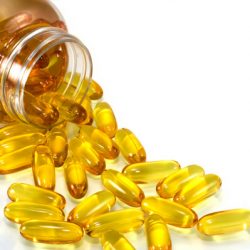
Vitamin E protects against memory disorders: A Finnish Study
Elderly people with high serum vitamin E levels are less likely to suffer from memory disorders than their peers with lower levels, according to a study published recently in Experimental Gerontology. According to the researchers, various forms of vitamin E seem to play a role in memory processes. The study was carried out in cooperation between the University of Eastern … [Read more...]

People choose healthy options at the grocery store if are at risk of losing healthy food discount: A Study
People are more likely to choose healthy options at the grocery store if they use the risk of losing their monthly healthy food discount as a motivational tool, according to new research published in Psychological Science, a journal of the Association for Psychological Science. The research adds to a body of work aimed at understanding which factors are most effective for … [Read more...]

Women suffering from pelvic pain caused by endometriosis may need psychological intervention: A Study
A new study published in the Journal of Psychosomatic Obstetrics & Gynecology has found that women who suffer from pelvic pain caused by endometriosis may need psychological intervention in order to help improve their mental health and quality of life. The study, which assessed quality of life, anxiety and depression in 110 patients with surgically diagnosed … [Read more...]

Irritable Bowel Syndrome (IBS) patients are vitamin D deficient: University of Sheffield Study
A large proportion of people living with Irritable Bowel Syndrome (IBS) are vitamin D deficient, a new study has found. Researchers from the University of Sheffield discovered a significant association between a patient's vitamin D levels and the severity of their IBS symptoms, particularly the extent to which IBS affects their quality of life. The study, which is the … [Read more...]

Overeating and depression linked: Yale University Study
Chronic overeating and stress are tied to an increased risk of depression and anxiety, and in a new study, Yale researchers explain why that happens and suggest a possible solution. The researchers report that the anesthetic ketamine reverses depression-like symptoms in rats fed a high-fat diet in a similar way it combats depression and synaptic damage of chronic stress in … [Read more...]

How drug reverses obesity, diabetes and fatty liver disease: University of Michigan Study
Researchers at the University of Michigan have identified how a promising drug in clinical trials for the treatment of obesity and related metabolic disorders improves the metabolism of sugar by generating a new signal between fat cells and the liver. In addition to illuminating how the drug, amlexanox, reverses obesity, diabetes and fatty liver disease, the findings suggest … [Read more...]

Tooth fillings of the future may incorporate bioactive glass: Oregon State University Study
A few years from now millions of people around the world might be walking around with an unusual kind of glass in their mouth, and using it every time they eat. Engineers at Oregon State University have made some promising findings about the ability of "bioactive" glass to help reduce the ability of bacteria to attack composite tooth fillings -- and perhaps even provide some … [Read more...]

Facebook dependency: University of Akron Study
What drives you to Facebook? News? Games? Feedback on your posts? The chance to meet new friends? If any of these hit home, you might have a Facebook dependency. But that's not necessarily a bad thing, says Amber Ferris, an assistant professor of communication at The University of Akron's Wayne College. Ferris, who studies Facebook user trends, says the more people use … [Read more...]

‘Paris thin’ models link with Anorexia nervosa and death from starvation: A Study
Prohibiting runway models from participating in fashion shows or photo shoots if they are dangerously thin would go a long way toward preventing serious health problems among young women--including anorexia nervosa and death from starvation--according to experts from Harvard T.H. Chan School of Public Health. In an editorial that will be published online December 21, 2015 in … [Read more...]

Use of Tanning Bed by Teens: A Study
The U.S. Food and Drug Administration (FDA) has proposed a ban on tanning bed use by those under 18. In 2013, a law was enacted in New Jersey banning those under the age of 17 from using tanning beds. Jerod L. Stapleton, PhD, is a behavioral scientist at Rutgers Cancer Institute of New Jersey and assistant professor of medicine at Rutgers Robert Wood Johnson Medical School, … [Read more...]

Poor diuretic response associated with worse clinical outcomes: European Society of Cardiology Study
Poor diuretic response is associated with worse in-hospital and post-discharge clinical outcomes, results of the RELAX-AHF trial reveal. The study also found that serelaxin has a neutral effect on diuretic response. These novel data from the RELAX-AHF trial were presented by lead author Professor Adriaan A. Voors at the Heart Failure Congress 2014, held 17-20 May in Athens, … [Read more...]

Sense of taste may affect length of life: University of Michigan Study
Perhaps one of the keys to good health isn't just what you eat but how you taste it. Taste buds -- yes, the same ones you may blame for that sweet tooth or French fry craving -- may in fact have a powerful role in a long and healthy life -- at least for fruit flies, say two new studies that appear in the Proceedings of the National Academy of Sciences of the United States of … [Read more...]

Little exercise, heavy use of electronic media constitute a significant health risk for children: University of Eastern Finland Study
The Physical Activity and Nutrition in Children Study, PANIC, carried out by the Institute of Biomedicine at the University of Eastern Finland shows that low levels of physical activity combined with heavy use of electronic media and sedentary behavior are linked to an increased risk for type 2 diabetes and vascular diseases already in 6-8 year-old children. The study was … [Read more...]

HRT therapy in women increases risk of acute pancreatitis: A Canadian Study
Women who use postmenopausal hormone replacement therapy (HRT) may be at increased risk of acute pancreatitis, found a new study in CMAJ (Canadian Medical Association Journal). Acute pancreatitis, a sudden inflammation of the pancreas, has symptoms that range from mild discomfort to severe, debilitating pain and may, in some cases, even lead to death. Although several … [Read more...]
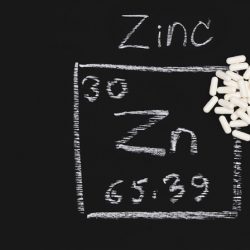
Zinc supplementation boosts immune system in children: A Study
Zinc supplements reduce diarrhea and other infections in malnourished children, and may prevent death, according to a new study published in The Cochrane Library. The study is the first Cochrane systematic review to focus on zinc as a means to prevent childhood death, including deaths caused by diarrhea, one of the biggest killers of under-fives. Zinc is a micronutrient with … [Read more...]
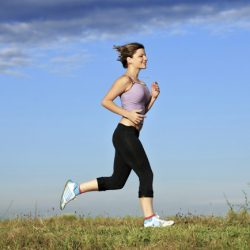
Mathematical model to optimize running: A French Study
How can runners improve their performance, weight and fitness? Amandine Aftalion from the Mathematics Laboratory in Versailles (CNRS/University of Versailles-Saint-Quentin-en-Yvelines) and Frédéric Bonnans from the Center of Applied Mathematics (CNRS/Inria/École polytechnique) have produced a mathematical model to optimize running, which could lead to personal e-coaching … [Read more...]
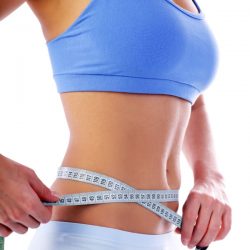
Weight loss through diet changes can improve sleep at any body weight: University of Pennsylvania Study
Weight loss due to dietary changes can improve sleepiness at any weight, says a study published by researchers from the Perelman School of Medicine at the University of Pennsylvania this month in the journal Sleep. The findings offer new insights into how weight fluctuations impact numerous aspects of sleep independent of body weight. Previous studies have linked obesity … [Read more...]

New ‘exercise hormone’ promotes physical endurance: University of Iowa Study
A new study in mice shows that exercise causes muscle to release a peptide that builds the muscle's capacity for energy production and increases physical endurance, allowing for longer and more intense exercise. The findings establish that the peptide, called musclin, is an "exercise factor" -- a hormone-like substance made by skeletal muscle in response to exercise and … [Read more...]

Genes associated with extreme longevity identified: Stanford University Study
Centenarians show successful aging as they remain active and alert at very old ages. Scientists at Stanford University and the University of Bologna have begun to unravel the basis for longevity by finding genetic loci associated with extreme longevity. Previous work indicated that centenarians have health and diet habits similar to the average person, suggesting that … [Read more...]

Active individuals who are in higher impact activities may need to maintain higher vitamin D levels: A Study
Vitamin D plays a crucial role in ensuring appropriate bone density. Active individuals who enjoy participating in higher impact activities may need to maintain higher vitamin D levels to reduce their risk of stress fractures, report investigators in The Journal of Foot & Ankle Surgery. The role of vitamin D in the body has recently become a subject of increasing … [Read more...]

Childhood family breakups harder on girls health: University of Illinois Study
A childhood family breakup can have long-term negative consequences for the children. Recent University of Illinois research looks at overall health, depression, and smoking as a health-related behavior and finds that, for girls, all three are worse. "Girls' health is more sensitive to family structure," says Andrea Beller, a U of I economist who studies educational … [Read more...]

Amygdala, a small structure in the brain is associated with charitable behavior: University of Pennsylvania Study
The amygdala, a small structure at the front end of the brain's temporal lobe, has long been associated with negative behaviors generally, and specifically with fear. But new research from Michael Platt, the James S. Riepe University Professor in the psychology, neuroscience and marketing departments at the University of Pennsylvania, along with Steve Chang from Yale University … [Read more...]

Carbs boost half-marathon race performance: American Physiological Society Study
Carbohydrates are the body's main energy source during high-intensity, prolonged running, a new study published in Journal of Applied Physiology reports. Muscles use carbohydrate and fat stored in the body as fuel during exercise, but the fuel sources differ in availability. Carbohydrates can be used immediately but have limited stores. Fats require additional processing … [Read more...]

Exercise can elevate stress response and make it more difficult to become slim: A Norwegian Study.
The obese are advised to do physical exercise. But this can increase their physiological stress responses, and thereby make it more difficult to slim, according to a new Norwegian study. This research may provide an explanation for the difficulties which many people encounter in losing weight despite energetic keep-fit efforts. "It's often said obese people should change … [Read more...]
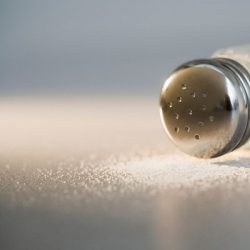
Both Sea or Table salt bad for health: Loyola University Study
Pink Himalayan, Breton Gray and Hawaiian Alea – the newer offerings of salt may be exotic, cost more and frequent the shelves of high-end stores, but they are just as bad for you as common table salt. “Typically people opt for natural vs. processed to avoid preservatives such as sodium, but in this case, all salt is sodium,” says Ashley Barrient, clinical dietitian, Loyola … [Read more...]

Intensive training affects the sleep, performance and mood of athletes: A Study
Getting enough sleep is an essential part of any athlete's training programme, but a study in the Journal of Sports Sciences reveals intensive bouts of exercise can make it hard to get 40 winks.Suspecting that intense exercise can lead to sleep disturbance, scientists from Loughborough University studied the effects of two nine day periods of heavy training on 13 highly trained … [Read more...]
- « Previous Page
- 1
- …
- 13
- 14
- 15
- 16
- 17
- …
- 98
- Next Page »
