
Excessive alcohol use continues to be a drain on the American economy, according to a study released by the Centers for Disease Control and Prevention (CDC). Excessive drinking cost the U.S. $249 billion in 2010, or $2.05 per drink, a significant increase from $223.5 billion, or $1.90 per drink, in 2006. Most of these costs were due to reduced workplace productivity, crime, and … [Read more...]

Genes involved in obesity: University College London Study
Genes involved in schizophrenia and obesity have been highlighted in a new UCL study, which could lead to a better understanding of the DNA variants which affect risk of these conditions and aid the development of improved strategies for prevention and treatment. The research by the UCL Genetics Institute, published in Annals of Human Genetics, involved analysing over one … [Read more...]

Zebrafish study sheds new light on human heart defects: University of Otago New Zealand Study
Researchers working with zebrafish at New Zealand's University of Otago have published a study providing new insights into the causes of the congenital heart defects associated with a rare developmental disorder. The disorder, Cornelia de Lange Syndrome (CdLS), is estimated to occur in up to 1 in 10,000 births worldwide. CdLS causes a range of developmental anomalies, both … [Read more...]

Nicotine intake linked to risk of addiction: University of Toronto Study
According to new research in rat models, nicotine use over time increases the speed that codeine is converted into morphine within the brain, by increasing the amount of a specific enzyme. It appears smokers' brains are being primed for a bigger buzz from this common pain killer -- which could put them at a higher risk for addiction, and possibly even overdose. "We've known … [Read more...]

Daytime sleep boost learning: A Study
A new study suggests that receiving rewards as you learn can help cement new facts and skills in your memory, particularly when combined with a daytime nap. The findings from the University of Geneva, to be published in the journal eLife, reveal that memories associated with a reward are preferentially reinforced by sleep. Even a short nap after a period of learning is … [Read more...]

Early insulin treatment for diabetes may produce better outcomes: American Osteopathic Association Study
A pilot study of 23 adults with newly diagnosed type 2 diabetes found early insulin therapy to be as effective as 15 months of oral therapy and may improve the body's ability to produce insulin. The current standard of care calls for initial treatment with oral therapies that suppress glucose production by the liver. In contrast, insulin is a hormone produced by the pancreas … [Read more...]

Cell signaling mechanism linked to obesity: Marshall University Study
Researchers with the Marshall University Joan C. Edwards School of Medicine (SOM) and the Marshall University Institute for Interdisciplinary Research (MIIR) have identified a mechanism for blocking the signal by which the cellular sodium-potassium pump amplifies oxidants (reactive oxygen species). These oxidants lead to obesity and metabolic syndrome. Their research was … [Read more...]

Nanodiamonds might prevent tooth loss after root canals: University of California Study
People undergoing root canals may have gained a powerful, if tiny, new ally. Researchers from the UCLA School of Dentistry have found that using nanodiamonds to fortify a material used in the procedure could significantly improve outcomes for patients. A paper on their research is published in the current issue of the peer-reviewed journal ACS Nano. Nanodiamonds are tiny … [Read more...]

Scientists one step closer to understanding longevity: American Chemical Society Study
Why some people live much longer than others is an enduring mystery. Now, based on a study of a worm, scientists are getting one step closer to understanding longevity. They report in ACS' Journal of Proteome Research that the metabolic profiles of the worms could accurately predict how long they would live and that middle age could be a key turning point. Other than … [Read more...]

Conceptual and perceptual factors linked to what synesthetes ‘see’ when they smell: An Australian Study
Being able to identify a smell or flavour appears to be the most important factor in how some synesthetes 'see' them, according to a study just published in the journal Cognitive Neuroscience. The aim of the study was to explore just how much conceptual and perceptual factors contribute to what synesthetes 'see' when they smell. To do this, the trio of … [Read more...]

Pre-modern people don’t get more sleep: A South African Study
It's tempting to believe that people these days aren't getting enough sleep, living as we do in our well-lit houses with TVs blaring, cell phones buzzing, and a well-used coffee maker in every kitchen. But new evidence reported in the Cell Press journal Current Biology on October 15 shows that three ancient groups of hunter-gatherers--living in different parts of the … [Read more...]

Scientists find potential epilepsy drug: A Duke University Study
Working in mice, researchers at Duke University have discovered a potential new class of drugs that may prevent the development of temporal lobe epilepsy, one of the most common and devastating forms of epilepsy. Temporal lobe epilepsy is particularly debilitating because it strikes the areas of the brain responsible for memory and mood. As a result, patients have … [Read more...]

Alcohol and first sexual experience: Risks for young women: University at Buffalo Study
If a young woman's first sexual experience involves alcohol, she is more likely to be at risk for problems such as sexual assault, and this risk may persist in her future, new research finds. The study, authored by Jennifer A. Livingston, PhD, senior research scientist at the University at Buffalo Research Institute on Addictions (RIA), surveyed 228 women, ages 18 to 20, … [Read more...]

Telomerase enzyme play a significant role in aging and cancer: University of California Study
An enzyme called telomerase plays a significant role in aging and most cancers, but until recently many aspects of the enzyme's structure could not be clearly seen. Now, scientists from UCLA and UC Berkeley have produced images of telomerase in much higher resolution than ever before, giving them major new insights about the enzyme. Their findings, published online today by … [Read more...]

Traditional Chinese medicines stall progression of diabetes: Endocrine Society Study
Traditional Chinese herbal medicines hold promise for slowing the progression from prediabetes to an official diabetes diagnosis, according to new research accepted for publication in the Endocrine Society’s Journal of Clinical Endocrinology & Metabolism (JCEM). Prediabetes is diagnosed an individual has developed elevated blood sugar levels, but glucose levels have not … [Read more...]

Researchers find metabolic clues to diabetic kidney failure: A Study
About 33 percent of people with type 2 diabetes suffer kidney damage that progresses to end stage renal disease (ESRD), at which point they require either dialysis or kidney transplantation. Scientists have thought that this kidney disease is driven by damage to the glomeruli, blood vessels in the kidney, which spill the protein albumin into the urine. Current … [Read more...]

Research advancements made in diabetes-induced blindness: A Study
Investigators at the Cedars-Sinai Regenerative Medicine Institute have identified new molecular abnormalities in the diabetic cornea that could contribute to eye problems in affected patients. With this new knowledge, investigators aim to accelerate the process of healing and repair in damaged corneas to ultimately reverse the effects of diabetes-induced eye … [Read more...]

Fish derived serum omega-3 fatty acids help reduce risk of type 2 diabetes: A Finnish Study
High concentrations of serum long-chain omega-3 fatty acids may help reduce the risk of type 2 diabetes, according to a University of Eastern Finland study published recently in Diabetes Care. The sources of these fatty acids are fish and fish oils. Type 2 diabetes is becoming increasingly widespread throughout the world, including Finland. Overweight is the most … [Read more...]

Maternal stress alters offspring gut and brain through vaginal microbiome: Endocrine Society Study
Changes in the vaginal microbiome are associated with effects on offspring gut microbiota and on the developing brain, according to a new study published in Endocrinology, a journal of the Endocrine Society. The neonate is exposed to the maternal vaginal microbiota during birth, providing the primary source for normal gut colonization, host immune maturation, and metabolism. … [Read more...]
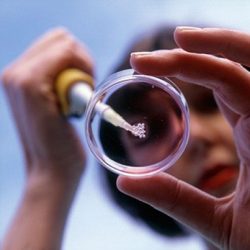
No benefit in IVF from routinely freezing all embryos before transfer: A Study
An IVF technique which freezes all embryos generated in an initial treatment cycle and transfers them in a later cycle as freeze-thawed embryos does not improve outcome as some studies have suggested. Results of the study, performed at the Instituto Valenciano de Infertilidad (IVI) clinic in Valencia, Spain, are presented today at the ESHRE Annual Meeting by Dr Ernesto … [Read more...]

Method to assess UTI risk in women after pelvic-floor surgery: Loyola University Study
Researchers at Loyola University Chicago Stritch School of Medicine may have identified a way to assess who is at risk for developing a urinary tract infection (UTI) following pelvic-floor surgery. These findings were reported in the latest issue of PLOS ONE. Urinary tract infections (UTIs) are the most common type of bacterial infection and have estimated treatment costs … [Read more...]

Novel anti-clotting therapy in halted trial no better than existing agents: American College of Cardiology Study
A novel therapy that would allow doctors to turn the body's blood-clotting ability off and on in a more controlled way was about as effective as established anticoagulants in patients undergoing angioplasty but was associated with higher rates of moderate to severe bleeding, according to an analysis of data from a terminated Phase III trial presented at the American College of … [Read more...]

Nutrients turn on key tumor signaling molecule, fueling resistance to cancer therapy: University of California Study
Tumors can leverage glucose and another nutrient, acetate, to resist targeted therapies directed at specific cellular molecules, according to Ludwig Cancer Research scientists studying glioblastoma, a deadly brain cancer. The findings, published in the July 13 Proceedings of the National Academy of Sciences, demonstrate that nutrients can strongly affect the signaling … [Read more...]
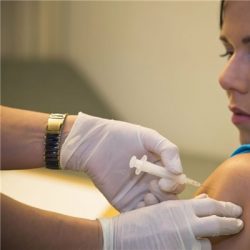
Cancer discovery links experimental vaccine and biological treatment: University of Wisconsin-Madison Study
A new study at the University of Wisconsin-Madison has linked two seemingly unrelated cancer treatments that are both now being tested in clinical trials. One treatment is a vaccine that targets a structure on the outside of cancer cells, while the other is an altered enzyme that breaks apart RNA and causes the cell to commit suicide. The study was published July 13 in the new … [Read more...]
Popular blood-diet debunked: A Canadian Study
Researchers from the University of Toronto (U of T) have found that the theory behind the popular blood type diet--which claims an individual's nutritional needs vary by blood type--is not valid. The findings are published this week in PLoS One. "Based on the data of 1,455 study participants, we found no evidence to support the 'blood-type' diet theory," said the senior … [Read more...]

Multihormone reverses metabolic damage of high calorie diet: A German Study
A single molecule, which acts equally on the receptors of the metabolic hormones glucagon and glucagon-like peptide-1 (GLP-1) improves body weight and diabetes through restored function of the anti-obesity hormone leptin. This was discovered by an international team comprising scientists from the Helmholtz Center Munich, Germany, Indiana University and the San Diego-based … [Read more...]

Muscle-strengthening, conditioning in women linked with reduced risk of diabetes: A Danish Study
Aerobic exercise is known to prevent type 2 diabetes, and muscle-strengthening alone or in combination with aerobic exercise improves diabetic control among those with diabetes. Although men who weight train have been found to have an associated reduced risk of developing diabetes, whether such an association exists for women has not been established. In this week's PLOS … [Read more...]

Intervention to help reduce weight in people with schizophrenia: University of Southampto Study
A group of researchers, led by Professor Richard Holt at the University of Southampton, are to investigate whether people with schizophrenia or first episode psychosis are able to reduce their weight through a structured education program. People with schizophrenia are two to three times more likely to be overweight or obese. As well as a range of adverse physical health … [Read more...]

Fiber prevents diabetes and obesity: A French Study
Scientists have known for the past twenty years that a fiber-rich diet protects the organism against obesity and diabetes but the mechanisms involved have so far eluded them. A French-Swedish team including researchers from CNRS, Inserm and the Université Claude Bernard Lyon 1 (Unité Inserm 855 "Nutrition et Cerveau") has succeeded in elucidating this mechanism, which involves … [Read more...]

Non-coding DNA implicated in type 2 diabetes: A Imperial College London Study
Variations in non-coding sections of the genome might be important contributors to type 2 diabetes risk, according to a new study. DNA sequences that don't encode proteins were once dismissed as "junk DNA," but scientists are increasingly discovering that some regions are important for controlling which genes are switched on. The new study, published in Nature Genetics, is … [Read more...]
- « Previous Page
- 1
- …
- 107
- 108
- 109
- 110
- 111
- …
- 429
- Next Page »