
Laboratory rats who breathed Beijing's highly polluted air gained weight and experienced cardio-respiratory and metabolic dysfunctions after three to eight weeks of exposure. A study appearing in the March issue of the Journal of the Federation of American Societies for Experimental Biology (FASEB) placed pregnant rats and their offspring in two chambers, one exposed to … [Read more...]

Desire for romance leads to increased substance, alcohol or tobacco use in adolescents: A Study
Research published in the International Journal of Adolescence and Youth has examined whether the desire for romance leads to increased substance alcohol or tobacco use in adolescents. Wura Jacobs, Kwon Chan Jeon, Patricia Goodson & Thomas W. Valente studied over 1,100 Grade 10 pupils in Los Angeles, USA examining whether an association could be drawn between romantic … [Read more...]

Stigma regarding weight loss may be overblown: North Carolina State University
A qualitative study from North Carolina State University finds that most people who have lost a lot of weight don't perceive themselves as being "judged" because they used to be overweight or obese -- which contradicts earlier research that people were still stigmatized even after reaching a healthy weight. Previous research found that people judge thin individuals more … [Read more...]

Health behaviors of those who maintain a healthy weight: A Study
If there is one thing to avoid when trying to lose or maintain a healthy weight, it's a restrictive diet! Instead, simple routine behaviors may be key. To shed light on the health behaviors of those who maintain a healthy weight, Cornell Food and Brand Lab researchers developed an online Global Healthy Weight Registry (formerly named the Slim by Design Registry). Adults of … [Read more...]

Light-to-moderate drinking good for your heart: Norwegian University Study
People who drink wine, liquor or beer regularly are less prone to heart failure and heart attacks than those who rarely or never drink. Three to five drinks a week can be good for your heart. Drinking a little alcohol every day may be part of a healthy lifestyle, according to Imre Janszky, a professor of social medicine at the Norwegian University of Science and Technology … [Read more...]

Exercise to control gestational hypertension: A Spanish Study
Researchers at UPM and UWO have shown that performing supervised moderate-intensity exercise during pregnancy can prevent gestational hypertension in pregnant women and overweight in newborns. A team of researchers from Universidad Politécnica de Madrid and University of Western Ontario (Canada) has carried out a randomized clinical trial with healthy pregnant women in three … [Read more...]

Body recovery from an ultramarathon: A Study
Ultramarathon runners can expect an approximate five-to-seven-day subjective recovery post race, according to research presented this week at the Association of Academic Physiatrists Annual Meeting in Sacramento, Calif. The study also looked at factors that affect physical recovery and a runner's ability to return to full running speed after participation in an … [Read more...]

Using a mirror for squat exercises: A Study
Despite being common practice, performing squat exercises in front of a mirror has no effect on preferential loading, according to a pilot study presented this week at the Association of Academic Physiatrists Annual Meeting in Sacramento, Calif. The double-legged squat is regularly used in exercise and rehabilitation, and it is common to perform these squats in front of a … [Read more...]
Paleo diet is dangerous, increases weight gain and diabetes: University of Melbourne Study
A new study has revealed following a low-carbohydrate, high-fat diet for just eight weeks can lead to rapid weight gain and health complications. The surprise finding, detailed in a paper in Nature journal Nutrition and Diabetes, has prompted University of Melbourne researchers to issue a warning about putting faith in so-called fad diets with little or no scientific … [Read more...]

Breast milk sugars promote healthy infant growth through gut microbiome: A Study
Bacteria that live in the gut interact with dietary components to affect health and wellness. In a study published February 18 in Cell, a team led by Jeffrey Gordon at the Washington University School of Medicine in St. Louis now finds key components in breast milk that promote healthy infant growth and how interactions with the gut bacteria drive this process. Childhood … [Read more...]

Disconnect between stated health concerns and actual food purchases: New York University Study
With the public under a seemingly constant barrage of nutritional information and advice, researchers are making headway at understanding how people make choices when shopping for food. New research aims to untangle the apparent disconnect between stated health concerns and actual food purchases. In "Impact of Healthy Alternatives on Consumer Choice: A Balancing Act," … [Read more...]

A new system in a virtual training room for sports exercises: Bielefeld University Study
CITEC is funding this large-scale research project with 1.6 million Euro and it will run until 2017. During a project presentation the researchers showcased what their system is capable of. Using the example of a squat exercise, they presented the new technology, which will help not only athletes, but also physical rehabilitation patients learn movement exercises and correct … [Read more...]

Aging treatments shown to have opposite effects on males and females: University of Southern California Study
What helps her live longer might be harmful to him, according to a new study that may shed light on how and why organisms age. Analyzing years of previous research on dietary and pharmaceutical tests on flies and mice, researchers showed that aging interventions can have opposite effects on mortality rates in males versus females. The findings appear consistent with data … [Read more...]

Epidemiologist uncovers new genes linked to abdominal fat: University of Louisville Study
Excess abdominal fat can be a precursor to diseases such as cardiovascular disease, type 2 diabetes and cancer. A person's measure of belly fat is reflected in the ratio of waist circumference to hip circumference, and it is estimated that genetics account for about 30-60 percent of waist-to-hip ratio (WHR). Kira Taylor, Ph.D., M.S., assistant professor, University of … [Read more...]

Who’s to blame for obesity? Policy makers, the food industry, or individuals: University of Illinois Study
Fast food restaurants take a lot of heat for the rise in obesity in the United States, but is it really their fault? A research survey conducted by two food economists revealed that most people believe individuals are to blame for their own obesity -- not restaurants, grocery stores, farmers, or government policies. One implication from this research is that creating and … [Read more...]

Fish oil help preserve brain cells: A Study
People with higher levels of the omega-3 fatty acids found in fish oil may also have larger brain volumes in old age equivalent to preserving one to two years of brain health, according to a study published in the January 22, 2014, online issue of Neurology®, the medical journal of the American Academy of Neurology. Shrinking brain volume is a sign of Alzheimer’s disease as … [Read more...]

Morbidity higher in obese liver transplant recipients with diabetes: A New Zealand Study
Researchers from New Zealand report that morbidity following liver transplant is highest among obese patients with diabetes, but these risk factors do not influence post-transplant survival. According to the study published in Liver Transplantation, a journal of the American Association for the Study of Liver Diseases and the International Liver Transplantation Society, body … [Read more...]

Effect of maternal glycemia on childhood obesity and metabolic dysfunction
In a study to be presented on Feb. 5 in an oral concurrent session at 1:15 p.m. PST, at the Society for Maternal-Fetal Medicine's annual meeting, The Pregnancy Meeting™, in San Diego, researchers will report on the impact of maternal glycemia on childhood obesity and metabolic dysfunction. The study, titled The Effect of Maternal Glycemia on Childhood Obesity and Metabolic … [Read more...]

FDA approves new drug for binge eating disorder (BED)
The United States Food and Drug Administration (FDA) recently approved lisdexamfetamine dimesylate, under the brand name Vyvanse, to treat moderate to severe binge eating disorder (BED) in adults, a first of its kind prescription drug specifically indicated for BED. "TOS has long supported new tools to assist with treating obesity," says Martin Binks, PhD, TOS Secretary … [Read more...]

Role of dietary advanced glycation end products in the risk of Alzheimer’s disease: A Study
A new paper published in the Journal of Alzheimer's Disease provides evidence that cooking foods at high temperatures increases the risk of Alzheimer's disease. This study looked at the content of advanced glycation end products (AGEs) in national diets and clinical studies comparing and compared total AGEs to Alzheimer's disease rates. AGEs are a group of compounds that are … [Read more...]

Basic building block of the body could prevent breast cancer: University of Kansas Study
Preventing cancer requires intimate knowledge of how cancer starts, what causes it to grow and flourish, and how to stop it in its tracks. Sometimes this comes in the form of a vaccine (the HPV vaccine for cervical and head and neck cancers), a screening (a colonoscopy for colorectal cancer) or a blood test (the PSA level test for prostate cancer). Carol Fabian, M.D., … [Read more...]

Insulin-decreasing hormone discovered: Stanford University Study
An insulin-regulating hormone that, until now, only had been postulated to exist has been identified by researchers at the Stanford University School of Medicine. The hormone, called limostatin after the Greek goddess of starvation, Limos, tamps down circulating insulin levels during recovery from fasting or starvation. In this way, it ensures that precious nutrients remain … [Read more...]

Healthy diet linked to lower risk of chronic lung disease: A Study
Eating a diet rich in whole grains, polyunsaturated fats and nuts -- and low in red and processed meat, refined grains and sugary drinks -- is associated with a lower risk of chronic lung disease (chronic obstructive pulmonary disease or COPD), finds a study published in The BMJ this week. The finding supports the importance of a healthy diet to promote lung health. COPD … [Read more...]

Compound in green tea found to block rheumatoid arthritis
Researchers at Washington State University in Spokane have identified a potential new approach to combating the joint pain, inflammation and tissue damage caused by rheumatoid arthritis. Their discovery is featured on the cover of Arthritis and Rheumatology, a journal of the American College of Rheumatology, in print Tuesday, Feb 16. Rheumatoid arthritis is a … [Read more...]
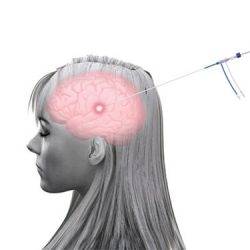
Visualase for Brain Tumors
For people with brain tumors, treatment usually involves invasive surgery as surgeons open portions of the skull to remove the cancer. If a tumor comes back, patients may begin to run out of options. A new FDA- approved device, also used to treat epilepsy, is now giving some patients another chance. Sixty-five-year-old Linda Fahey is writing a book, but weakness on her left … [Read more...]

Maternal stress hormones, maternal smoking increase daughter’s risk of nicotine dependence: A Study
Tobacco smoking by pregnant women has long been viewed as a public health risk because of smoking's adverse effects on the development of a fetus. Smoking during pregnancy is linked to numerous negative outcomes, including low birth weight, sudden infant death syndrome, and increased risk for attention deficit disorder, conduct disorder, and nicotine use in offspring. … [Read more...]

Estimated risk of breast cancer increases as red meat intake increases: A Study
So far, studies have suggested no significant association between red meat intake and breast cancer. However, most have been based on diet during midlife and later, and many lines of evidence suggest that some exposures, potentially including dietary factors, may have greater effects on the development of breast cancer during early adulthood. So a team of US researchers … [Read more...]

Unfit, lean people are better protected against heart attacks than fit and obese people: Umea University Study
In a study published in the European Heart Journal, an Umeå research team has shown that physical fitness in your teens can reduce the risk of heart attack later in life, while men who are fit and obese in their teens run a higher risk of having a heart attack than unfit, lean men. In the study, Gabriel Högström, Anna Nordström and professor at the Department of Community … [Read more...]

Epigenetic enzyme regulates fat formation: A German Study
Freiburg researchers demonstrate that LSD1 plays a key role in metabolic processes The human body reacts to environmental influences like cold or nutritional imbalance through adaptation. There is a change in metabolic processes in white adipose tissue in mammals. This results in the development of brown-like or beige fat cells, which are located in white fat depots and … [Read more...]
Diversity among women in their sexual attractions and sexual arousal: Queen’s University Study
New research from of the Sexuality and Gender Laboratory at Queen's University shows that heterosexual women have more diverse patterns of sexual response than previously reported. Research on women's sexual orientation and patterns of sexual response has previously focused on women's genital and subjective sexual arousal relative to their sexual identity, as heterosexual, … [Read more...]
- « Previous Page
- 1
- …
- 73
- 74
- 75
- 76
- 77
- …
- 429
- Next Page »