
The HSE’s clinical lead on obesity, Dr Donal O’Shea has said Ireland should lead the way on fighting childhood obesity by introducing a plan packaging policy on fizzy drinks and sweets. Ireland had already led the way in relation to the smoking ban and there should be a similar campaign to introduce plan packaging on unhealthy foods, he said. He was speaking after Public … [Read more...]
Weight Management

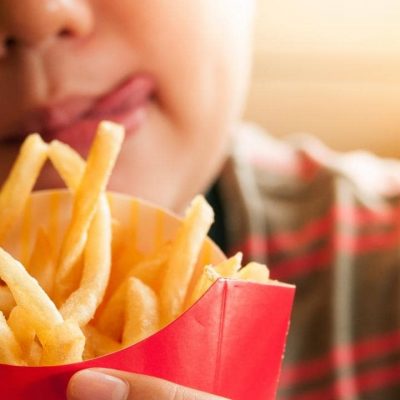
Fat cell discovery could help combat obesity-related health issues
Researchers have discovered differences in fat cells that could potentially identify people predisposed to metabolic diseases such as diabetes and fatty liver disease. The world-first discovery also identified 'fast burning' fat cells that if unlocked might help people lose weight. About 70 per cent of Australians are overweight or obese, which has been linked to metabolic … [Read more...]

With abdominal etching, plastic surgeons help patients get ‘six-pack abs’
Even with a good diet and workout routine, some men and women have trouble getting the toned abdominal appearance they want. For these patients, a technique called abdominal etching can help in creating the classic "six-pack abs" physique in men or three-vertical-line abdomen in women, reports a study in the April issue of Plastic and Reconstructive Surgery®, the official … [Read more...]

Children Exposed to Air Pollution at School may be at Greater risk of Overweight and Obesity
Exposure to air pollution, particularly at school, could be associated with a higher risk of overweight and obesity during childhood. This is the conclusion of a study by the Barcelona Institute for Global Health (ISGlobal), an institution supported by "la Caixa," performed with 2,660 children between 7 and 10 years of age from 39 schools in Barcelona. A few studies have … [Read more...]

Identity Crisis of Satiety Neurons Leads to Obesity
Obesity -- as research in the past decade has shown -- is first and foremost a brain disease. Researchers at Helmholtz Zentrum München, partners in the German Center for Diabetes Research, have now discovered a molecular switch that controls the function of satiety neurons and therefore body weight. The findings were published in the journal Nature Metabolism. The worldwide … [Read more...]

How exercise reduces belly fat in humans
Some of you may have made a New Year's resolution to hit the gym to tackle that annoying belly fat. But have you ever wondered how physical activity produces this desired effect? A signaling molecule called interleukin-6 plays a critical role in this process, researchers report December 27 in the journal Cell Metabolism. As expected, a 12-week intervention consisting of … [Read more...]
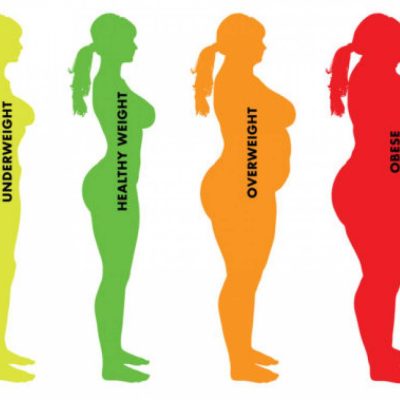
High childhood BMI linked to obesity at age 24 in women
Girls who gain weight more rapidly between the ages of 5 and 15 are more likely to be obese at age 24, according to researchers. "This highlights the importance of prevention efforts in childhood and adolescence," said Emily Hohman, assistant research professor of the Center for Childhood Obesity Research. The center is a college-wide collaboration of researchers from … [Read more...]

Childhood obesity the major risk factor for serious hip disease
Slipped Capital Femoral Epiphysis (SCFE) is a disease that occurs amongst teenagers, affecting 1 in 2,000 children. The hip deforms, and sometimes completely collapses, causing pain and life-long disability. Early recognition and treatment of the disease is important to minimise the severity. Nevertheless, SCFE is one of the most common reasons for a hip replacement in young … [Read more...]
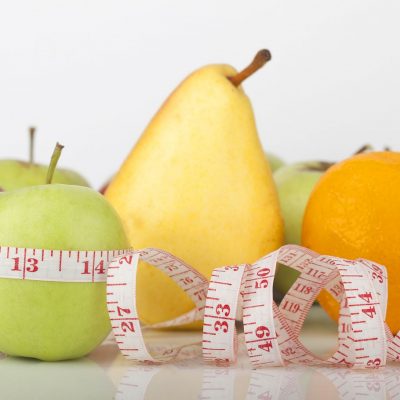
Among body shapes, pears are healthier than apples
For women, it usually accumulates around the hips, resulting in a pear-shaped look. In men, fat tends to build up around the abdomen, creating an apple shape. As it turns out, it's healthier to be a pear than an apple. A research team at the University of California, Riverside, has found that only male mice experienced neuroinflammation, or activation of the immune … [Read more...]

Working together key to weight loss in relationships
Couples who are trying to lose weight could be putting their relationship under strain by using unsuitable strategies to achieve their weight loss goals, a new study suggests. Interpersonal communication expert, Dr René Dailey, investigated how individuals interpret their partner's approaches to help weight loss, aiming to provide more tailored recommendations for couples … [Read more...]

Why zero-calorie sweeteners can still lead to diabetes, obesity
Increased awareness of the health consequences of eating too much sugar has fueled a dramatic uptick in the consumption of zero-calorie artificial sweeteners in recent decades. However, new research finds sugar replacements can also cause health changes that are linked with diabetes and obesity, suggesting that switching from regular to diet soda may be a case of 'out of the … [Read more...]

Combating childhood obesity by preventing ‘fatty liver’ in fetus
New research published in The Journal of Physiologyindicates that an obese pregnant mother and exposure to a high fat, high sugar diet during pregnancy produces a "fatty liver" in the fetus, potentially predisposing children to obesity, metabolic and cardiovascular disorders later in life. The research aims to understand the cellular mechanisms involved in laying down fat in … [Read more...]

Teens likely to crave junk food after watching TV ads
Teenagers who watch more than three hours of commercial TV a day are more likely to eat hundreds of extra junk food snacks, according to a report by Cancer Research UK. Being bombarded by TV ads for unhealthy, high calorie food could lead teens to eat more than 500 extra snacks like crisps, biscuits and fizzy drinks throughout the course of a single year compared to those … [Read more...]
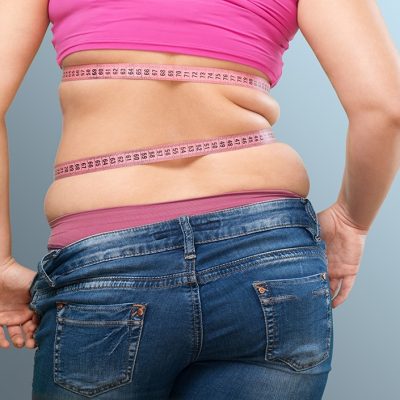
Low fitness is associated with larger waist size and higher degree of inflammation
Researchers found an inverse correlation between waist circumference and fitness, regardless of BMI Low fitness is associated with a larger waist size and a higher degree of inflammation, according to a study published January 17, 2018 in the open-access journal PLOS ONE by Anne-Sophie Wedell-Neergaard from the University of Copenhagen, Denmark, and … [Read more...]

Green tea ingredient may ameliorate memory impairment, brain insulin resistance, and obesity
A study published online in The FASEB Journal, involving mice, suggests that EGCG (epigallocatechin-3-gallate), the most abundant catechin and biologically active component in green tea, could alleviate high-fat and high-fructose (HFFD)-induced insulin resistance and cognitive impairment. Previous research pointed to the potential of EGCG to treat a variety of human diseases, … [Read more...]

Redefining obesity in postmenopausal women
There is no doubt the prevalence of obesity has increased significantly across all age groups, creating greater health risks. What exactly constitutes obesity, however, is subject to debate, especially for postmenopausal women who have a different body composition than younger women. A study published online today in Menopause, the journal of The North American Menopause … [Read more...]

Weight Loss after Bariatric Surgery Can Improve Heart Health
Significant improvements in heart shape and function can happen one year after an operation for weight loss SAN DIEGO (Tuesday, October 24, 5:30 pm PDT): In overweight and obese people, fat often gets deposited in the midsection of the body. Large amounts of this belly fat can lead to unhealthy changes in a heart’s function and size. But according to new findings presented … [Read more...]

Understanding how gastric bypass works: Finding drug targets for obesity and diabetes
A study by a team of researchers at the Massachusetts General Hospital Center for Engineering in Medicine (MGH-CEM) and Shriners Hospital for Children has made a technological advancement toward accelerating the discovery of drug targets for obesity, type II diabetes and other metabolic diseases. The novel experimental and computational workflow involves the first use of rodent … [Read more...]
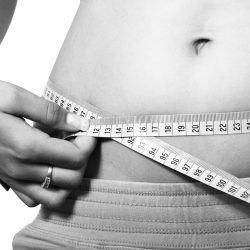
Abdominal fat a key cancer driver for postmenopausal women
Body fat distribution in the trunk is more important than body weight when it comes to cancer risk in postmenopausal women, according to a study presented at the ESMO 2017 Congress in Madrid. The findings put a new spin on weight management priorities for women in this this age-group, who are prone to abdominal weight gain, said study investigator Line Mærsk Staunstrup, … [Read more...]

Gene therapy via skin could treat many diseases, even obesity
A research team based at the University of Chicago has overcome challenges that have limited gene therapy and demonstrated how their novel approach with skin transplantation could enable a wide range of gene-based therapies to treat many human diseases. In the August 3, 2017 issue of the journal Cell Stem Cell, the researchers provide "proof-of-concept." They describe a … [Read more...]

Young adult obesity: A neglected, yet essential focus to reverse the obesity epidemic
The overall burden of the U.S. obesity epidemic continues to require new thinking. Prevention of obesity in young adults, while largely ignored as a target for prevention and study, will be critical to reversing the epidemic, says William Dietz, MD, PhD, Chair of the Sumner M. Redstone Global Center for Prevention and Wellness at the Milken Institute School of Public Health at … [Read more...]

Can smelling your food make you fat?
Our sense of smell is key to the enjoyment of food, so it may be no surprise that in experiments at the University of California, Berkeley, obese mice who lost their sense of smell also lost weight. What's weird, however, is that these slimmed-down but smell-deficient mice ate the same amount of fatty food as mice that retained their sense of smell and ballooned to twice … [Read more...]

Newly found, ‘thrifty’ genetic variant influences Samoan Obesity
The Samoas' world-leading rate of obesity is a recent phenomenon, heavily influenced by the globe's rapid shift to calorie-rich, processed foods and more sedentary lifestyles. A new study, however, suggests nearly half of Samoans have a newly identified and significant genetic variant that contributes to obesity risk; a variant that had remained undiscovered until … [Read more...]

The Trick To Turn White Fat Brown!
A signaling pathway in fat cells may one day provide the key to better treatments for obesity, according to new research by scientists in the Perelman School of Medicine at the University of Pennsylvania. They reported their findings online ahead of print in Genes & Development. Ordinary fat cells, also called white adipocytes, stuff themselves with fat molecules … [Read more...]

Insulin Resistance Reversed By Removal Of Protein
By removing the protein galectin-3 (Gal3), a team of investigators led by University of California School of Medicine researchers were able to reverse diabetic insulin resistance and glucose intolerance in mouse models of obesity and diabetes. By binding to insulin receptors on cells, Gal3 prevents insulin from attaching to the receptors resulting in cellular insulin … [Read more...]

Sleep deprivation may cause people to eat more calories
Sleep deprivation may result in people consuming more calories during the following day, according to a systematic review and meta-analysis led by researchers at King's College London. The meta analysis combined the results of many previous small intervention studies to produce a more robust answer and found that sleep-deprived people consumed an average of 385 kcal per … [Read more...]

Workplace Workout Can Do Wonders!
Employees who participate in a workplace weight management program—even those without significant weight loss—have reduced health care costs and improved quality of life (QOL), reports a study in the November Journal of Occupational and Environmental Medicine, official publication of the American College of Occupational and Environmental Medicine (ACOEM). Tzeyu L. … [Read more...]

Child Obesity On An Alarming Rise!
Researchers' global estimates indicate that by 2025, some 268 million children aged 5 to 17 years may be overweight, including 91 million obese, assuming no policy interventions have proven effective at changing current trends. Timed to coincide with this year's World Obesity Day, which is observed on October 11, investigators have also released data anticipating that … [Read more...]

Don’t blame your genes if you’re not losing weight!
You might be able to blame your genes for weighing more and increasing your risk of obesity, but you can no longer blame your genes for failing to lose weight, a comprehensive study has found. Carriers of the FTO gene are known to be on average 3 kilos (6.6lbs) heavier and 70% more likely to be obese. However, researchers at Newcastle University, publishing in The … [Read more...]

Children Should Eat Less Than 25 Grams Of Added Sugars Daily
Children ages 2 to 18 should eat or drink less than six teaspoons of added sugars daily, according to the scientific statement recommending a specific limit on added sugars for children, published in the American Heart Association journal Circulation. Six teaspoons of added sugars is equivalent to about 100 calories or 25 grams. "Our target recommendation is the same … [Read more...]
- « Previous Page
- 1
- 2
- 3
- 4
- 5
- 6
- …
- 28
- Next Page »
