Although there have been discussions about chronic obstructive pulmonary disease (COPD), a condition impacting 24 million Americans, and depression, there has been little research showing the impact depression has on patients with COPD. Two studies published in the April issue of the journal CHEST found one in four patients with COPD suffer from depressive symptoms, and if not … [Read more...]

Vaccine-Related Chronic Fatigue Syndrome: Keele University Study
A team of scientists have investigated a case of vaccine-associated chronic fatigue syndrome (CFS) and macrophagic myofasciitis in an individual demonstrating aluminium overload. This is the first report linking aluminium overload with either of the two conditions and the possibility is considered that the coincident aluminium overload contributed significantly to the … [Read more...]

Not all EGFR mutations are the same when it comes to therapy for NSCLC: A Study
Certain rare epidermal growth factor receptor (EGFR) mutations are associated with tobacco smoking, worse prognosis and poor response to EGFR tyrosine kinase inhibitor (TKI) therapy compared to the more common "classical" EGFR mutations. However, as not all rare mutations are the same, testing and therapy may need to be evaluated for each individual mutation. Lung cancer is … [Read more...]
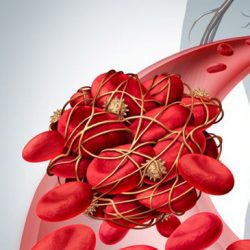
New way to prevent dangerous blood clots discovered: University of North Carolina Study
For the first time, scientists at the UNC School of Medicine have shown that eliminating the enzyme factor XIII reduces the number of red blood cells trapped in a clot, resulting in a 50 percent reduction in the size of the clot. The finding, featured in the Journal of Clinical Investigation, has major implications for people at high risk of deep vein thrombosis (DVT), a … [Read more...]

Removing gall bladder for suspected common duct stone shows benefit: A Swiss Study
Among patients with possible common duct stones, removal of the gall bladder, compared with endoscopic assessment of the common duct followed by gall bladder removal, resulted in a shorter length of hospital stay without increased illness and fewer common duct examinations, according to a study in the July 9 issue of JAMA. Many common duct stones eventually pass into the … [Read more...]

New clues to brain’s wiring found by scientists: Washington University Study
New research provides an intriguing glimpse into the processes that establish connections between nerve cells in the brain. These connections, or synapses, allow nerve cells to transmit and process information involved in thinking and moving the body. Reporting online in Neuron, researchers at Washington University School of Medicine in St. Louis have identified a … [Read more...]

Deployment-related respiratory symptoms in returning veterans: A Study
In a new study of the causes underlying respiratory symptoms in military personnel returning from duty in Iraq and Afghanistan, a large percentage of veterans had non-specific symptoms that did not lead to a specific clinical diagnosis. Most patients who did receive a diagnosis had evidence of asthma or nonspecific airway hyperreactivity, which may have been due in some cases … [Read more...]

Treatment of rheumatoid arthritis: Ghent University Belgium Study
Patients with more or less severe forms of rheumatoid arthritis (RA) may have the same painful symptoms, but does this mean that the cause of their illness is the same? And therefore that they should all receive the same treatment? Scientists at VIB and Ghent University have demonstrated with their research into inflammasomes that RA should be considered as a syndrome rather … [Read more...]

Intake of vitamin D in the first year of life appears to set children have more muscle mass: McGill University Study
A healthy intake of vitamin D in the first year of life appears to set children up to have more muscle mass and less body fat as toddlers, according to a new study published in the journal Pediatric Obesity. The findings emerged from research initially aimed at confirming the importance of vitamin D for bone density. The additional benefit in terms of body composition came … [Read more...]

Alternative ways to stop weight gain: University of North Carolina Study
A new study has identified two self-regulation strategies effective in preventing weight gain among young adults. At the end of the three-year study, researchers showed that young adults taught self-regulation strategies were more successful at preventing weight gain than those in the control group and 50 percent fewer had become obese. By age group, young adults are gaining … [Read more...]

Positive effects to calorie restriction in nonobese adults: A Study
A 25 percent calorie restriction over two years by adults who were not obese was linked to better health-related quality of life, according to the results of a randomized clinical trial published online by JAMA Internal Medicine. Calorie restriction can increase longevity in many species but concerns remain about potential negative effects of calorie restriction in … [Read more...]

Control of fertility: New player identified: A Study
Individual small RNAs are responsible for controlling the expression of gonadoliberin or GnRH (Gonadotropin-Releasing Hormone), a neurohormone that controls sexual maturation, the appearance of puberty, and fertility in adults. This has just been demonstrated by the "Development and Plasticity of the Neuroendocrine Brain" team led by Vincent Prévot, Inserm Research Director … [Read more...]

Cardiovascular risk tool overestimates actual chance of cardiovascular events: A Study
A widely recommended risk calculator for predicting a person's chance of experiencing a cardiovascular disease event -- such as heart attack, ischemic stroke or dying from coronary artery disease -- has been found to substantially overestimate the actual five-year risk in adults overall and across all sociodemographic subgroups. The study by Kaiser Permanente was published in … [Read more...]

New drug for treating obesity: Massachusetts Institute of Technology Study
Researchers at MIT and Brigham and Women's Hospital have developed nanoparticles that can deliver antiobesity drugs directly to fat tissue. Overweight mice treated with these nanoparticles lost 10 percent of their body weight over 25 days, without showing any negative side effects. The drugs work by transforming white adipose tissue, which is made of fat-storing cells, into … [Read more...]

Pregnancy study for overweight women leads to fewer high birth weight babies: University of Adelaide Study
The world's biggest study offering healthy eating and exercise advice to pregnant women who are overweight or obese has shown a significant reduction in the number of babies born over 4kg (8.8 pounds) in weight. The LIMIT Study, led by researchers from the University of Adelaide's Robinson Institute and the Women's and Children's Hospital, involved more than 2200 pregnant … [Read more...]

Geographic variation of human gut microbes tied to obesity: University of Arizona Study
People living in cold, northern latitudes have bacteria in their guts that may predispose them to obesity, according to a new study by researchers at the University of California, Berkeley, and the University of Arizona, Tucson. The researchers' analysis of the gut microbes of more than a thousand people from around the world showed that those living in northern latitudes … [Read more...]

Attention modification program to decrease overeating in obese children: University of California Study
Among the multiple factors that can cause obesity is an abnormal neurocognitive or behavioral response to food cues. The brain becomes wired to seek -- and expect -- greater rewards from food, which leads to unhealthful overeating. Attention modification programs, which train a person to ignore or disregard specific, problematic cues or triggers, have been used effectively … [Read more...]

Citrus can ward off your risk of stroke: A French Study
Eating foods that contain vitamin C may reduce your risk of the most common type of hemorrhagic stroke, according to a study released today that will be presented at the American Academy of Neurology's 66th Annual Meeting in Philadelphia, April 26 to May 3, 2014. Vitamin C is found in fruits and vegetables such as oranges, papaya, peppers, broccoli and strawberries. … [Read more...]

Obesity in Samoa: Brown University Study
The South Pacific archipelago of Samoa and American Samoa harbors a global health mystery that may seem both remote and extreme but could foretell trends in obesity and related conditions across much of the developing world. About three-quarters of the U.S. territory's adult population is obese, the highest rate in the world with independent Samoa quickly catching up. Rates … [Read more...]

Tackling appetite could hold the key to preventing childhood obesity: University College London Study
A heartier appetite is linked to more rapid infant growth and to genetic predisposition to obesity, according to two papers published in JAMA Pediatrics. The studies investigated how weight gain is linked to two key aspects of appetite, namely lower satiety responsiveness (a reduced urge to eat in response to internal 'fullness' signals) and higher food responsiveness (an … [Read more...]

Healthy Lunchbox Challenge helps influence healthy eating habits in children: University of South Carolina Study
During the school year, 21 million children receive free or reduced-price lunches, yet less than 10% of those children participate in the Department of Agriculture's Summer Food Service Program. This discrepancy places responsibility for food choices during the summer on parents. Previous efforts to improve the healthfulness of foods and beverages provided by parents have … [Read more...]

Metabolism role in epilepsy: Franciscan University of Steubenville Study
Researchers from the Franciscan University of Steubenville, Ohio are exploring a possible link between metabolic defects and seizures. They determined that diet could influence susceptibility to seizures, and they have identified a common diabetes drug that could be useful in treating disorders such as epilepsy. Dr. Daniel Kuebler, the principal investigator behind the … [Read more...]

Healing the heart with fat: 18-HEPE might help: Rockefeller University Study
Too much dietary fat is bad for the heart, but the right kind of fat keeps the heart healthy, according to a paper published in The Journal of Experimental Medicine. Unsaturated dietary fatty acids, such as eicosapentaenoic acid (EPA), are known to protect against cardiovascular diseases. However, the mechanism and the specific fat metabolites responsible for this protection … [Read more...]

Bad diet and loss of smell linked: Florida State University Study
Could stuffing yourself full of high-fat foods cause you to lose your sense of smell? A new study from Florida State University neuroscientists says so, and it has researchers taking a closer look at how our diets could impact a whole range of human functions that were not traditionally considered when examining the impact of obesity. "This opens up a lot of possibilities … [Read more...]

Parents rank their obese children as ‘very healthy’: University of California Study
A University of California, San Diego School of Medicine-led study suggests that parents of obese children often do not recognize the potentially serious health consequences of childhood weight gain or the importance of daily physical activity in helping their child reach a healthy weight. The study is published online in the Journal of the Academy of Nutrition and … [Read more...]

Room for improvement in elementary school children’s lunches and snacks from home: Tufts University Study
Open a child’s lunch box and you’re likely to find that the lunches and snacks inside fall short of federal guidelines. Those are the findings of a study conducted by researchers at the Friedman School of Nutrition Science and Policy at Tufts University and in the Department of Public Health and Community Medicine at Tufts University School of Medicine. The findings are … [Read more...]

Cost-effectiveness of weight-loss programs: Duke-National University of Singapore Study
In a cost-effectiveness analysis of commercial diet programs and pills, the Weight Watchers program and the drug Qsymia showed the best value for the money. The Jenny Craig regimen generated the greatest weight loss, but was also the most expensive option tested, according to researchers at Duke-National University of Singapore (NUS) Graduate Medical School. The findings, … [Read more...]

High-salt diet doubles threat of cardiovascular disease in people with diabetes: A Japanese Study
People with Type 2 diabetes who eat a diet high in salt face twice the risk of developing cardiovascular disease as those who consume less sodium, according to a new study published in the Endocrine Society's Journal of Clinical Endocrinology & Metabolism. Diabetes occurs when there is too much sugar in the bloodstream. People develop Type 2 diabetes when their bodies … [Read more...]

Breastfeeding app shows promise in supporting first-time mothers: A Study
A pilot study found that use of a mobile phone app that provided supportive texts and an online community significantly increased the rate of breastfeeding among new mothers. An abstract of the study, "Mother's Milk Messaging (MMM): A Pilot Study of an App to Support Breastfeeding in First Time Mothers," will be presented at the Pediatric Academic Societies (PAS) 2016 Meeting … [Read more...]

Breast milk linked to significant early brain growth: Washington University Study
Feeding premature babies mostly breast milk during the first month of life appears to spur more robust brain growth, compared with babies given little or no breast milk. Studying preterm infants in the Neonatal Intensive Care Unit (NICU) at St. Louis Children's Hospital, the researchers found that preemies whose daily diets were at least 50 percent breast milk had more brain … [Read more...]
- « Previous Page
- 1
- …
- 54
- 55
- 56
- 57
- 58
- …
- 429
- Next Page »