
Cardiovascular disease is a leading cause of disability globally. Participation in cardiac rehabilitation programs is associated with significantly lower death, but evidence suggests that women are significantly less likely to stick to a cardiac rehabilitation program than men, according to investigators writing in the Canadian Journal of Cardiology. Cardiac … [Read more...]
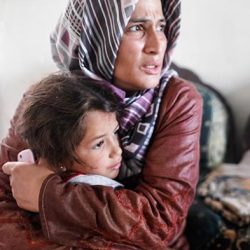
Refugee women at higher risk of preterm birth, study finds
Refugee women who come to Canada have greater risk of giving birth prematurely than non-refugee immigrants, a study by a St. Michael's Hospital researcher has found. Those risks are fueled by the fact that the preterm birth rate was 7.1 per cent among secondary refugees -- those who spent more than six months in a transit country before arriving in Canada -compared to five per … [Read more...]

Could thiamine-fortified fish sauce help fight infant beriberi in Southeast Asia?
Beriberi in infants is a public health concern with reports in parts of Southeast Asia. Caused by thiamine (B1) deficiency, beriberi generally presents among breastfed infants at three months. A disorder characterized by vomiting, convulsions and signs of heart failure, beriberi can be fatal for an infant unless thiamine is rapidly administered. In Cambodia, beriberi can result … [Read more...]

Tanning may protect skin against harmful UV irradiation but block vitamin D synthesis
As skin tans, it darkens to protect itself against harmful ultraviolet (UV) radiation, but the increasing pigment blocks vitamin D synthesis, limiting the skin's ability to produce more vitamin D, a new study from Brazil finds. Even people exposed to high levels of sunlight may be deficient in serum vitamin D because it is mainly induced by UV irradiation and synthesized … [Read more...]

Availability of community-based fitness classes leads to increased activity levels
Physical inactivity is a global health problem that leads to approximately 3.2 million deaths each year, according to the World Health Organization. Researchers from the University of Missouri School of Medicine have found that a government-sponsored community activity program in Brazil is improving activity levels of women. The researchers believe the program could be scaled … [Read more...]

New doubts on Zika as cause of microcephaly
Brazil's microcephaly epidemic continues to pose a mystery -- if Zika is the culprit, why are there no similar epidemics in other countries also hit hard by the virus? In Brazil, the microcephaly rate soared with more than 1,500 confirmed cases. But in Colombia, a recent study of nearly 12,000 pregnant women infected with Zika found zero microcephaly cases. If Zika is to blame … [Read more...]

Medical scientists discover potent method for improving drug-free fertility treatment
For those facing infertility, IVF has long been the established option to have a baby. Now Australian and Belgian medical scientists have discovered how to improve a woman's chances of becoming pregnant using a less invasive and cheaper alternative. The innovation, which has already undergone pre-clinical testing, uses growth factors to enhance an existing fertility … [Read more...]

Recommendation for better counseling access for women preferring cesarean births
A study involving over 6,500 pregnant women from 6 countries in northern Europe highlights a clear need for appropriate support and advice when cesarean section (c-section) is elected for non-medical reasons, and for the accurate communication of the risk and benefits of c-section birth, suggests new research published in the Journal of Psychosomatic Obstetrics & … [Read more...]

Cancer overtakes heart disease as the main cause of death in 12 European countries
Although diseases of the heart and blood vessels (cardiovascular disease, CVD) kill more people worldwide than anything else, with 17.3 million deaths globally, cancer has now overtaken CVD as the main cause of death in 12 European countries. New data on the burden of CVD in Europe for 2016, which are published today (Monday) in the European Heart Journal, show that in … [Read more...]

Women with unhealthy BMIs who smoke, drink at two-fold higher risk of asthma
Underweight and obese women who also drank alcohol and smoked tobacco had a two-fold higher risk of being diagnosed with asthma than women with a healthy body mass index who did not drink or smoke, a St. Michael's Hospital study found. Women with low and high body mass indexes, or BMIs, who smoked and drank were also two to three times more likely to experience … [Read more...]
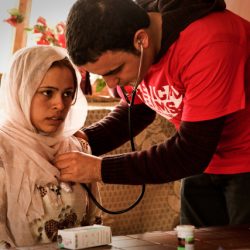
Has Syria painted a target on medical teams around the world?
Even in war, hospitals have a kind of invisible bubble around them, making them neutral territory and off limits for aggression for the sake of medical teams and their patients. But in Syria, that bubble has burst dozens of times, according to a new report from the group Physicians for Human Rights. The hospitals in just the eastern half of Aleppo city have suffered 45 … [Read more...]

Soluble corn fiber can help young women build bone, & older preserve bone
Supplementing with soluble corn fiber at two critical times in a woman's life -- adolescence and post-menopause -- can help build and retain calcium in bone, according to new research from Purdue University. "We are looking deeper in the gut to build healthy bone in girls and help older women retain strong bones during an age when they are susceptible to fractures," said … [Read more...]

Asthma is associated with polycystic ovary syndrome and excess weight
Among reproductive-age women, polycystic ovary syndrome (PCOS) as well as overweight and obesity are independently linked with asthma, new preliminary research from Australia suggests. "A greater proportion of women with polycystic ovary syndrome report asthma, and the results of this study suggest that asthma is associated with PCOS and excess weight," said lead author … [Read more...]
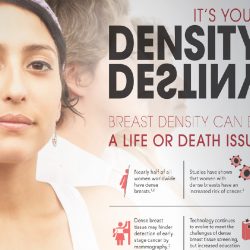
Breast density matters in detection of breast cancer
Almost 8% of women have extremely high breast density, which can make it harder for health professionals to detect breast cancer on a screening mammogram. These women are also more likely to develop breast cancer in the future. This is the warning from a new Australian alliance of breast cancer researchers, who are working together to raise awareness of the issue in the … [Read more...]
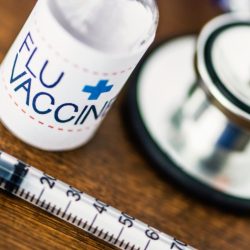
Seasonal influenza vaccination during pregnancy may reduce risk of stillbirth
Seasonal influenza vaccination may guard against stillbirth, a new study published in Clinical Infectious Diseases and available online suggests. Researchers in Western Australia analyzed data from nearly 60,000 births that occurred during the southern hemisphere's 2012 and 2013 seasonal influenza epidemics, and found that women who received the trivalent influenza vaccine … [Read more...]

Revealed! Dense-dose chemotherapy for early breast cancer does not result in significant improvement
Among women with high-risk early breast cancer, the use of tailored dose-dense chemotherapy compared with standard adjuvant chemotherapy did not result in a statistically significant improvement in breast cancer recurrence-free survival, and nonhematologic toxic effects were more frequent in the tailored dose-dense group, according to a study appearing in the November 8 issue … [Read more...]

Innovative drug could revolutionize the treatment of early-stage breast cancer
The large-scale international study ABCSG 42/PALLAS is currently investigating whether a drug that is already showing great promise in the treatment of metastasised breast cancer might also increase the success of treatment of the most common type of breast cancer: early-stage hormone-receptor-positive, HER2-negative breast cancer. The study is being conducted in the USA and in … [Read more...]

Study identifies two genes that boost risk for post-traumatic stress disorder
Why do some people develop post-traumatic stress disorder (PTSD) while others who suffered the same ordeal do not? A new UCLA discovery may shed light on the answer. UCLA scientists have linked two gene variants to the debilitating mental disorder, suggesting that heredity influences a person's risk of developing PTSD. Published in the February 2015 edition of the … [Read more...]

Fifteen million unwanted pregnancies a year caused by underuse of modern contraception
Fifteen million out of 16.7 million unwanted pregnancies a year could be avoided in 35 low- and middle-income countries if women had the opportunity to use modern methods of contraception, according to a study that applies to about one-third of the world's population. The authors of the study point out that women who become pregnant unintentionally in these countries may … [Read more...]

Modern hunter-gatherers show value of exercise
In a remote area of north-central Tanzania, men leave their huts on foot, armed with bows and poison-tipped arrows, to hunt for their next meal. Dinner could come in the form of a small bird, a towering giraffe or something in between. Meanwhile, women gather tubers, berries and other fruits. This is everyday life for the Hadza, an indigenous ethnic group living around … [Read more...]

Argentina with cigarettes “cheapest in the world” lead to rise in heart attack patients
Levels of smoking are rising in heart attack patients in Argentina, according to a study presented at the Argentine Congress of Cardiology (SAC 2016). The findings coincide with a 100% increase in affordability in the last decade, which have made cigarettes among the cheapest in the world. Researchers also report improved treatment for heart attacks but no decrease in … [Read more...]
Air travel maps identify countries in Africa, Asia at greatest risk of Zika virus
Many countries across Africa and Asia-Pacific may be vulnerable to Zika virus outbreaks, with India, China, the Philippines, Indonesia, Nigeria, Vietnam, Pakistan, and Bangladesh expected to be at greatest risk of Zika virus transmission due to a combination of high travel volumes from Zika affected areas in the Americas, local presence of mosquitos capable of transmitting Zika … [Read more...]
Yellow fever epidemic threatens to spread from Angola to China
The spread of yellow fever (YF) is a global health threat. In response to current outbreaks in Angola, other African countries, and China, which represents the first ever documented cases of YF in Asia, the World Health Organization (WHO) convened an emergency committee on May 19, 2016 to underscore the severity of the outbreak. In the current issue of the International Journal … [Read more...]
Number of adults with diabetes reaches 422 million worldwide, with fastest increases in low and middle income countries
Since 1980, the number of adults with diabetes worldwide has quadrupled from 108 million to 422 million, according to a new study published in The Lancet. The findings provide the most comprehensive estimates of worldwide diabetes trends to date and show that diabetes is fast becoming a major problem in low and middle income countries. "Diabetes has become a defining … [Read more...]
Newly found, ‘thrifty’ genetic variant influences Samoan Obesity
The Samoas' world-leading rate of obesity is a recent phenomenon, heavily influenced by the globe's rapid shift to calorie-rich, processed foods and more sedentary lifestyles. A new study, however, suggests nearly half of Samoans have a newly identified and significant genetic variant that contributes to obesity risk; a variant that had remained undiscovered until … [Read more...]

Strategy for increasing survival of mothers, newborns in South Asia
In several South Asian countries, midwifery is not an established profession. As a result, complications in both mothers and newborns are extremely common. Malin Bogren has been commissioned by the UN to work in Nepal, Afghanistan and Bangladesh. In her thesis, she presents a strategy on how the midwifery profession can be established in low-income countries -- and in this way, … [Read more...]

Veterans returning from Middle East face higher skin cancer risk
Soldiers who served in the glaring desert sunlight of Iraq and Afghanistan returned home with an increased risk of skin cancer, due not only to the desert climate, but also a lack of sun protection, Vanderbilt dermatologist Jennifer Powers, M.D., reports in a study published recently in the Journal of Investigative Dermatology. "The past decade of United States combat … [Read more...]
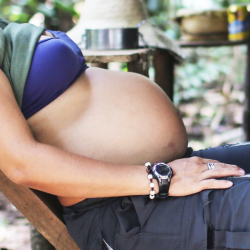
International law fails to protect pregnant women in war zones
Deaths from violent conflict and lack of available care are major causes of mortality among pregnant women in war zones, warn doctors in an editorial published in The BMJ. More needs to be done to protect women from violence in conflicts, and to provide appropriate medical care required, they argue. "In times of war, the focus is usually on the male soldiers," they … [Read more...]

Combat exposure may jeopardize the behavioral health of women in the military
In a recent study, combat exposure among Army enlisted women was associated with an increased likelihood of developing behavioral health problems post-deployment, including post-traumatic stress disorder (PTSD), depression, and at-risk drinking. In the study, which was funded by the National Institute on Drug Abuse, 42,397 Army enlisted women who returned from … [Read more...]

Sugar-free and ‘diet’ drinks no better for healthy weight than full sugar drinks
Sugar-free and "diet" drinks are often seen as the healthier option -- but researchers from Imperial College London have argued that they are no more helpful for maintaining a healthy weight than their full-sugar versions. In a commentary on current research and policy into sweetened drinks, academics from Imperial College London and two Brazilian universities … [Read more...]
- « Previous Page
- 1
- …
- 33
- 34
- 35
- 36
- 37
- …
- 426
- Next Page »
